What happened
Biohub is coordinating a $1.8 billion effort to train AI models that predict cell behavior, with Meta, Google DeepMind and Isomorphic Labs contributing a combined $300 million and the Department of Energy over $500 million.
Why it matters
Commercial funders get one year of exclusive access to the data they paid for before it goes public, while government-funded work will be available without those restrictions.
What to watch
A first dataset is expected in about a year. The effort's impact hinges on whether standardizing government-funded datasets for AI training produces accurate predictions from a standing start.
WHO IT HITSThis affects drug development researchers at biotech and pharmaceutical companies who could use models predicting cell behavior to speed up their early-stage work, and academic labs relying on public datasets that Biohub plans to standardize.
Summaries like this, in your inbox every morning.
The effort builds on Biohub's earlier pledge of $500 million in April for its five-year Virtual Biology Initiative, with the new $1.8 billion expanding the scope to include data, lab equipment, and compute. The US Department of Energy is investing over $500 million in lab measurements and compute over five years, while the National Institutes of Health are coordinating datasets built with more than $500 million in prior federal funding. Biohub's role includes standardizing those datasets for AI training.
Other AI companies are pursuing biology projects as well. Anthropic has built its own biology lab for AI-driven drug development, and the OpenAI Foundation is putting more than $125 million toward biological and medical datasets. The commercial funders in Biohub's effort are granted one year of exclusive access to the data they paid for before it becomes public, a condition that may influence how quickly academic and other researchers can use the results.
The outcome hinges on whether standardizing government-funded datasets leads to models that can reliably predict cell behavior, which the body frames as a way to speed up drug development. That is an inference from the stated goal rather than a demonstrated result. For now, the first dataset expected in about a year will be an early signal of whether the combined funding translates into usable training data, and how the one-year exclusivity window shapes who gets to build on it.
Pick your industry and the AI tools you use, and get news related to your work every day.
Free · 30 seconds with Google · unsubscribe anytimeWhat is AIToday? →
Ask AI anything about this article. The AI reads this article, earlier AIToday articles, and Wikipedia, and cites its sources. Q&As are published on this page for other readers too.
Dan Niles said on CNBC that Meta could build a public cloud as its next big business, noting Google, Microsoft…
Nvidia-backed Reflection AI and French lab Mistral unveiled new open-source models this week, Beam and Le Chon…
Higgsfield updated its AI influencer tool so users can insert a custom character into existing videos, as the…

OpenAI's dots and Meta's Muse start as assistants, then use other companies' websites and services
Faraday Future plans a US robotics factory online by the end of 2026, with the first "Built in USA" robot due…
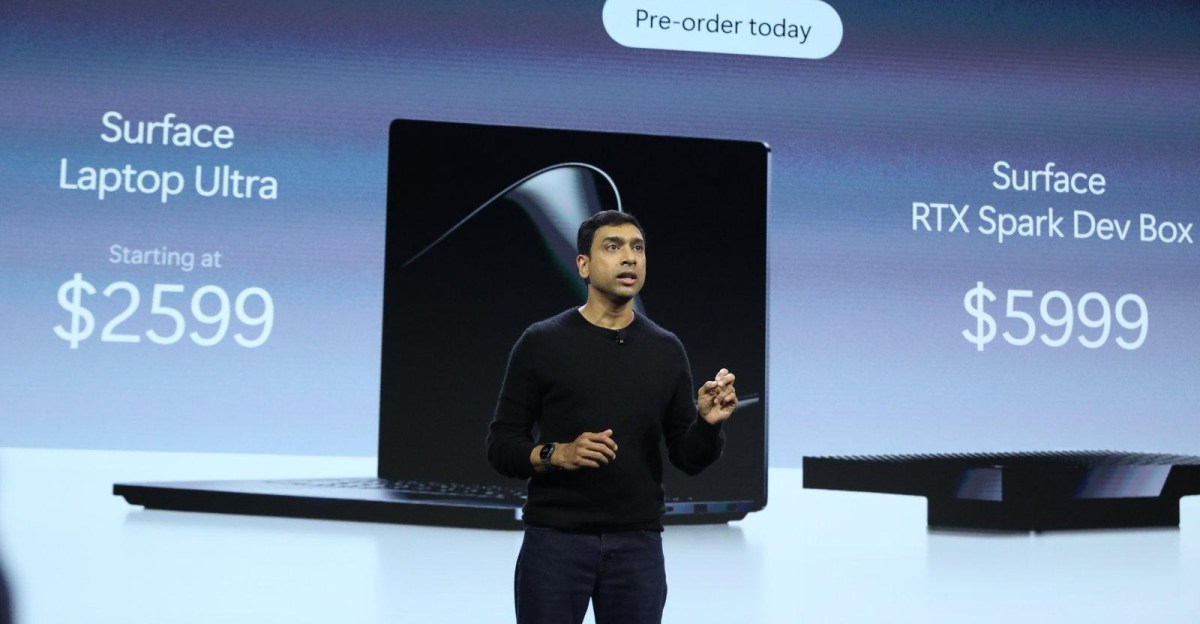
Microsoft's Surface Laptop Ultra, powered by Nvidia's RTX Spark Arm-based chip, starts at $2,599 and launches…