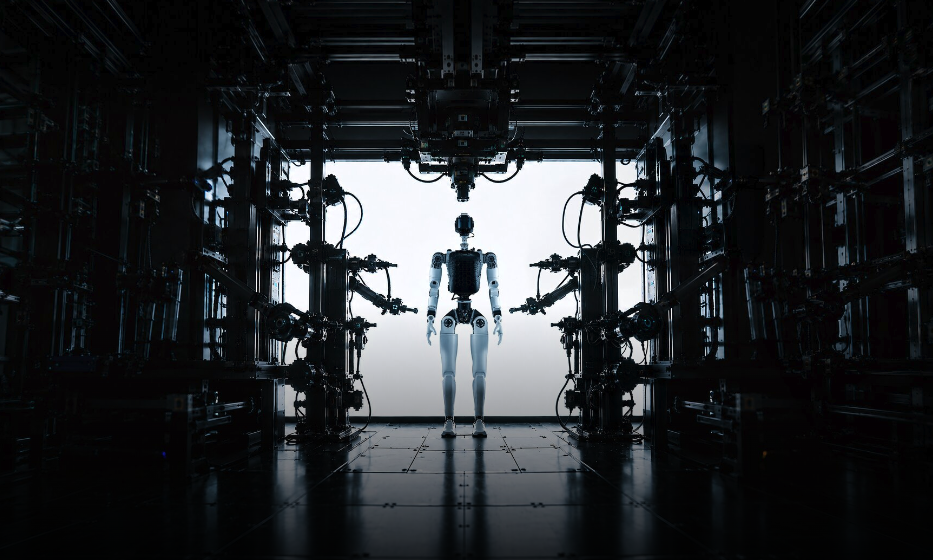
What happened
Faraday Future plans a US robotics factory online by the end of 2026, with the first "Built in USA" robot due off the line in February 2027. It is weighing a retrofit of its Hanford, California plant or a new site.
Why it matters
The company is trying to place vehicles and robots under one broader embodied AI strategy, sharing models, software tools, data collection and training infrastructure.
What to watch
The manufacturing plan hinges on whether FF can localize key components after starting with US assembly, and it says it plans to invest at least $5 billion in the United States over the next 10 years. Watch the first robot's February 2027 rollout and the 2028 localization deadline.
WHO IT HITSThe plan lands on US robotics manufacturing partners, distributors, school-district buyers, and FF's own supply chain, since the company is recruiting distributors, industry solution providers, developers, and data and robot skills partners nationwide.
Summaries like this, in your inbox every morning.
Faraday Future has spent more than a decade developing electric vehicles, and it now describes itself as a "Physical AI ecosystem company" focused on both robotics and mobility. Rather than abandoning cars, the company is trying to put vehicles and robots under one broader embodied AI strategy, arguing both can share elements of an AI technology stack — models, software development tools, data collection and training infrastructure — even though the physical products are very different. FF calls this its "Four-Core Full-Stack AI" ecosystem, comprising its EAI Brain, EAI Devices, Industry Productivity Solutions and Developer Platform, and EAI Data Factory.
The manufacturing plan was detailed at FF's first EAI Robotics "Built in USA" Upstream & Downstream Business Partner Conference at its Los Angeles headquarters, and it came with a broader commercial push. FF has opened nationwide recruitment for distributors, industry solution providers and developers, AI companies, and data and robot skills partners. Its robotics education business is also expanding: FF says it has partnerships with two California public school districts, Lynwood Unified and El Segundo Unified, covering approximately 22 K-12 schools, and is developing another 11 potential education partnerships across 10 US states. A further piece is RoboShare, described as an "Uber + Turo"-style robot rental and sharing platform operated by AIxC, in which FF is the majority shareholder.
How this plays out may hinge on execution rather than ambition. The company is starting with US assembly before moving toward domestic production of key components, with "Made in USA" output for embodied AI devices targeted by the fourth quarter of 2028 — a staged transition that leaves open whether the localization milestones can be met on schedule. For FF's robotics partners and school-district customers, the test is likely to be whether shipments, margin and rental demand keep pace as the company commits to at least $5 billion of US investment over the next 10 years.
Pick your industry and the AI tools you use, and get news related to your work every day.
Free · 30 seconds with Google · unsubscribe anytimeWhat is AIToday? →
Ask AI anything about this article. The AI reads this article, earlier AIToday articles, and Wikipedia, and cites its sources. Q&As are published on this page for other readers too.
Dan Niles said on CNBC that Meta could build a public cloud as its next big business, noting Google, Microsoft…
Nvidia-backed Reflection AI and French lab Mistral unveiled new open-source models this week, Beam and Le Chon…

Higgsfield updated its AI influencer tool so users can insert a custom character into existing videos, as the…

OpenAI's dots and Meta's Muse start as assistants, then use other companies' websites and services
Biohub is coordinating a $1.8 billion effort to train AI models that predict cell behavior, with Meta, Google…

IEEE Spectrum and Wiley released a white paper on HiPHI, a 617.5-hour whole-body motion dataset with 245.7 hou…