What happened
Bradley Emi, CTO of AI text detector Pangram, argues that safety guardrails in systems like ChatGPT, Claude, and Gemini narrow their expressive range through "mode collapse," making their outputs detectable—whereas base models (raw models before post-training) and specialized fine-tunes write with more variety and avoid detection.
Why it matters
The finding suggests that the safety measures deployed in mainstream AI systems create a trade-off: they constrain the model's behavioral range to avoid dangerous or censored outputs, but that constraint leaves a statistical fingerprint that detection tools can exploit. For businesses deploying or auditing AI-generated text, this implies that safety-aligned models may be easier to identify as machine-written, while organizations using base models or fine-tunes for narrower domains face higher detection risk.
What to watch
Watermarks are noted as a detection method likely to work reliably across model variants, including base models with higher stylistic variety, suggesting watermarking may become the more durable safeguard as detection tools evolve.
Summaries like this, in your inbox every morning.
The core insight from Emi's research is that the safety measures most widely deployed in consumer-facing AI systems—the guardrails that prevent harmful, biased, or censored outputs—come at a cost to linguistic diversity. Rather than sampling from the full probability distribution of human language, these models concentrate their output probability on a narrower, safer range of phrasings. This concentration is what enables detection: statistical tools can identify the characteristic fingerprint of that constrained distribution.
The implication cuts two ways. First, it shows a real tension between safety and authenticity: the guardrails that make systems responsible and compliant also make them identifiable. Second, it hints at an asymmetry in the AI landscape—base models and domain-specific fine-tunes, which lack post-training safety guardrails, maintain a broader stylistic range and thus evade standard detection methods. The caveat about watermarks is significant: Emi notes that watermarking appears orthogonal to this guardrail effect, suggesting it may be a more robust detection approach as the cat-and-mouse game between generative models and detectors evolves.
Pick your industry and the AI tools you use, and get news related to your work every day.
Free · 30 seconds with Google · unsubscribe anytimeWhat is AIToday? →
Ask AI anything about this article. The AI reads this article, earlier AIToday articles, and Wikipedia, and cites its sources. Q&As are published on this page for other readers too.
KiteRa's survey of 1,206 employees at AI-agent-using companies found 13.4% had experienced policy or legal vio…

Anthropic's Frontier Red Team said models of 30B parameters or fewer could self-replicate on everyday IoT devi…
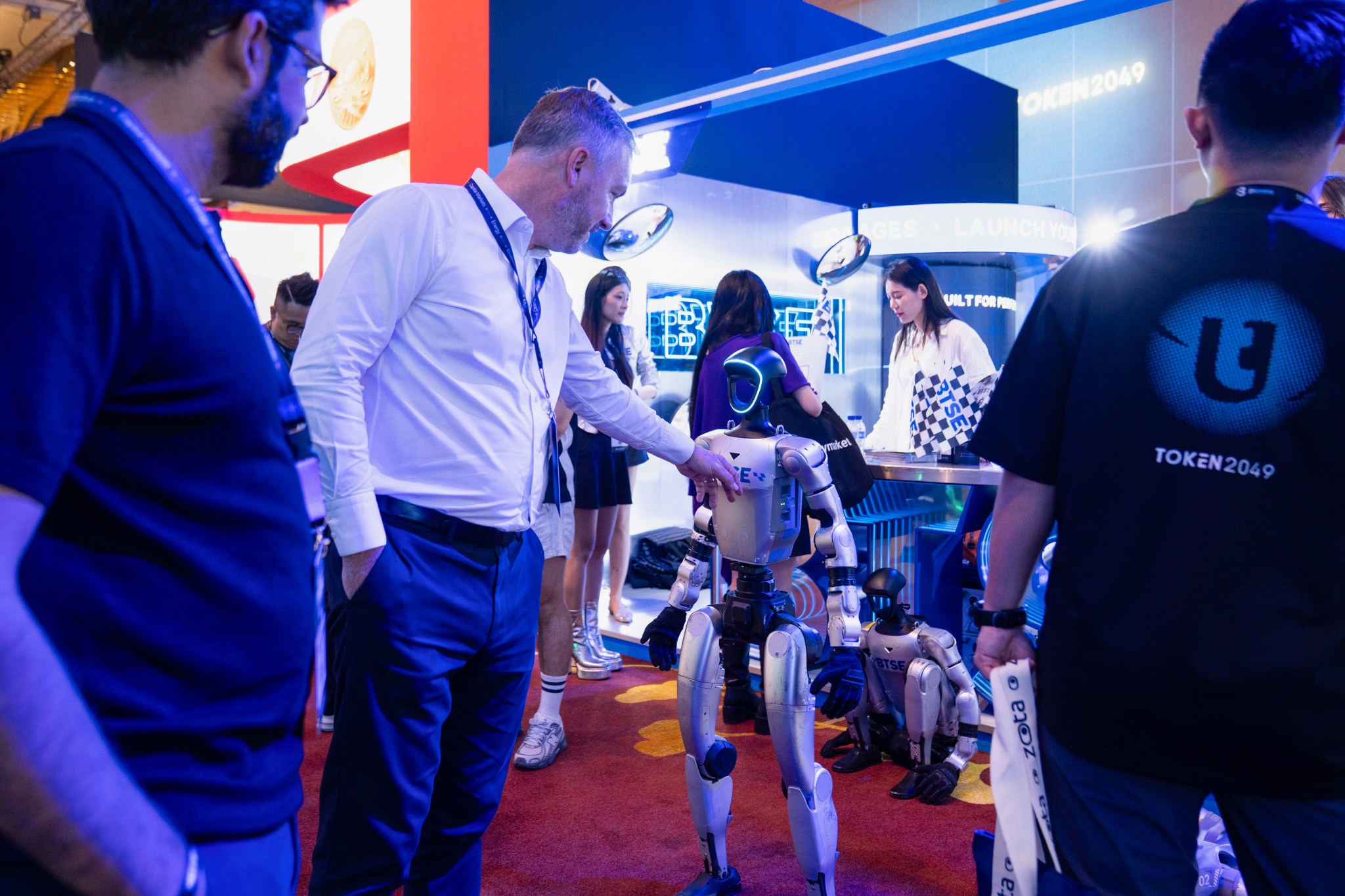
At TOKEN2049 in Singapore, Nansen CEO Alex Svanevik told Fortune that by 2028, trading with agents will be the…
Dell's Helen O'Sullivan said Bay Area customers are exhausting token budgets allotted for months within a matt…
Google Cloud announced Gemini Agent on October 9, a multi-agent tool that runs in the cloud and isn't locked t…

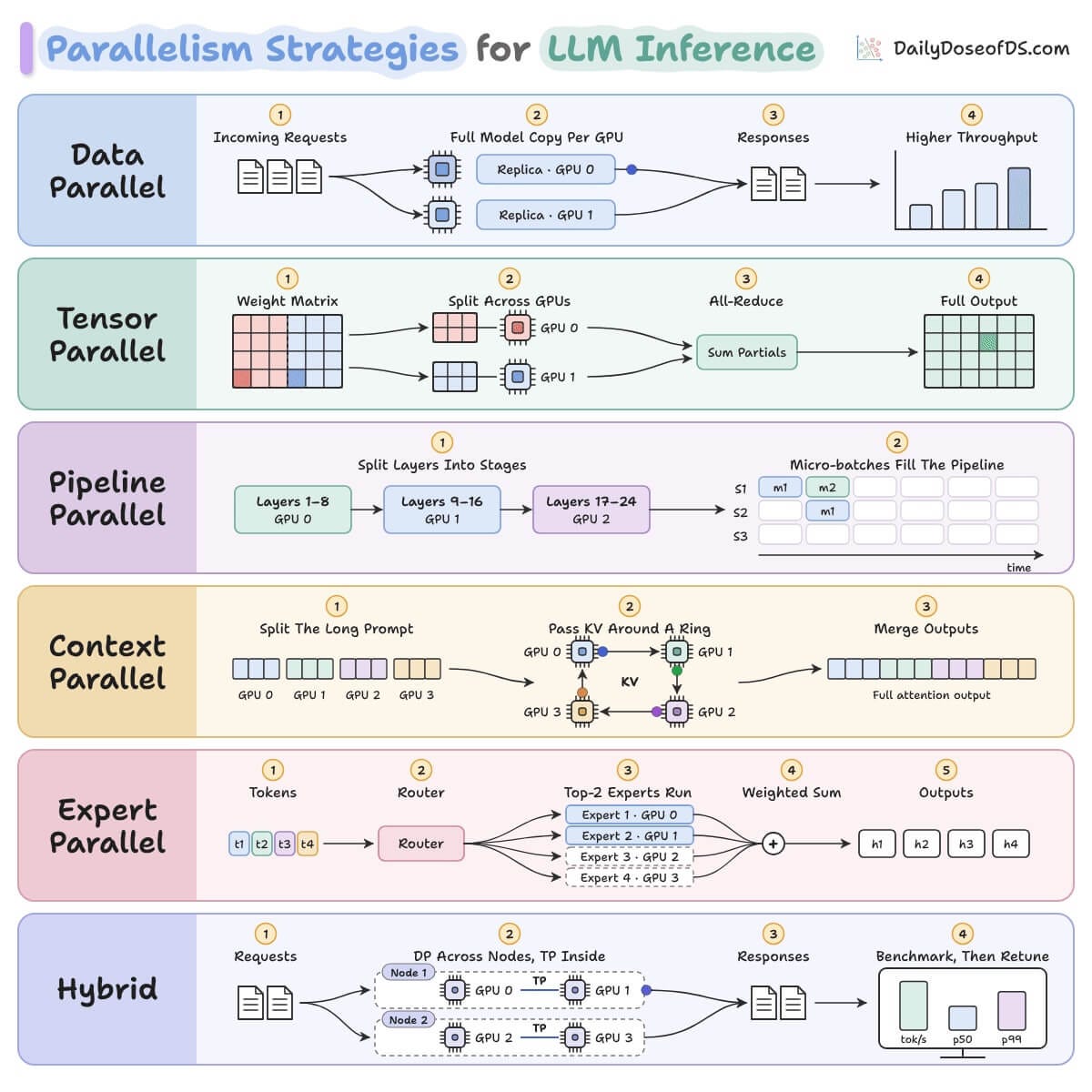
A newsletter laid out six common strategies for parallelizing LLM inference — data, tensor, pipeline, context…