What happened
AWS detailed how NVRx on Amazon EKS with PyTorch FSDP achieves 99.2% training efficiency at 2 nodes and 99.8% at 8 nodes using async checkpointing, and NVRx in-process restart recovers in ~10 seconds with zero container restarts.
Why it matters
Recovering in seconds with no container restarts means more of the GPU time paid for at 2 to 8 nodes goes to actual training instead of checkpoint blocking and fault recovery.
What to watch
The gains depend on NVRx version and configuration — the benchmark uses NVRx 0.4.1, while AWS points to v0.6.0 with an updated launcher configuration for a current deployment.
WHO IT HITSThis matters to ML platform and infrastructure engineers running multi-node GPU training on Kubernetes, who can add NVRx to an existing PyTorch FSDP script via pip install without recompiling PyTorch.
Summaries like this, in your inbox every morning.
The setup addresses a basic math problem in large-scale training: the longer a job runs across many nodes, the more likely some interruption will hit at least one worker. AWS frames the cost as twofold — idle GPU hours from faults, plus the wall time consumed by synchronous checkpointing, which it says ate up to 40% of total wall time at the cluster sizes tested.
The design splits the problem by fault class. Async checkpointing, through NVRx's TorchAsyncCheckpoint, hands the state dict to a background process so training continues; with FSDP's LOCAL_STATE_DICT, each rank writes its own shard with no all-gather. Recovery comes in two independent layers: in-process restart wraps the training function so transient exceptions or NCCL hangs don't kill the Python process, while the ft_launcher swaps in for torchrun and respawns workers after SIGKILL, OOM kills, or OS-level hangs. A cluster orchestrator would cover node loss. AWS notes the layers are independent and can be adopted separately.
The reported gains depend on the storage behaving as it did in these runs: because FSx Lustre write time was constant across 16 and 64 GPUs, async checkpointing could hide it entirely. Whether teams see similar numbers likely hinges on their own storage latency and fault patterns, not just the NVRx version they install.
For example, today's edition would include:
AI-summarized, only the topics you pick — one digest a day via Email, Slack, or Discord.
Free · 30 seconds with Google · unsubscribe anytimeWhat is AIToday? →
Ask AI anything about this article. Q&As are published on this page for other readers too.
Anthropic merged chatbot Claude with agentic tool Claude Cowork effective immediately, and launched Claude Doc…

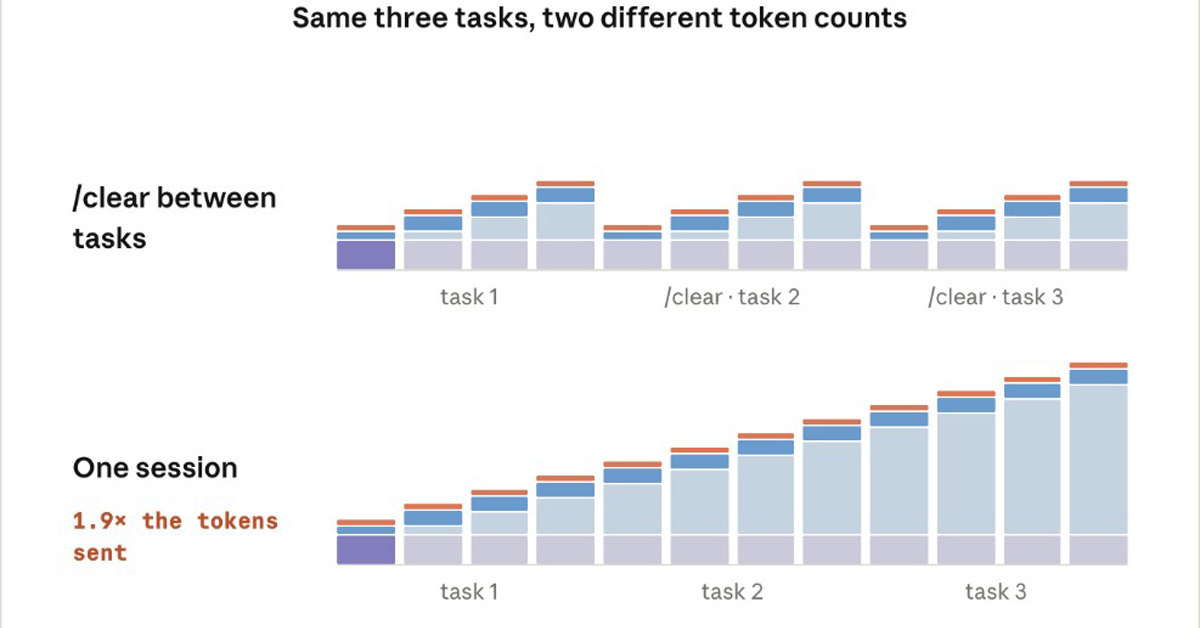
Anthropic posted guidance saying Claude Code's output tokens cost about 5 times its input tokens, and that one…
The NSA, CISA, and FBI issued a joint advisory on September 8, 2026 saying Chinese firms including DeepSeek, M…

Andrew Scull, a historian of psychiatry, appeared on episode 502 of the Lex Fridman Podcast
Snap introduced Specs Intelligence, an 'anticipatory AI service' that links accounts like Gmail and Slack

Apple researchers proposed DACA-GRPO, a plug-and-play enhancement for GRPO-style trainers, adding Denoising Pr…