AIToday

Schneider Electric Bets $1B on AI-Physical World Collision Through VC Arm

Crunchbase News AI6h agoSend on LINE
Schneider Electric Bets $1B on AI-Physical World Collision Through VC Arm

Key takeaway

Schneider Electric's $1 billion(約1600億円) venture arm, SE Ventures, is betting that AI's next growth phase will be defined by energy and industrial infrastructure, not software alone. As AI model training and inference strain power grids and data center capacity, the firm is backing startups in data center efficiency, grid resilience, and robotics — with around 80% of its portfolio having direct commercial ties to Schneider Electric's business units. The firm's head describes energy as AI's defining constraint and sees reindustrialization driven by AI-assisted workers and lights-out manufacturing as the defining investment cycle of the next decade.

Summaries like this, in your inbox every morning.

Sign up free →

3 Key Points

  • What happened

    Schneider Electric's venture capital arm, SE Ventures, is deploying its $1 billion(約1600億円) fund to back startups addressing the infrastructure demands created by AI — from data center efficiency and grid resilience to robotics and industrial automation. The firm counts eight unicorns in its portfolio and has logged 12 exits, most recently the acquisition of Fabric8Labs by Tokyo-based TDK Corp.

  • Why it matters

    As AI training and inference consume vast amounts of electricity, energy has become the binding constraint on AI expansion. SE Ventures' head, Amit Chaturvedy, notes that "the scarce resource in this entire space is the capacity to build: buildings, real estate, energy, power and electrification gear." Around 80% of the firm's portfolio companies have commercial relationships with Schneider Electric business units, creating a flywheel where portfolio startups can scale by partnering with a global leader in energy management and automation.

  • What to watch

    The firm is focused on three near-term investment cycles: AI infrastructure (model training and inference), data center efficiency (which Chaturvedy expects to become urgent once the current CapEx cycle cools in 3–5 years), and industrial AI adoption (especially robotics and warehouse automation). Over the next 3–10 years, depending on CapEx refresh cycles, greenfield factories with native robotics and industrial automation will begin to emerge.

In Depth

Schneider Electric, the global leader in energy management and automation, has evolved from a 19th-century steel and machinery company into a modern industrial conglomerate. Now, through SE Ventures, a $1 billion(約1600億円) venture arm launched to capitalize on AI's collision with the physical world, the company is backing startups that address the infrastructure demands of the AI era.

Amit Chaturvedy, who joined SE Ventures in 2022 after leading corporate investments at Cisco, articulates three primary investment theses. First is AI infrastructure itself — the data centers, power systems, and equipment required to train and run large language models. SE Ventures has invested in Together AI, which trains models, and Hammerhead AI, which focuses on data center efficiency. Chaturvedy notes that while efficiency is not urgent today (because the AI CapEx cycle is in its upswing), it will become critical within three to seven years as the pace of new data center construction slows. The second thesis centers on grid resilience and electrification. As AI demand compounds the existing strain on electrical grids from vehicle electrification and renewable generation, startups that help manage that capacity — whether through demand shifting, battery storage (BESS), or grid intelligence — become strategically valuable. The third is the transformative impact of AI on industrial sectors: robotics, automation, and AI agents that help field workers and design engineers.

SE Ventures' portfolio includes eight unicorns and has completed 12 exits, the most recent being Fabric8Labs, a 3D metal printing technology company acquired by Tokyo-based electronic manufacturer TDK Corp. Notably, around 80% of portfolio companies have commercial relationships with a Schneider Electric business unit, either as partners serving Schneider's customers or as vendors. This overlap is intentional. "Whichever startup is working with me in that transformation journey," Chaturvedy says, "is the startup that will move from POC to adoption overnight."

Chaturvedy frames energy as AI's defining constraint. Unit economics in an AI data center center on tokens — each token generated requires electricity. The short-term solution is optimization: writing code that produces fewer tokens or generates them at cheaper rates, and shifting inference workloads to off-peak hours to avoid peak electricity rates. Improving data center cooling (HVAC systems) is another lever. The longer-term solution is creating new generation capacity, primarily through renewables, and deploying battery energy storage systems (BESS).

On reindustrialization, Chaturvedy argues that the U.S. and Europe have little choice but to rebuild manufacturing capacity given geopolitical pressures. However, the path is not to recreate labor-intensive factories of the past. Instead, he envisions factories where AI becomes an assistant to every blue-collar worker, effectively turning them into knowledge workers — a transformation that could overcome the shortage of trained technicians. He does not expect all manufacturing jobs to return; cost of living, wage expectations, and quality-of-life standards in the U.S. will prevent a wholesale return to historical production levels. Instead, reindustrialization will be selective and highly automated. The timeline varies by industry: data centers are already experiencing rapid buildout because of urgent demand and significant capital availability. In the broader industrial sector, the next three to ten years will see more greenfield projects that are natively robotics-oriented and industrial automation-oriented, as AI adoption catches up with technological capability. Each new factory built in the next seven to ten years will have productivity levels far exceeding factories built 15–30 years ago, creating strong ROI and incentive to expand capacity further.

Context & Analysis

Schneider Electric's venture strategy reflects a fundamental shift in how large industrials view AI opportunity. Rather than chasing software-layer innovation, SE Ventures is targeting the physical infrastructure that AI demands — a recognition that the next decade of venture returns will accrue to those who solve energy, cooling, real estate, and electrification challenges. Chaturvedy's framing of energy as the "scarce resource" signals that the era of cheap electricity subsidizing compute is ending, and that constraint will reshape which startups win.

The portfolio's geographic and operational design also matters. By ensuring that roughly 80% of portfolio companies can partner directly with Schneider Electric's global customer base and operational footprint, SE Ventures has created a differentiation layer unavailable to pure-play venture investors. This is not a new model — corporate VCs have long used portfolio synergies — but its application to AI infrastructure is timely. Data center builders, grid operators, and factory owners already trust Schneider; a robotics startup or efficiency software company backed by SE Ventures gains immediate credibility and distribution.

The reindustrialization thesis undergirding the strategy is the third piece. Chaturvedy argues that over the next 3–10 years, every new factory will embed AI-native robotics and automation from day one, creating a CapEx cycle as large as the current data center buildout. This is not guaranteed — it depends on wages, geopolitical policy, and the speed at which industrial AI adoption spreads — but it is grounded in urgent economic pressure: an aging workforce, inflation, and geopolitical competition all push manufacturers to automate and electrify simultaneously. SE Ventures' thesis is that those two imperatives (electrification and automation) are inseparable and require partners who understand both.

FAQ

What types of companies does SE Ventures invest in?
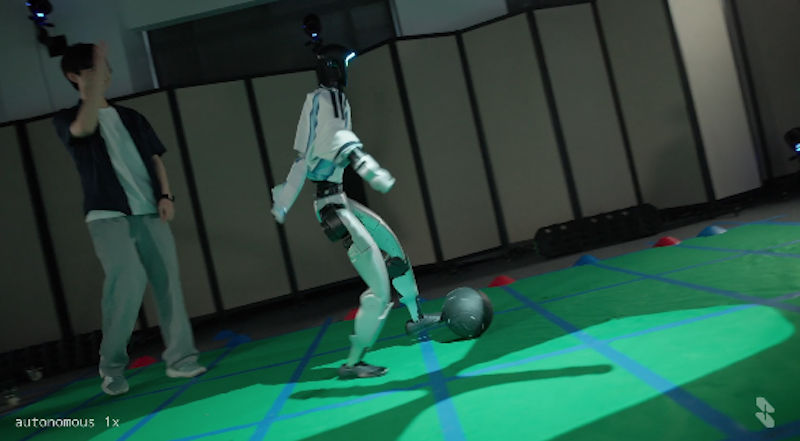
SE Ventures invests across the full stack of AI for energy and industry: data infrastructure, training and inference, AI agents solving real-world use cases, and enabling layers like multi-cloud, multi-LLM, cybersecurity, and data governance. Specific focus areas include data center infrastructure (e.g., Hammerhead AI for efficiency, Together AI for training), grid resilience, robotics (e.g., Skild AI), and industrial AI (e.g., Axion, which analyzes warranty data for hardware makers).
How does SE Ventures create value for its portfolio companies?
Around 80% of SE Ventures' portfolio companies have some level of commercial relationship with a Schneider Electric business unit, often as a partner servicing Schneider's customers or as a vendor. The firm will also take board seats and work to bring value to portfolio companies, with the goal of moving companies from proof-of-concept to adoption.
What is the bottleneck for AI expansion right now?
Energy is increasingly the bottleneck. Chaturvedy explains that the unit economics of an AI data center depend on tokens — generating each token costs electricity — so the focus is on producing tokens cheaply and consuming fewer tokens through more optimized models. Longer-term solutions include shifting inference to off-peak hours, improving data center cooling, and building new generation capacity (largely through renewables).

Get the latest Robotics news every morning

AI-summarized, only the topics you pick — one digest a day via Email, Slack, or Discord.

Free · takes 30 seconds · unsubscribe anytime

Discussion

No comments yet. Be the first to share your thoughts!

Log in to join the discussion

Related Articles

Stay ahead with AI news

Get curated AI news from 200+ sources delivered daily to your inbox. Free to use.

Get Started Free

Free · takes 30 seconds · unsubscribe anytime