SK Hynix, a Korean semiconductor company that only recently listed American depositary receipts, controls 58% of the high-bandwidth memory market critical to AI, significantly outpacing Western rivals Micron and Sandisk.
The company's revenues surged to $55 billion in Q2 2026 with a 257% year-over-year gain and 72% operating margin, positioning it to potentially mirror Nvidia's transformative growth trajectory as AI memory demand accelerates through the end of the decade.
What happened
SK Hynix, a Korean semiconductor giant historically traded on South Korean exchanges, has emerged as the dominant player in AI memory chips. The company holds 58% of the high-bandwidth memory (HBM) market — more than double Micron's and Samsung's shares — and 29% of the broader DRAM category. In the first half of 2026, SK Hynix posted cumulative revenue surpassing 100 trillion won for the first time, with Q2 revenue reaching 79.3 trillion won (roughly $55 billion USD), up 51% sequentially and 257% year over year.
Why it matters
SK Hynix's market position mirrors Nvidia's role in the AI boom — both supply critical inputs to the AI chip stack, command elevated profit margins (SK Hynix posted 72% operating margin in Q1 2026), and benefit from long-term supply agreements and sold-out inventory. Memory shortages are projected to persist through the latter half of the decade as AI capital expenditures accelerate, suggesting sustained demand. SK Hynix's forward price-to-earnings ratio of 5.3 remains well below Nvidia's valuation during its explosive growth phase, potentially indicating room for multiple expansion.
What to watch
SK Hynix's ability to sustain capacity expansion, maintain technology leadership, and deepen customer lock-in will determine whether earnings growth translates into valuation gains. The company's recent American depositary receipt listing has improved visibility outside Asia, though memory industry cyclical risks remain a consideration.
Ask the AI about this article →
SK Hynix's emergence as the dominant AI memory supplier reflects a fundamental shift in the AI infrastructure hierarchy. While the initial AI boom centered on Nvidia's GPUs, the bottleneck has moved downstream to memory chips — specifically high-bandwidth memory (HBM) that sits atop accelerators and DRAM for data flow. SK Hynix's 58% HBM market share, combined with its 29% DRAM position, gives it a structural advantage that Western competitors Micron and Sandisk do not match. The company's financial acceleration in the first half of 2026 — with cumulative revenue surpassing 100 trillion won for the first time — demonstrates that market share is translating directly into operational strength and pricing power.
The parallel between SK Hynix and Nvidia's growth trajectory appears grounded in shared structural advantages: both supply a critical, non-substitutable input to the AI chip stack; both enjoy elevated margins as hyperscalers prioritize capacity; and both benefit from long-term supply agreements and sold-out inventory. However, SK Hynix trades at a forward P/E ratio of 5.3, materially cheaper than Nvidia during its most explosive phase, suggesting the market may not yet have fully priced in the company's dominant market position or the secular demand shift toward AI workloads. Memory shortages are projected to persist through the latter half of the decade as AI capital expenditures accelerate, providing a multi-year runway for both earnings growth and potential valuation expansion.
For example, today's edition would include:
AI-summarized, only the topics you pick — one digest a day via Email, Slack, or Discord.
Free · takes 30 seconds · unsubscribe anytimeWhat is AIToday? →
Ask AI anything about this article. Q&As are published on this page for other readers too.
Phonely Ltd. launched Alma, a large language AI model built for voice agents and trained on over 10 million re…

Aranya Inc., a startup founded last year, launched today with $11 million in funding

CBTS Technology Solutions LLC launched Forge Agents, a platform that turns a plain-language job description in…

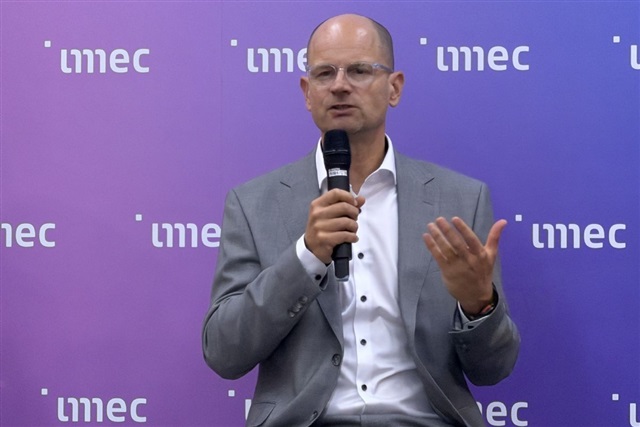
Imec CEO Patrick Vandenameele said at SEMICON Taiwan 2026 that the Belgian research center is broadening its c…
Alphabet's AI Overviews now reach over 2.5 billion monthly users through Google Search, and its ad business ge…
Sarah O’Connor's book 'We Are Not Machines' explores how mechanization and AI have transformed the workforce…