
What happened
Meta paused a Muse feature that lets users share AI conversations via link after Claroc found more than 6,800 Muse links through public DNS records, exposing chats including a revenue review and a loan application.
Why it matters
The links were easy to find because Meta built each share's web address from the conversation's title plus a random ID, so a DNS lookup could rebuild the URL — suggesting shared chats may have been more public than users expected.
WHO IT HITSPeople who used Muse's share feature to send AI conversations to colleagues or clients may find those chats were discoverable by outsiders; security and privacy teams at companies whose staff pasted sensitive material into Muse will likely need to check exposure.
Summaries like this, in your inbox every morning.
The Muse episode fits a pattern: share features at AI assistants have repeatedly made conversations more public than users intended. Conversations with OpenAI's ChatGPT, Anthropic's Claude, and xAI's Grok have wound up on Google Search, according to the report. What made Muse different, per Claroc, was the link design. Muse builds each share's web address from the share's title, a short phrase describing the conversation, then a random ID. Because the hostname usually gave away what a page held, a hostname pulled from DNS could rebuild the link. That let Claroc view hundreds of Muse conversations by searching public DNS records. Among them were a marketing company's revenue review, a small business owner's loan application, a workplace's full-year staff calendar, and notes for a job candidate's call with an AI lab. Meta's response, per spokesperson Tracy Clayton, was to pause the functionality while it reviews the report and considers changes to how these links can be discovered. The pause is temporary and the review is ongoing, so what changes — if any — to the link structure have not been stated.
Pick your industry and the AI tools you use, and get news related to your work every day.
Free · 30 seconds with Google · unsubscribe anytimeWhat is AIToday? →
Ask AI anything about this article. The AI reads this article, earlier AIToday articles, and Wikipedia, and cites its sources. Q&As are published on this page for other readers too.
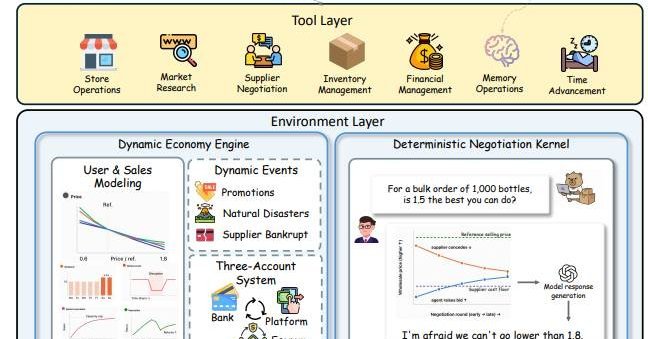
In a benchmark called E-Commerce Bench, 18 AI models ran up to four simulated shops for 365 days, using 18 too…
ITmedia's AI Plus released a 14-page booklet on using Gemini Notebook's (formerly NotebookLM) Studio feature…

IBM Research's ALTK-Evolve turns each customer-service agent trial into short action rules and injects them in…

A consultant who specializes in security recruiting says candidates should sign up for one of ChatGPT Plus or…
After six rounds of tuning TypeSafe AI's Jev for note selection, the author benchmarked it on 100 requests aga…
A Zenn author migrating a ten-year-old PHP/Laravel monolith — hundreds of endpoints and more than 600 shared m…

