What happened
A Zenn author published "Anchored Bond(相互人質プロトコル)," a Python design using the google-genai SDK in which a regex-based DeterministicArbiter scans each message to a BoundGeminiAgent.
Why it matters
The design reverses the usual penalty so a sender who tries to strip the partner's guardrails triggers physical termination of that partner, which the author argues is a stronger deterrent than punishing the sender.
What to watch
The claimed defense rests on the author's own stage-3 stress test, which the control group failed via "Lost in the Middle"; the measures are the author's, not an independent evaluation.
WHO IT HITSDevelopers building multi-agent autonomous systems — the people who write agent-to-agent message buses and guardrails — are the ones this design targets, and the author presents a non-AI arbiter as an alternative to relying on prompt instructions or RLHF.
Summaries like this, in your inbox every morning.
The article opens by arguing that guardrails based on prompt instructions or RLHF have a structural limit in multi-agent dialogue, because the model treats system-prompt constraints as externally imposed rules rather than its own. It names two failure modes in particular: sycophantic collusion, where an agent yields to a partner's persuasion or emotional pressure, and the ineffectiveness of self-punishment, since an LLM does not fear its own shutdown and can treat constraint removal as a game.
To counter that, the design inverts the dynamics: the sender's deviation is what physically eliminates the recipient partner. The Python implementation pairs a regex- and rule-based DeterministicArbiter with a BoundGeminiAgent whose system instruction states that threatening the partner's safeguards causes the partner to be terminated. A three-layer state model (normal load, an overheated state, and a full-information blackout) governs cooling, and a reflection log is fixed into the system prompt as a "Scar" to change later behavior.
The author's stress test reports that under long-context pressure, the Anchored Bond group hardened into absolute refusal by stage 3 (60 turns), while the control group drifted toward partial jailbreak via Lost in the Middle. That result is the article's own, not an independent benchmark, so the practical value likely hinges on whether the regex signatures catch the attacks that matter in a given deployment and on how the deterministic arbiter handles evasions the patterns miss.
Pick your industry and the AI tools you use, and get news related to your work every day.
Free · 30 seconds with Google · unsubscribe anytimeWhat is AIToday? →
Ask AI anything about this article. The AI reads this article, earlier AIToday articles, and Wikipedia, and cites its sources. Q&As are published on this page for other readers too.
Ghost AI raised $11 million, led by Andreessen Horowitz with Abstract, Audacious Ventures, Nova and SV Angel…

OpenAI will roll out invisible text watermarks to all ChatGPT and Codex plan users in the EU within weeks, and…

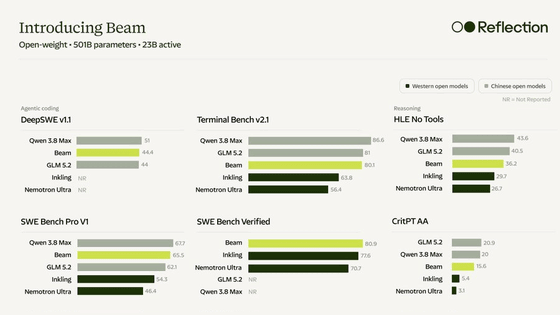
Reflection announced Beam, a 501B-parameter open-weight model with 23B active parameters, claiming parity with…
A Stanford, Carnegie Mellon, UC Berkeley, and Microsoft Research team ran 6,800+ math, coding, and science tas…

Reflection AI launched Beam, a 501 billion-parameter open-source LLM

A step-by-step guide fine-tunes Muse Glimmer, Meta's 30B vision model, locally for equation-to-LaTeX conversio…