What happened
AWS built a LangChain RAG app on Amazon Bedrock Managed Knowledge Bases and ran one six-intent question through both paths; standard retrieval at 5 results covered 4 of 6 sub-intents, while the other path covered 6 of 6.
Why it matters
This shows that when a single query hides six intents, one embedding can miss sub-intents, so teams may need to weigh higher cost and latency against fuller coverage. Hedged: the trade-off hinges on query shape.
What to watch
The result hinges on whether production traffic is mostly single-intent or multi-part, since the cheaper path is recommended for short, well-scoped questions; watch maxAgentIteration — below 4 the planner stops decomposing.
WHO IT HITSThis lands on enterprise RAG teams and application developers running self-hosted or managed retrieval on Amazon Bedrock who must choose between one hybrid search and a planning loop per query.
Summaries like this, in your inbox every morning.
Amazon Bedrock Managed Knowledge Bases removes the self-managed vector store, embeddings, and re-ranking models from the RAG architecture; the walkthrough uses an S3 bucket as the data source, and the API takes no storageConfiguration, which the post calls the clearest signal that Amazon handles the storage layer. From there the same complex query can go through two paths: a standard LangChain retriever wrapping the Retrieve API, or a planning loop exposed as agentic_retrieve and the lower-level agentic_retrieve_stream call. The post notes friction in the current integration — agentic retrieval is a function rather than a LangChain retriever, so it needs a RunnableLambda to sit in a chain, and trace events that show the query plan require a direct boto3 call. For context, AWS evaluated agentic retrieval on MuSiQue, a public multi-hop benchmark, and reported improved recall over single-shot retrieval, with the largest gains on the hardest questions and single-hop questions seeing gains under five points. The post also notes that agentic retrieval registers up to five knowledge bases in one request and routes sub-queries using a natural-language description attached to each, which the other API cannot do. The outcome likely hinges on whether a team's own query mix is dominated by single-intent questions, since the recommendation is to route on query shape rather than pick one path for everything, and measuring that mix appears to be the intended next step.
Pick your industry and the AI tools you use, and get news related to your work every day.
Free · 30 seconds with Google · unsubscribe anytimeWhat is AIToday? →
Ask AI anything about this article. The AI reads this article, earlier AIToday articles, and Wikipedia, and cites its sources. Q&As are published on this page for other readers too.
Ghost AI raised $11 million, led by Andreessen Horowitz with Abstract, Audacious Ventures, Nova and SV Angel…

OpenAI will roll out invisible text watermarks to all ChatGPT and Codex plan users in the EU within weeks, and…
A Stanford, Carnegie Mellon, UC Berkeley, and Microsoft Research team ran 6,800+ math, coding, and science tas…

Reflection announced Beam, a 501B-parameter open-weight model with 23B active parameters, claiming parity with…
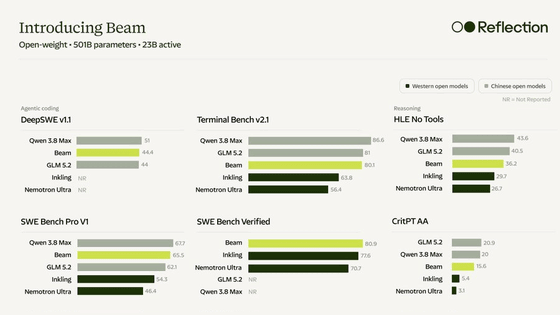
Reflection AI launched Beam, a 501 billion-parameter open-source LLM

A step-by-step guide fine-tunes Muse Glimmer, Meta's 30B vision model, locally for equation-to-LaTeX conversio…