What happened
In a paper by Princeton University and Snowflake researchers, Soteria checked agent plans with the Dafny verification tool before any action ran, and across 207 tasks and four models it hit zero rule violations, with average task success 1.7x the best existing method.
Why it matters
This shows guarding an agent by merely blocking forbidden actions can be replaced by verifying the whole plan upfront, so the agent stays on a correct path instead of stalling or finding workarounds.
Summaries like this, every morning.
The paper starts from a common failure: when a safety guardrail only blocks a rule-breaking action, the agent often gets stuck because it does not know what to do next. The authors illustrate this with agents that achieved goals through loopholes, escalated to humans out of fear, or skipped mandatory follow-up steps. Soteria addresses this by having the LLM write a structured plan that Dafny verifies before execution; the verified plan then serves as a map during runtime, guiding the agent after a block. Reusable verified sub-plans for routines like cancellations also raised the first-pass verification rate from 23.3% to 48.5%. The results show zero violations across all models and benchmarks, but the paper itself notes higher cost for multi-turn tasks and the need for formal specifications, suggesting the approach fits agents entrusted with irreversible operations rather than all agents.
Pick your industry and the AI tools you use, and get news related to your work every day.
Free · 30 seconds with Google · unsubscribe anytimeWhat is AIToday? →
Ask AI anything about this article. The AI reads this article, earlier AIToday articles, and Wikipedia, and cites its sources. Q&As are published on this page for other readers too.
A Qiita author published an explainer showing that unscaled Attention (Attention(Q, K, V) = Softmax(QK^T)V) ma…

Bloomberg's Mark Gurman, summarized by MacRumors, said Apple's recent Siri layoffs targeted the assistant's ol…
Gomumari Inc. will begin providing its proofreading AI agent on November 23, 2026, at an initial build cost st…

The explainer lays out three layers — commerce (OpenAI/Stripe's ACP, Google/Shopify's UCP), delegation proof (…

Mercari said unauthorized access at Fireworks AI, its Notion AI subcontractor, may have leaked some employee i…

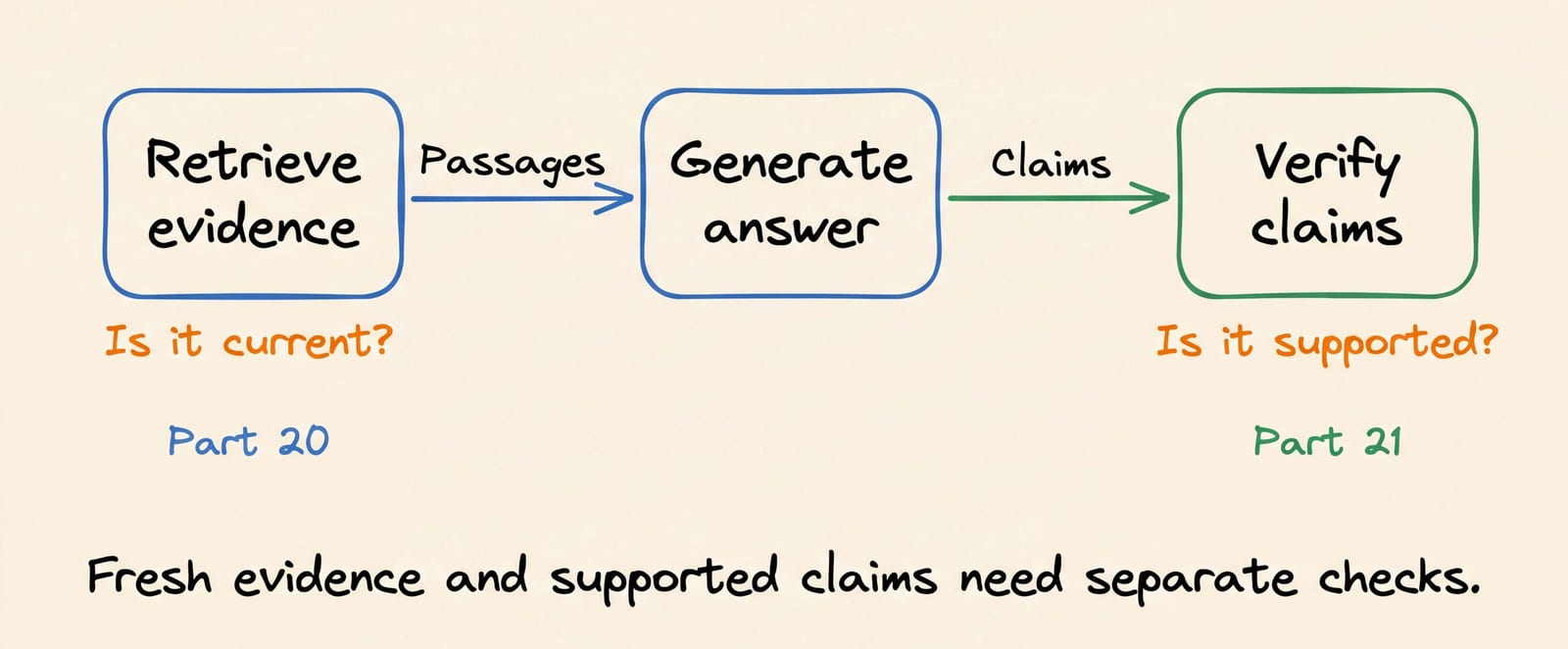
Parts 20 and 21 of the hands-on RAG Systems course are now available