What happened
Anthropic secured $71 billion in chip-lease debt through special purpose vehicles (SPVs) over roughly 60 days. In a $35 billion deal closed in June 2026, arranged by Apollo Global Management and Blackstone Credit and Insurance, an SPV acquires Google's tensor processing units and leases them back to Anthropic. A second preliminary $36 billion deal was reported in early August 2026, with similar structure and deployment targeted at data centers across New York, Texas, Louisiana, and Indiana.
Why it matters
By using SPVs, Anthropic keeps massive hardware deployments off its corporate balance sheet, avoiding the drag of hardware depreciation on its primary financial statements while funding compute spending estimated at approximately $45 billion per year — far exceeding its $19 billion annualized revenue run rate. Broadcom's residual-value backstop on the senior tranches (approximately $6 billion Senior A1 notes and approximately $24 billion Senior A2 notes) allows these slices to carry Broadcom's investment-grade rating rather than Anthropic's, making $71 billion in private credit accessible to a company still in a cash-burning growth phase.
What to watch
Anthropic is targeting an October 2026 IPO debut with a confidential S-1 filed June 1, led by Morgan Stanley, Goldman Sachs, and JPMorgan, anchored at a $965 billion post-money valuation from its Series H raise. The SPV debt structure remains invisible to public-market investors evaluating the equity story, so the IPO will raise equity capital for corporate operations separately from this hardware-backed debt.
Summaries like this, in your inbox every morning.
Anthropic's deployment of special purpose vehicles represents a sophisticated capital structure that separates hardware financing from corporate operations. The $35 billion deal closed in June 2026 exemplifies how structured finance allows a high-growth company to scale compute capacity without burdening its balance sheet with depreciating assets. The Broadcom residual-value backstop is the critical enabler: by guaranteeing the senior tranches, Broadcom converts Anthropic-grade credit risk into investment-grade pricing, unlocking access to $71 billion in private markets that would otherwise be unavailable to a company burning cash at $45 billion annually while generating only $19 billion in revenue.
The parallel capital structure — equity raised through the planned October 2026 IPO versus debt secured through SPVs — creates a structural separation that public-market investors may not fully appreciate. The IPO filing, led by Morgan Stanley, Goldman Sachs, and JPMorgan, anchors valuation at $965 billion post-money but will be evaluated on the equity story alone. Meanwhile, the SPV debt remains invisible to that equity valuation, even as it finances the same compute expansion. The preliminary $36 billion second deal, reported in August 2026 and structured identically, suggests Anthropic may push total SPV exposure beyond $71 billion if finalized, making this among the largest private-credit arrangements ever assembled.
For example, today's edition would include:
AI-summarized, only the topics you pick: one digest a day via Email, LINE, or Slack.
Free · 30 seconds with Google · unsubscribe anytimeWhat is AIToday? →
Ask AI anything about this article. The AI reads this article, earlier AIToday articles, and Wikipedia, and cites its sources. Q&As are published on this page for other readers too.
Kalkine Media reports that Home Depot (NYSE:HD) is introducing an AI assistant for its retail operations

AMD said Monday it agreed to acquire World Labs, Fei-Fei Li's San Francisco AI lab, for about $8.2 billion in…
Bank of America announced Payments Insights, a new CashPro capability that analyzes payment efficiency, cross-…
Dell's AI server backlog rose to $95 billion after a record $60.9 billion in AI server orders in fiscal Q2, wi…
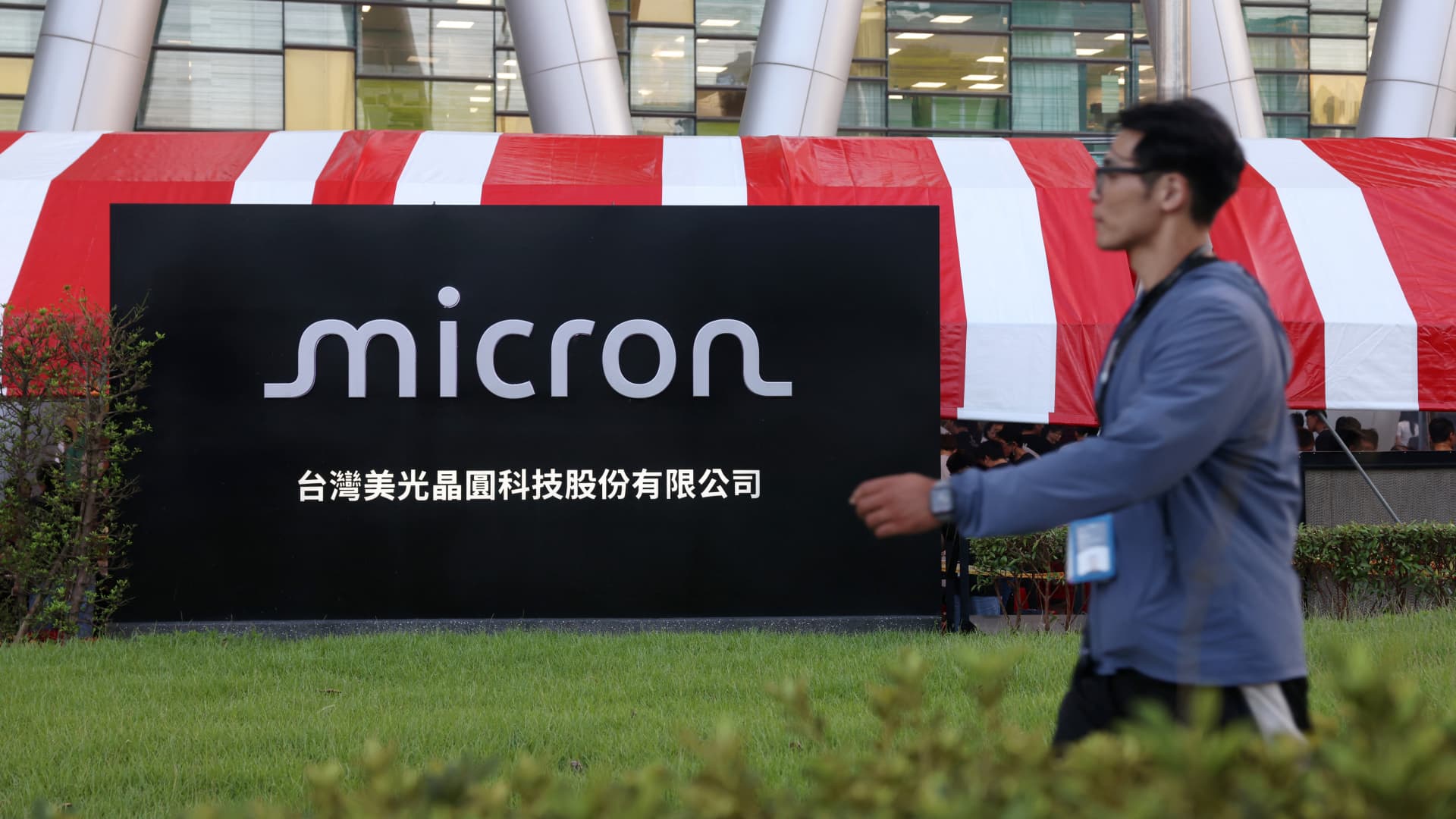
Baird said agentic AI will drive Micron to new heights, per a CNBC report
A Seeking Alpha analyst published a bullish piece titled "Lam Research: A Key AI Infrastructure Player With Gr…