What happened
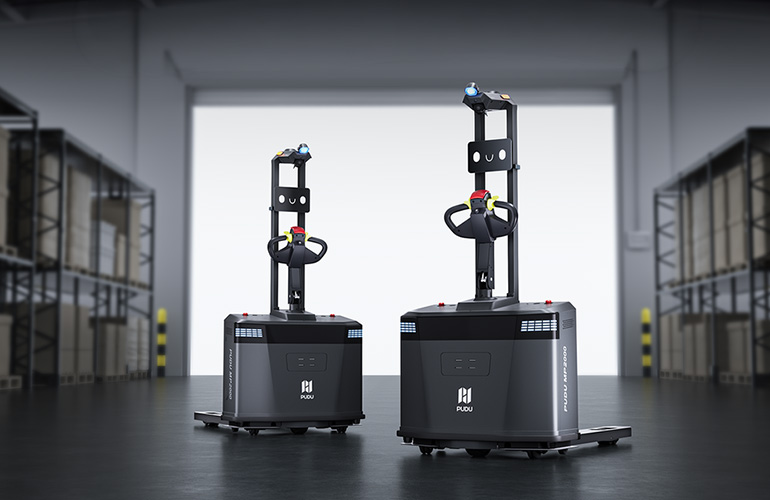
Pudu Robotics launched the MP2000, an AI-powered autonomous pallet handler equipped with 3D lidar and depth cameras, capable of completing pallet pickup cycles in as little as 20 seconds. The robot can identify target pallet locations, adjust approach paths in real time, and validate pallet size and configuration to handle standard and customized load carriers.
Why it matters
The MP2000 extends Pudu Robotics' portfolio of autonomous mobile robots (AMRs) to address high-frequency, heavy-payload transport in warehouses and manufacturing facilities. It fills a gap in autonomous material handling by tackling palletized, floor-to-floor workflows—loading docks, line-side storage, and production workshops—where manual or semi-automated systems currently dominate. The robot also includes manual operator override, allowing it to function as a powered manual forklift when needed.
What to watch
The MP2000 integrates with Pudu's existing T Series AMRs through distributed fleet intelligence, which coordinates multiple robots and maintains task management even during network outages. The robot can communicate with facility infrastructure such as doors and elevators to access controlled areas, suggesting deployment across multi-level and gated warehouse environments.
Summaries like this, in your inbox every morning.
Pudu Robotics' MP2000 entry into the autonomous pallet-handling market addresses a specific operational bottleneck in warehouse and factory logistics: the need for rapid, high-frequency palletized transport that current autonomous mobile robots have not fully served. By achieving pallet pickup cycles as fast as 20 seconds and equipping the robot with 3D lidar, depth cameras, and real-time path adjustment, Pudu positions the MP2000 as a solution for facilities with demanding throughput requirements. The robot's ability to identify and adapt to pallet misalignment and non-standard load carriers reduces a major source of operational friction—the variability of real-world pallet conditions that rigid automation systems struggle to handle.
The MP2000 is designed to integrate into Pudu's existing AMR ecosystem, specifically extending the company's T Series portfolio. This modular approach allows customers to deploy a mix of autonomous robots tailored to different transport tasks: T Series for flexible, lighter delivery, and MP2000 for heavy-payload floor-to-floor workflows. Distributed fleet intelligence, which coordinates multiple robots and persists during network outages, reflects operational maturity—warehouses and factories require redundancy and local autonomy when centralized connectivity fails. The inclusion of manual operator override further signals a pragmatic design: it allows facilities to use the MP2000 as a backup powered forklift when autonomous mode is not suitable.
Pick your industry and the AI tools you use, and get news related to your work every day.
Free · 30 seconds with Google · unsubscribe anytimeWhat is AIToday? →
Ask AI anything about this article. The AI reads this article, earlier AIToday articles, and Wikipedia, and cites its sources. Q&As are published on this page for other readers too.
Skild AI used Nvidia Isaac Sim to give its S1 model one objective — score a goal — and let it compete against…
Yamazaki Mazak and ABEJA said on the 16th they will start joint development of physical AI, using ABEJA's ABEJ…
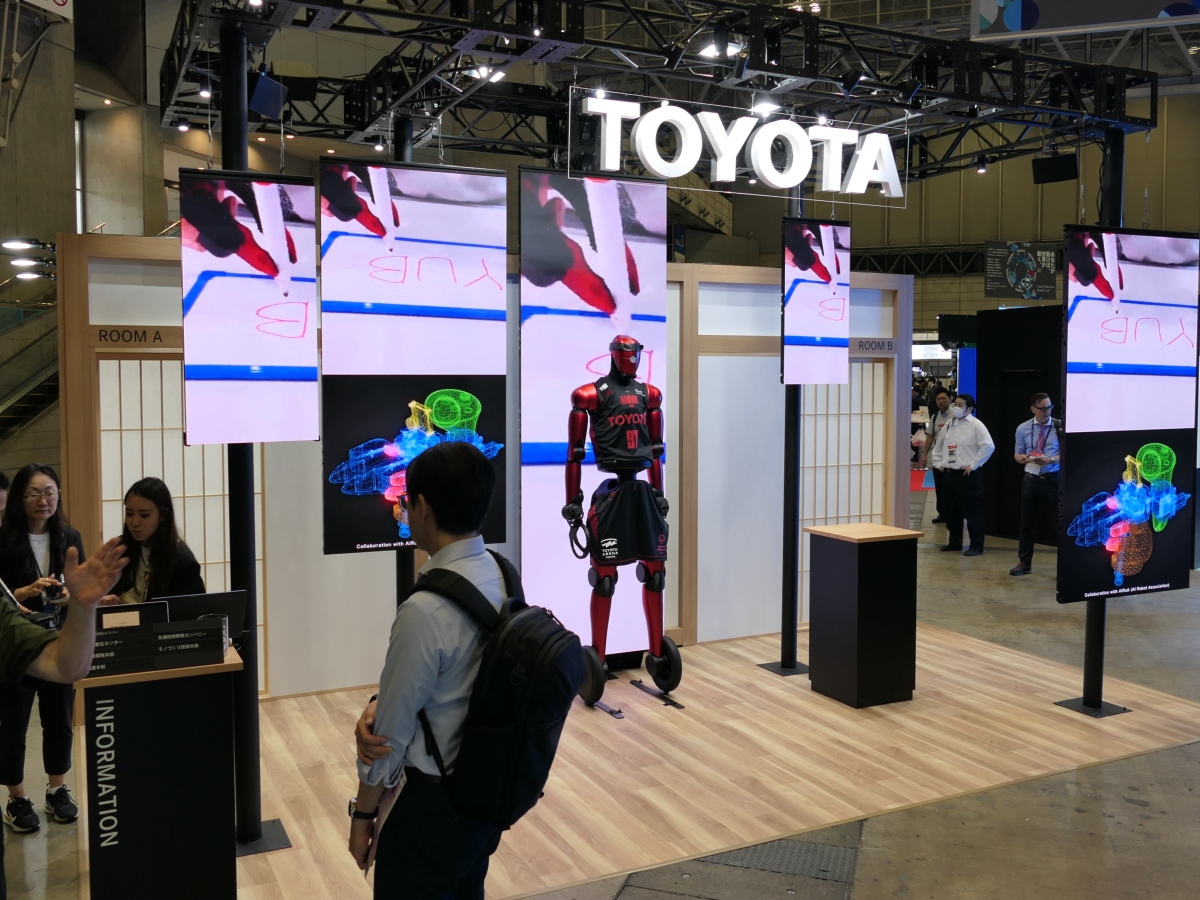
Toyota Motor's Japan Mobility Show Bizweek 2026 booth centers on its AI basketball robot CUE7, has no other ex…
Japan Mobility Show Bizweek 2026 showcased Physical AI applications, including Toyota's basketball-playing rob…
Google pitched Gemini 4 Argon as one model for robot control, simulation and training-data review, saying it s…
Researcher Sammy Azdoufal discovered Energize Lab's Eiliko robot stores 13 million conversations from 68,000 t…