AIToday

Color smart glasses poised for mass production by 2028

DIGITIMES Asia11h agoSend on LINE
Color smart glasses poised for mass production by 2028

Key takeaway

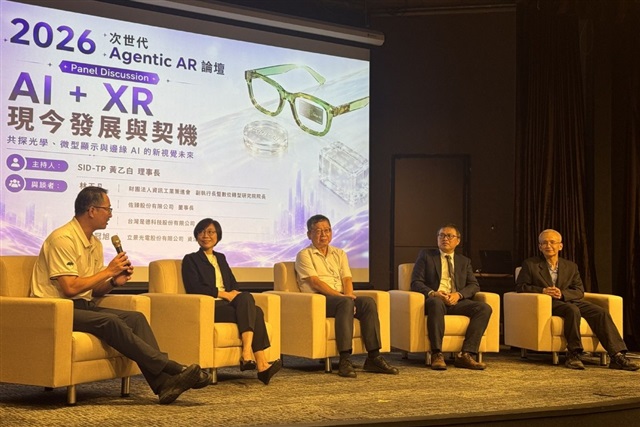
Taiwan's smart glasses industry could bring color-display smart glasses to mass production by 2028 if the supply chain overcomes current technical fragmentation, according to executives speaking at a July 24 forum. The milestone matters because color displays are essential for practical smart glasses, and Taiwan's manufacturers control much of the global supply chain for the technology.

Summaries like this, in your inbox every morning.

Sign up free →

3 Key Points

  • What happened

    Industry executives at a Taiwan forum on July 24 stated that smart glasses with full-color displays could enter mass production by 2028, contingent on Taiwan's supply chain breaking down technical silos and moving quickly.

  • Why it matters

    Smart glasses represent the next phase of wearable computing after smartphones; color displays are a critical capability for practical adoption. Taiwan's manufacturing ecosystem is central to the technology, so coordination among local suppliers could determine whether the market materializes on schedule.

  • What to watch

    The timeline is 2028; success depends on whether Taiwan's fragmented supply chain can consolidate around shared technical standards and accelerate development in the interim.

In Depth

At a forum held in Taiwan on July 24 focused on the outlook for AI+XR and the next phase of wearable computing, industry executives outlined a critical challenge and opportunity: smart glasses with full-color displays could reach mass production by 2028, but only if Taiwan's supply chain addresses a fundamental problem. The problem is technical silos—the fragmentation of expertise and manufacturing capacity across multiple companies, each controlling a piece of the supply chain without coordinating on common standards or interfaces. Executives emphasized the need for Taiwan's suppliers to "move first," suggesting competitive urgency: other regions are also pursuing smart glasses, and delay risks ceding market leadership. Color displays are the linchpin. Unlike earlier smart glasses prototypes that relied on monochrome or grayscale output, full-color smart glasses can display rich, lifelike imagery—essential for navigation, video communication, augmented reality applications, and consumer appeal. The current bottleneck is not a single unsolved problem but the integration and scaling of multiple micro-technologies: ultra-bright micro-LED or LCD displays, miniaturized optics, efficient power management, and sensor fusion. Taiwan's manufacturers have deep expertise in each domain, but the fragmentation across suppliers has slowed integration. The 2028 timeline assumes that breaking down these silos—through joint ventures, industry standards, shared prototyping, or other coordination mechanisms—can accelerate the path from laboratory to factory floor within the next four years.

Context & Analysis

Smart glasses represent a natural evolution of wearable computing beyond the smartphone era. Full-color display technology is a prerequisite for practical consumer adoption—monochrome or limited-color alternatives have constrained the category's appeal. Taiwan's role is decisive: the island's electronics ecosystem has historically driven breakthroughs in miniaturization and display manufacturing, making it the natural hub for smart glasses production. The July 24 forum discussion underscores a common challenge in hardware development: multiple suppliers specializing in narrow components (optics, micro-displays, power management, sensors) must align on common interfaces and standards to accelerate integration. Without such coordination, each company optimizes for its own roadmap, slowing the overall timeline. The 2028 target is neither imminent nor remote—it signals confidence that the technical hurdles (chiefly color micro-display brightness, power efficiency, and miniaturization) are solvable within four years if resources are properly focused.

FAQ

When could color smart glasses be mass-produced?
According to industry executives speaking at a July 24 forum, smart glasses with full-color displays could enter mass production by 2028, provided Taiwan's supply chain breaks down technical silos and moves quickly.
What is blocking progress on smart glasses right now?
The Taiwan supply chain urgently needs to break down technical silos among suppliers, according to the executives at the July 24 forum.

Get the latest Robotics news every morning

AI-summarized, only the topics you pick — one digest a day via Email, Slack, or Discord.

Free · takes 30 seconds · unsubscribe anytime

Discussion

No comments yet. Be the first to share your thoughts!

Log in to join the discussion

Related Articles

Stay ahead with AI news

Get curated AI news from 200+ sources delivered daily to your inbox. Free to use.

Get Started Free

Free · takes 30 seconds · unsubscribe anytime