What happened
Vitality and Google extended Vitality AI into the United States. The platform runs on Google Cloud and Gemini Enterprise, and internationally has delivered a 180% ROI and an estimated 6 deaths prevented.
Why it matters
Employers gain a proven tool to address low engagement and rising benefit costs.
What to watch
The 180% ROI and health outcomes come from international markets, so U.S. results may vary. Watch how many U.S. employers adopt the platform and whether the same 4% claims reduction holds.
WHO IT HITSThis directly affects U.S. benefits managers at large employers and health plan executives responsible for controlling costs while improving employee health engagement.
Summaries like this, in your inbox every morning.
The announcement marks an expansion of a partnership between Vitality and Google Cloud that has already been tested in international markets. Vitality brings a dataset of more than 2,800 unique health and behavioral dimensions, while Google supplies its Gemini models and data analytics capabilities. This combination aims to address a persistent problem: getting people to act on health advice.
Internationally, Vitality AI has produced measurable results. Members who received AI-driven recommendations were 3.3 times more likely to complete a mental wellbeing assessment, 2.7 times more likely to complete an online health review, and 1.4 times more likely to complete a colorectal cancer screening. High-BMI participants increased physical activity by more than 200%. These outcomes form the evidence base Vitality and Google are using to pitch the platform to U.S. health plans and employers.
The U.S. market presents both opportunity and challenge. Surveys cited in the announcement show that 53% of workers have delayed or avoided preventative care due to cost, and 41% struggle to navigate benefits. Vitality AI will need to demonstrate that its personalized incentives can overcome these barriers as effectively as they have elsewhere. The extent to which U.S. employers realize the claimed 180% ROI and 4.4 productive days saved per employee will depend on member engagement and how well the platform localizes its incentives for American users.
For example, today's edition would include:
AI-summarized, only the topics you pick — one digest a day via Email, Slack, or Discord.
Free · 30 seconds with Google · unsubscribe anytimeWhat is AIToday? →
Ask AI anything about this article. Q&As are published on this page for other readers too.
ServiceNow introduced AI Control Tower, Context Engine, and Shift Zero, tools for managing AI agent access, id…
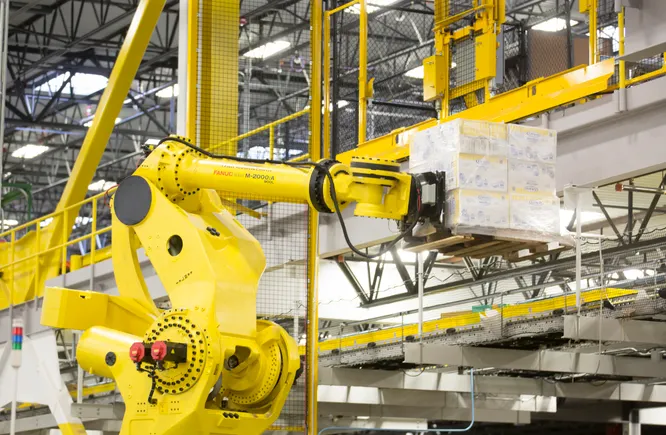
At an IMTS media panel in Chicago, Honeywell Technologies CTO Mehul Patel predicted companies will eventually…
On Sept. 1, Deere introduced JD, an AI assistant in its operations center that lets farmers ask about their ow…
Morgan Stanley analyst Matthew Cost began covering Booking Holdings with an Overweight rating and a $230 price…

CEO Jim Taiclet told a Morgan Stanley panel Lockheed will pair the F-35 and advanced missiles with cheaper aut…
Lockheed Martin completed a Riyadh summer internship for Saudi university students in AI, robotics and advance…