Microsoft, Meta, Amazon, and Alphabet are planning to invest $732.5 billion on AI infrastructure in 2026, with forecasts reaching over $1 trillion by 2027.
This boom is benefiting Vertiv and Eaton, two suppliers of essential power and cooling systems for data centers.
Vertiv, a pure-play AI infrastructure company, is growing faster (projected 40% annual EPS growth through 2028) but trades at a higher valuation, while Eaton offers more diversification across aerospace and utilities (projected 15.5% annual EPS growth) at a lower valuation multiple.
What happened
Microsoft, Meta, Amazon, and Alphabet plan to spend $732.5 billion on AI capital expenditures in 2026, with Goldman Sachs and JPMorgan Chase forecasting AI capex will exceed $1 trillion in 2027. This surge is driving growth for Vertiv and Eaton, two infrastructure suppliers; Vertiv posted net sales of $3.27 billion in Q2 (24% year-over-year growth) and raised full-year projections to $14 billion, while Eaton reported Q2 revenue of $8.5 billion (21% year-over-year growth) with data center orders surging 85%.
Why it matters
The massive infrastructure spending creates a structural demand for power, cooling, and data center hardware. Vertiv specializes purely in AI data center infrastructure—power management, chillers, and liquid cooling—while Eaton diversifies across electrical, aerospace, and utility segments. For investors, this represents a choice between a focused play on AI infrastructure growth or broader exposure to industrial cyclicals alongside the AI boom.
What to watch
Analysts project Vertiv's earnings per share to grow about 40% compounded annually through 2028, versus Eaton's projected 15.5% annual growth. Vertiv trades at about 40 times forward earnings compared to Eaton at 33 times forward earnings. Eaton is spinning off its Mobility Group with Dana Incorporated in early 2027 and will receive a $1.1 billion cash distribution before completion.
Ask the AI about this article →
The scale of AI capital expenditure announced by major hyperscalers has created a structural demand for infrastructure hardware that extends well beyond 2026. With $732.5 billion already committed for 2026 and forecasts reaching $1 trillion in 2027, the market for power, cooling, and data center systems has moved from cyclical opportunity to sustained multi-year growth engine. Both Vertiv and Eaton are positioned to benefit, but they represent different strategic bets on the same underlying trend.
Vertiv's dominance in liquid cooling and modular data center power systems makes it the pure-play choice for investors betting directly on the AI infrastructure buildout. Its partnerships with Nvidia and focus on 800V DC power architectures align it tightly with next-generation chipmaker requirements. Eaton's $9.5 billion acquisition of Boyd Thermal signals that even legacy electrical suppliers recognize cooling as a critical strategic asset, yet Eaton's broader portfolio—aerospace, utilities, and traditional electrical distribution—diversifies cash flows and reduces dependence on any single capex cycle. The valuation gap (40× forward earnings for Vertiv versus 33× for Eaton) reflects analyst consensus that Vertiv will sustain faster growth, though it also implies higher downside risk if infrastructure spending disappoints.
For example, today's edition would include:
AI-summarized, only the topics you pick — one digest a day via Email, Slack, or Discord.
Free · takes 30 seconds · unsubscribe anytimeWhat is AIToday? →
Ask AI anything about this article. Q&As are published on this page for other readers too.
Aranya Inc., a startup founded last year, launched today with $11 million in funding

CBTS Technology Solutions LLC launched Forge Agents, a platform that turns a plain-language job description in…
Phonely Ltd. launched Alma, a large language AI model built for voice agents and trained on over 10 million re…

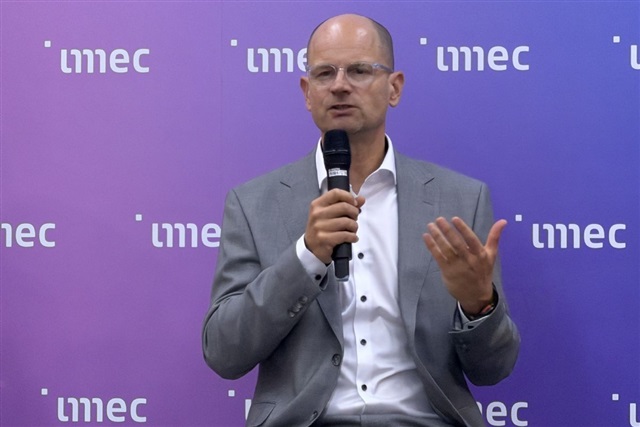
Imec CEO Patrick Vandenameele said at SEMICON Taiwan 2026 that the Belgian research center is broadening its c…
Alphabet's AI Overviews now reach over 2.5 billion monthly users through Google Search, and its ad business ge…
Sarah O’Connor's book 'We Are Not Machines' explores how mechanization and AI have transformed the workforce…