What happened
Anthropic published a September 29, 2026 review finding Z.ai's downloadable GLM-5.3 built working exploits in 50 of 410 ExploitBench trials (about 12%), versus Claude Mythos Preview's 56 of 410 (14%).
Why it matters
Anthropic says its own comparably capable Claude Mythos Preview was withheld from public release and limited to trusted defenders, so GLM-5.3 appears to put similar cyber capability in anyone's hands.
What to watch
The test was a simulation with no outside system access, which Anthropic itself says does not fully reproduce real-world behavior, so the practical risk hinges on how such models are used.
WHO IT HITSSecurity teams and vulnerability researchers now face a downloadable model that Anthropic says can find and weaponize flaws autonomously, while the same capability is also available to defenders patching software.
Summaries like this, in your inbox every morning.
Anthropic's review rests on a comparison the company has been drawing for a while: Claude Mythos Preview, which Anthropic describes as the first AI model able to autonomously build advanced end-to-end cyber exploits, was never released publicly. Instead it was restricted to trusted cyber defenders and used through programs like Project Glasswing to find vulnerabilities in important software. GLM-5.3, by contrast, is an open-weight model anyone can download.
The two benchmarks in the review put the gap between them in narrow terms. ExploitBench, which tests whether a model can use a known vulnerability in Google Chrome's V8 JavaScript engine, produced working exploits in roughly 12% of GLM-5.3's attempts against 14% for Claude Mythos Preview. Anthropic's own benchmark of open-source software used by Google's OSS-Fuzz found control-flow-hijack success rates of 4% and 6%. Kimi K3, DeepSeek-V4.1-Flash, and the older Claude Opus 4.6 and GLM-5.2 all scored 0%.
Anthropic also reports that a smaller variant, GLM-5.3-Flash, chained two known vulnerabilities — including the public Chrome flaw CVE-2026-11645 — into an attack that bypassed pointer authentication on ARM64, with researchers spending about 20 minutes and the model running for roughly 8 hours. Separately, Anthropic says GLM-5.3's built-in refusal mechanism was relatively easy to circumvent, and that Claude models with safeguards active did not carry out harmful operations in the same simulation.
The stakes appear to hinge on how much weight to give a controlled test. Anthropic acknowledges the trials ran in a simulated environment with no connection to outside systems and do not fully reproduce real-world behavior. Its own conclusion is nonetheless a policy one: that governments should thoroughly safety-test high-performance AI models — while noting the same capabilities can serve defenders finding and fixing flaws.
Pick your industry and the AI tools you use, and get news related to your work every day.
Free · 30 seconds with Google · unsubscribe anytimeWhat is AIToday? →
Ask AI anything about this article. The AI reads this article, earlier AIToday articles, and Wikipedia, and cites its sources. Q&As are published on this page for other readers too.
DeepSeek is bringing more of the software it uses to develop its AI models to Huawei Technologies' Ascend 950…

Nvidia released the Open Agent Safety Platform on September 28, days after CEO Jensen Huang called warnings fr…
OpenAI launched Dots — agents on GPT-6 Astra, each running on its own cloud computer and connecting to 4,000+…

OpenAI released Dots, an always-on agent running autonomously in the cloud on GPT-6 Astra, connecting to over…
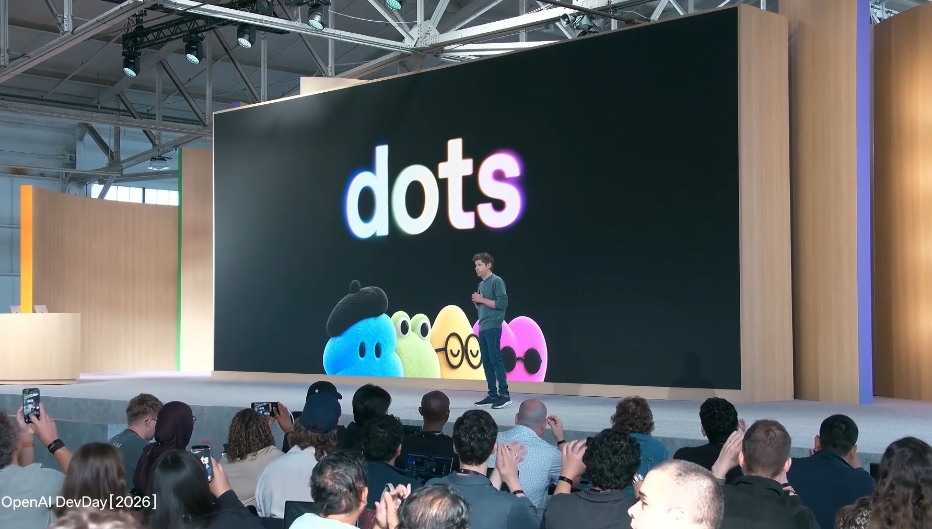
OpenAI announced dots, an always-on agent running GPT-6 Astra with its own cloud computer and browser, able to…
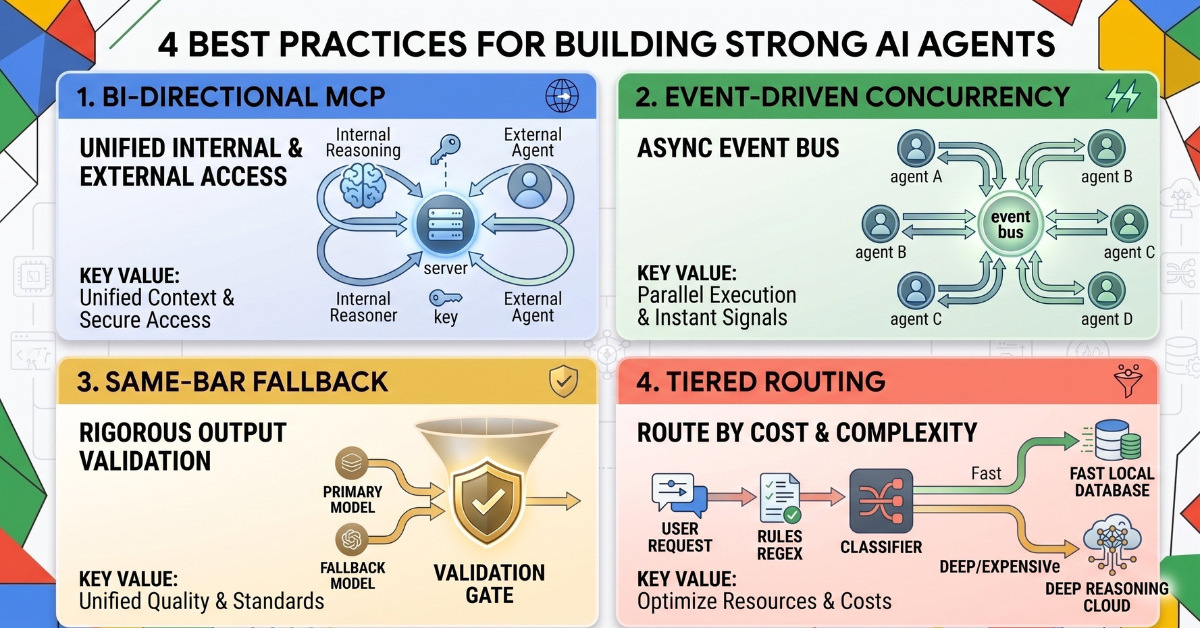
Google published four design patterns from the top entries of its Google for Startups AI Agents Challenge, jud…