What happened
Tether AI Research released BotPsy, a 0.8B-parameter model built on Qwen3.5-0.8B for on-device tool use, with open weights under Apache 2.0. It roughly doubled its base model's agentic scores, e.g. BFCL v4 from 23.4 to 44.0.
Why it matters
The 0.8B model matched or beat every model of up to 1.2B parameters tested on five of six agentic benchmarks, suggesting capable tool-using assistants may run locally on devices rather than via frontier cloud models.
What to watch
BotPsy will be available in three precisions (bf16, Q8, Q4) as Hugging Face safetensors and as GGUF files for the QVAC SDK and llama.cpp.
WHO IT HITSThis lands on developers building privacy-sensitive on-device assistants and on organizations that want to avoid cloud API costs and provider lock-in, though the model is not intended for high-stakes use.
Summaries like this, every morning.
BotPsy is Tether AI Research's answer to the cost and control problems of frontier cloud models. The Hugging Face blog post argues that frontier cloud LLMs carry high operational costs that can fluctuate unexpectedly, and that relying on third-party providers introduces vulnerabilities since access can be modified, denied, or deprecated at any time. Proprietary models also offer limited customization and pose risks to privacy and data control. The release targets that gap with a small model that is cheap to run and keeps user data on-device.
To build it, Tether started from Qwen3.5-0.8B and applied a four-stage training recipe. Supervised fine-tuning on tool-use conversations boosted tool use but pushed knowledge and instruction following below the base model. A distillation stage with three specialist Qwen3.5-4B teachers recovered those capabilities, and two reinforcement-learning rounds added further gains. The result is a model that roughly doubles its base's agentic scores and leads five of six tool-use benchmarks against models up to 1.2B parameters, including Qwen3.5-2B-Think, which is 2.5× its size.
The blog post is careful about limits. BotPsy still makes mistakes and is not intended for safety-critical or high-stakes automated decisions, or for applications involving money, personal information, health, and other sensitive topics. It is best suited to tasks of low to medium difficulty and is primarily trained and tested in English. Future development by Tether AI Research will focus on expanding on-device agentic capabilities to more hardware and local services, including decentralized peer-to-peer queries and local fine-tuning.
Pick your industry and the AI tools you use, and get news related to your work every day.
Free · 30 seconds with Google · unsubscribe anytimeWhat is AIToday? →
Ask AI anything about this article. The AI reads this article, earlier AIToday articles, and Wikipedia, and cites its sources. Q&As are published on this page for other readers too.
In Anthropic's IPO roadshow video, co-founder Tom Brown said Claude trains and serves across AWS Trainium, Goo…

UC Berkeley and NVIDIA released open-source tools, including Graph-as-Policy and the VABAR benchmark of six in…
Databricks said Genie One now combines Genie Search across tools like Google Drive, Jira and Confluence, in-co…
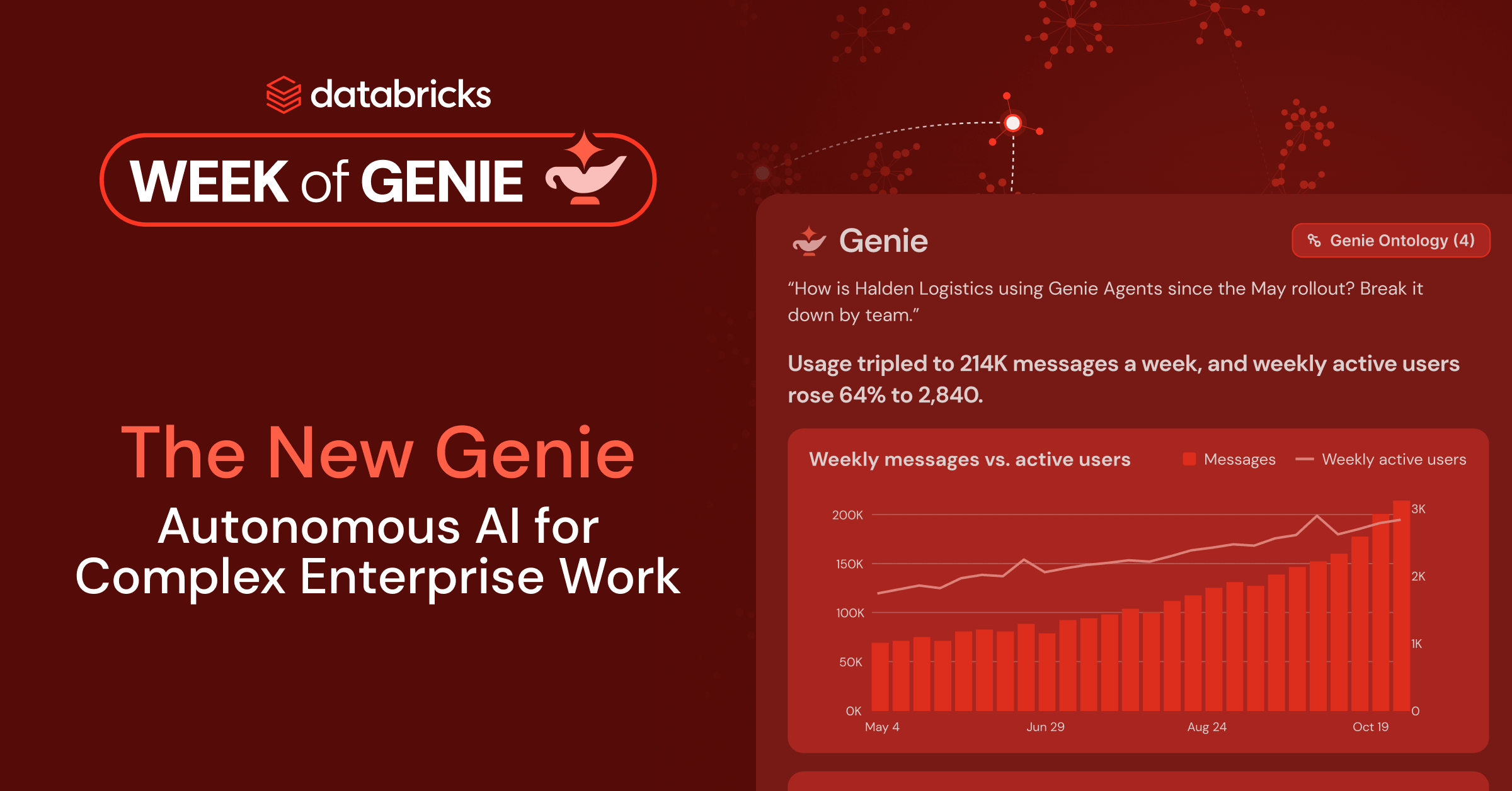
Databricks introduced the new Genie, an autonomous AI coworker that stays on the job continuously, tracking pr…
Google DeepMind unveiled AlphaGenome 2, trained on more than 100 million individual cell profiles across 68 ti…

Plurai raised $13 million in seed funding led by Team8, with U&I, Velocity and Mercer participating, to build…