What happened
GUGA said on October 1 it will significantly revise the syllabus for its 生成AIパスポート certification, applying it from the February 2027 exam, and began pre-orders that day for an official 2027-syllabus textbook.
Why it matters
The revision adds AI agents, contextual engineering and prompt injection to the tested material and shifts the focus toward risk prevention, AI ethics and governance, likely reflecting how employers expect staff to handle AI safely.
What to watch
Holders of the qualification can now apply for a 生成AIパスポート 資格更新テスト to prove their AI literacy is current, so the test's uptake may show whether certified staff keep pace with the new requirements.
WHO IT HITSHR and training teams that put staff through the 生成AIパスポート certification will need to plan for a new syllabus from the February 2027 exam, while existing certificate holders face a renewal test if they want to show updated AI literacy.
Summaries like this, in your inbox every morning.
The revision comes as generative AI spreads through both individual and organizational use, and as new risks surface — inappropriate use of generated content, over-reliance on AI, and information leaks through shadow AI, or unsanctioned AI tools used inside a company. GUGA frames the answer as human-centered: users should build ethics around how they work with AI, evaluate and verify what it produces, and take final responsibility for decisions.
The syllabus changes follow that logic. A section on AI agents has been expanded and the chapter structure reorganized, with contextual engineering and prompt injection added next to updated material on RAG (a method that lets AI pull in external documents) and MCP (a protocol for connecting AI to tools). What was previously taught as "information literacy, basic principles and AI social principles" is renamed "generative AI risk prevention, AI ethics and governance", with new items on typical risks, the mindset of user judgment and responsibility, and how to build organizational AI governance. Coverage also grows from basic uses to practical methods by job function — marketing, creative production, data analysis, app development — and by industry, through to evaluating and verifying AI output.
Whether the overhaul lands as intended may hinge on whether employers and certified staff actually follow the new material: the renewal test gives existing holders a path to show their literacy is current, but its uptake is the open question. For training and HR teams, the practical date to note is the February 2027 exam.
Pick your industry and the AI tools you use, and get news related to your work every day.
Free · 30 seconds with Google · unsubscribe anytimeWhat is AIToday? →
Ask AI anything about this article. The AI reads this article, earlier AIToday articles, and Wikipedia, and cites its sources. Q&As are published on this page for other readers too.
HENNGE said on October 1 it set up HENNGE AI, a subsidiary with only two directors and no other employees, whe…
Pony.ai and Verne began fully driverless Robotaxi test rides with passengers on public roads in Zagreb, along…

Solomon Asamoah laid out a framework for Ghana's AI infrastructure, arguing data-centre approvals should start…

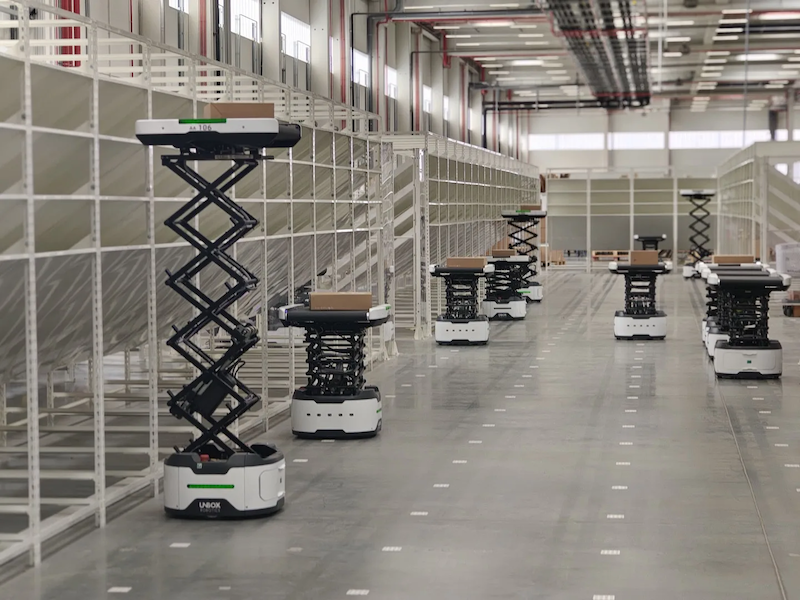
Writing for Robotics and Automation News, Unbox Robotics CEO Pramod Ghadge said reverse logistics needs AI dec…
AMD announced AMD Ross, an agentic AI assistant for embedded design and development that runs across the AMD E…

DataSnipper CEO Vidya Peters said audit faces a staffing crisis, with two to two and a half times as many jobs…