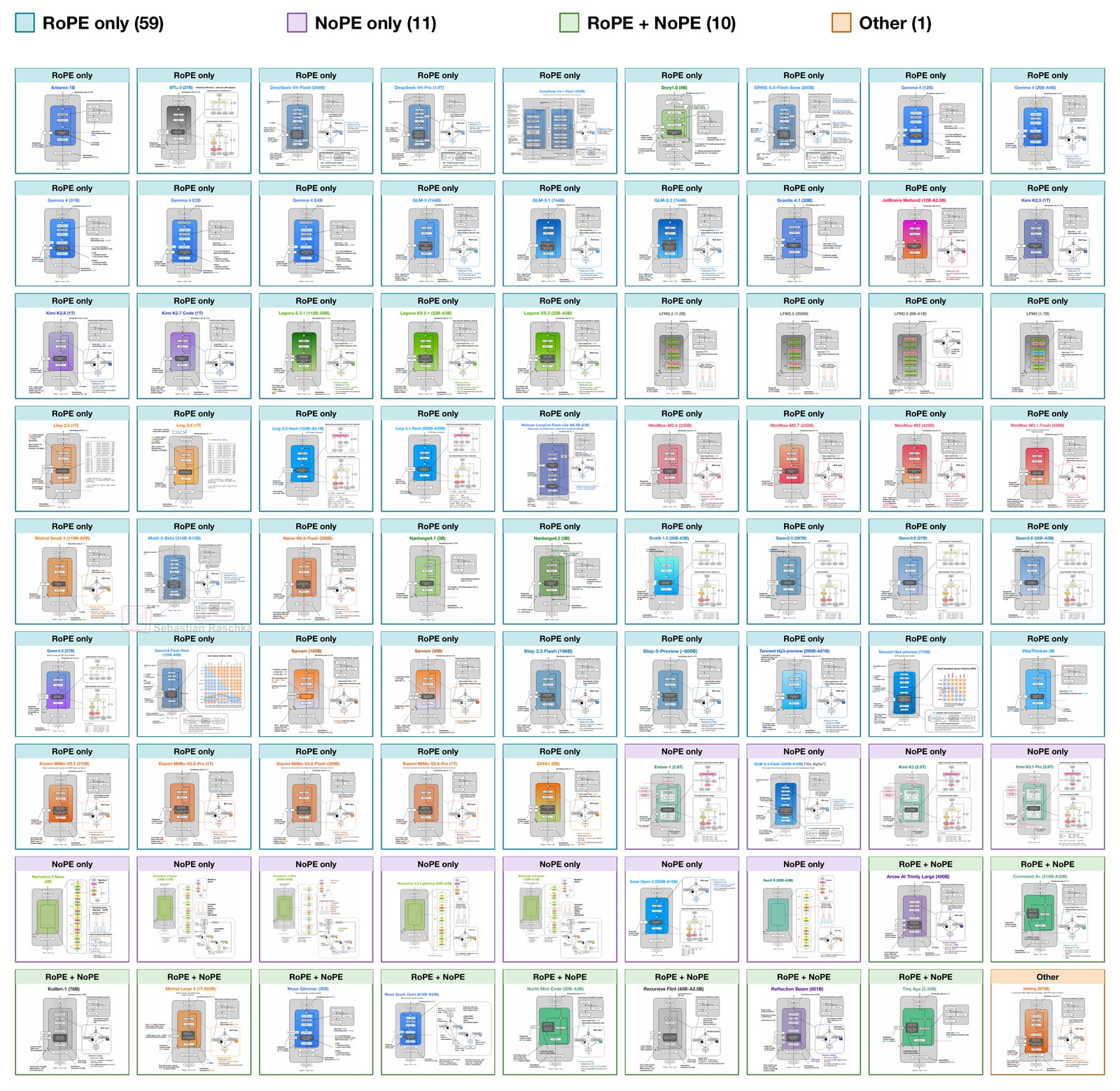
What happened
Sebastian Raschka published a technical walkthrough of positional embeddings in LLMs, covering learned absolute vectors in GPT-2, fixed sine-cosine encodings in the original transformer, and RoPE, which rotates query and key vectors inside attention in models such as MiniMax-M3.
Why it matters
The guide lays out why explicit position signals are needed even with causal masks, letting readers trace how recent open-weight models differ in where and how they inject that information.
Summaries like this, every morning.
Raschka notes that after years of reader requests for a tutorial on relative positional embeddings, he revisited an old draft to produce this walkthrough, which also serves as a foundation for future articles.
The lineage runs from GPT-2's learned absolute position table, which is capped at 1,024 positions and becomes uneconomical to extend to a 100k context, to the fixed sine-cosine encodings of the original 2017 transformer, and then to RoPE from the 2021 RoFormer paper. Raschka highlights that the original transformer's sinusoidal design was motivated by a property where a fixed offset corresponds to a linear rotation, which he suggests may make it easier for attention to learn relative relationships.
MiniMax-M3 applies RoPE inside attention with no separate position vector added to the token embedding, and a partial RoPE variant is to be covered later. The reference to a gallery of 2026 open-weight architectures, grouped by positional encoding, indicates the piece is intended as a map of current practice as well as a tutorial.
Pick your industry and the AI tools you use, and get news related to your work every day.
Free · 30 seconds with Google · unsubscribe anytimeWhat is AIToday? →
Ask AI anything about this article. The AI reads this article, earlier AIToday articles, and Wikipedia, and cites its sources. Q&As are published on this page for other readers too.
Microsoft hosts Ignite from Nov

On November 12, Google launched Gemini 4 Hydrogen, aimed at everyday coding and multi-step agent tasks, and it…

Meituan released the weights for LongCat-2.5, a 1.6-trillion-parameter agent model trained on Chinese hardware…

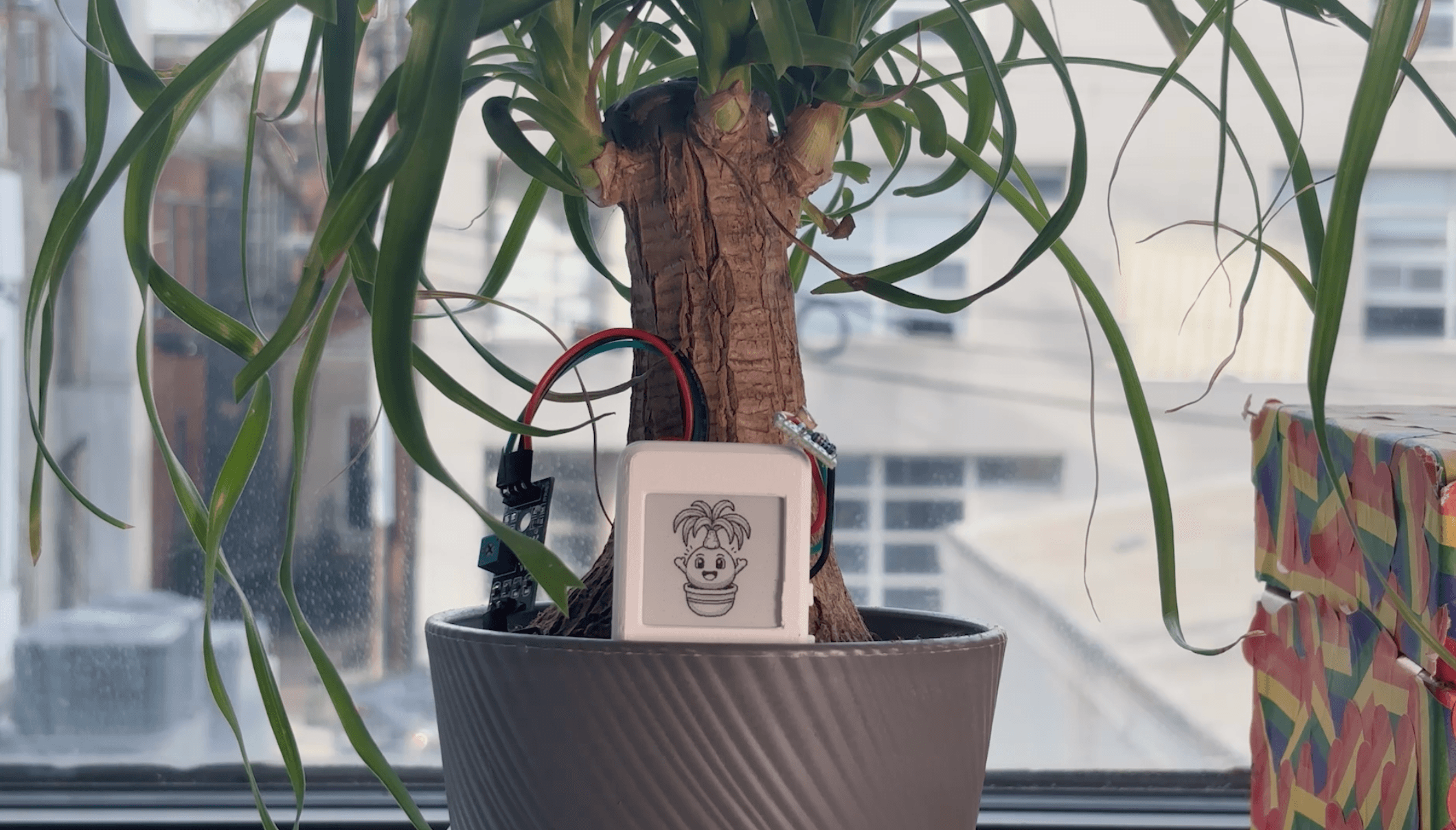
Daehwa Kim unveiled OATs, $20 E Ink modules that use sensors and Google Gemini's Nano Banana to give objects l…
Nvidia reports Tuesday, the Fed releases October minutes Wednesday, and Anthropic expects to price its IPO Wed…
In a November 9 note, Evercore ISI's Amit Daryanani said Apple's integration across apps, personal data, and A…