What happened
The team launched ViiTor Live, an online tool that transcribes audio/video files up to 500MB, supports 100+ languages, auto-labels speakers, and exports to DOCX, TXT or SRT.
Why it matters
It lets users edit the audio by editing the transcribed text, turning recording cleanup into a document-style workflow rather than waveform surgery, which suits podcasts, lectures and interviews.
Summaries like this, every morning.
The developers built ViiTor Live because saving a recording and being able to find a specific remark in it are different problems. Their list of frustrations is familiar to anyone who works with long interviews or meetings: locating the minute and second of a quote, telling speakers apart in a group conversation, and getting names and technical terms right. The tool addresses each with speaker labeling that can be set to an expected number of participants, a hot-word list for names and jargon, and timestamps that link each line back to the original audio. A summary feature is meant to give an overview before the user drills into details.
The editing feature goes a step further. Instead of opening waveform software to cut unwanted parts, users delete the corresponding sentences in the transcript, and the audio is edited to match. Corrected passages can be previewed with AI-generated speech. The developers note that this is designed for sentence-level deletion and replacement, not multitrack production or frame-level video editing. Export options cover DOCX for meeting minutes or article drafts, TXT for search and storage, and SRT for video subtitles, so the transcript can move into the next task without re-entering data elsewhere.
The team is upfront about limits. Because transcription runs on a server, they advise checking an organization's security policy before uploading highly confidential material. Recognition quality varies with recording conditions, and hot words improve but do not guarantee accuracy, so important figures and contract details should be checked against the original audio. They also list areas for improvement, including proper-noun recognition, speaker identification and subtitle export, and invite users to report errors or suggest use cases.
Pick your industry and the AI tools you use, and get news related to your work every day.
Free · 30 seconds with Google · unsubscribe anytimeWhat is AIToday? →
Ask AI anything about this article. The AI reads this article, earlier AIToday articles, and Wikipedia, and cites its sources. Q&As are published on this page for other readers too.
A comparison of 11 singing photo generators picked freebeat as best overall, citing Photo Karaoke's staged cli…
OLA PARTY JAPAN's Yoitoki made its AI matchmaker voice interview available to all users from October 4, with r…

Google DeepMind announced Genie 4 on October 27, 2026, a real-time world model that natively generates ambient…

Google DeepMind announced Genie 4 on October 27, 2026 — a world model that builds scenes you can walk through…

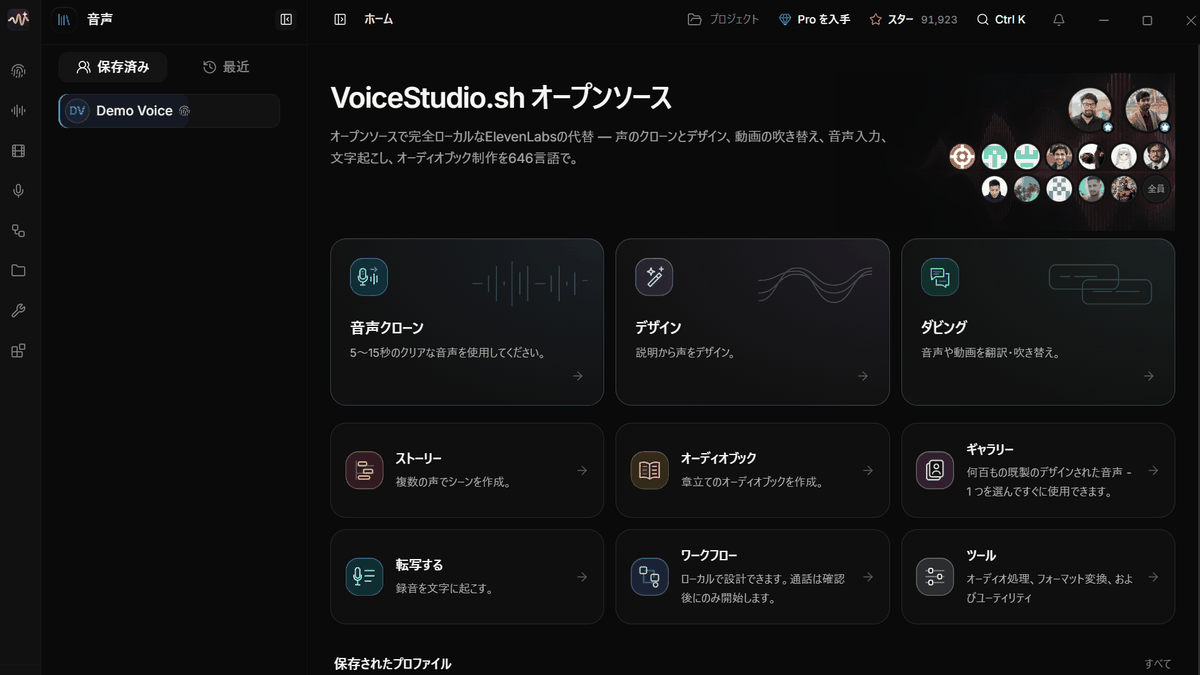
VoiceStudio, an open-source ElevenLabs alternative, runs on Windows with OmniVoice as its default engine, cove…
Sean Hollister paid $50 for a Waveshare ESP32-S3 1.75C, a Meta-sanctioned Muse Gadget devkit, then used Claude…