
What happened
A Zenn essay proposes Consumer Harness, a framework connecting human desires and states to autonomous AI production, covering value discovery, purpose formation, and delivery.
Why it matters
If AI can generate vast output autonomously, the constraint becomes human time, attention and understanding, so selecting and delivering value may matter more than producing it.
Summaries like this, every morning.
The essay starts from a question that recurs whenever AI capabilities improve: which abilities remain uniquely human? It notes that as AI acquires skills once considered human-specific, the discussion simply moves to another skill, and asks whether humans need to remain the primary producers at all. If production exists to satisfy human desires, the author argues, humans need not be the ones producing, provided AI can autonomously handle the research, design, development and production required.
The proposed structure, Consumer Harness, is defined as connecting the desires, preferences and states of consumers with the production possibilities of AI producers. The essay stresses it is not merely an interface for relaying human requests: because people cannot always form concrete requests for things that do not yet exist, the framework must also explore unrecognized value and turn it into producible purposes. It contrasts this with Agent Harness, which centers on how to reach a given goal state, while Consumer Harness centers on which goal states are worth realizing.
The essay sketches functions such as state recognition, preference modeling, value exploration, purpose formation, production selection, delivery, evaluation and adaptation, along with problem areas from desire recognition to self-determination and competition over resources. It also distinguishes naturally changing preferences from manipulating them, arguing that a Consumer Harness needs control structures preserving consumers' right to self-determination. Lengthy design tables list options such as explicit requests versus behavioral observation, and prior approval versus conditional delegation, with the appropriate level of autonomy varying by domain. It concludes by framing the shift as moving from an era of deciding what to have AI do toward designing structures that convert AI-producible output into human value, while cautioning that access to production means, benefit distribution and institutional design will shape whether this actually serves people.
Pick your industry and the AI tools you use, and get news related to your work every day.
Free · 30 seconds with Google · unsubscribe anytimeWhat is AIToday? →
Ask AI anything about this article. The AI reads this article, earlier AIToday articles, and Wikipedia, and cites its sources. Q&As are published on this page for other readers too.
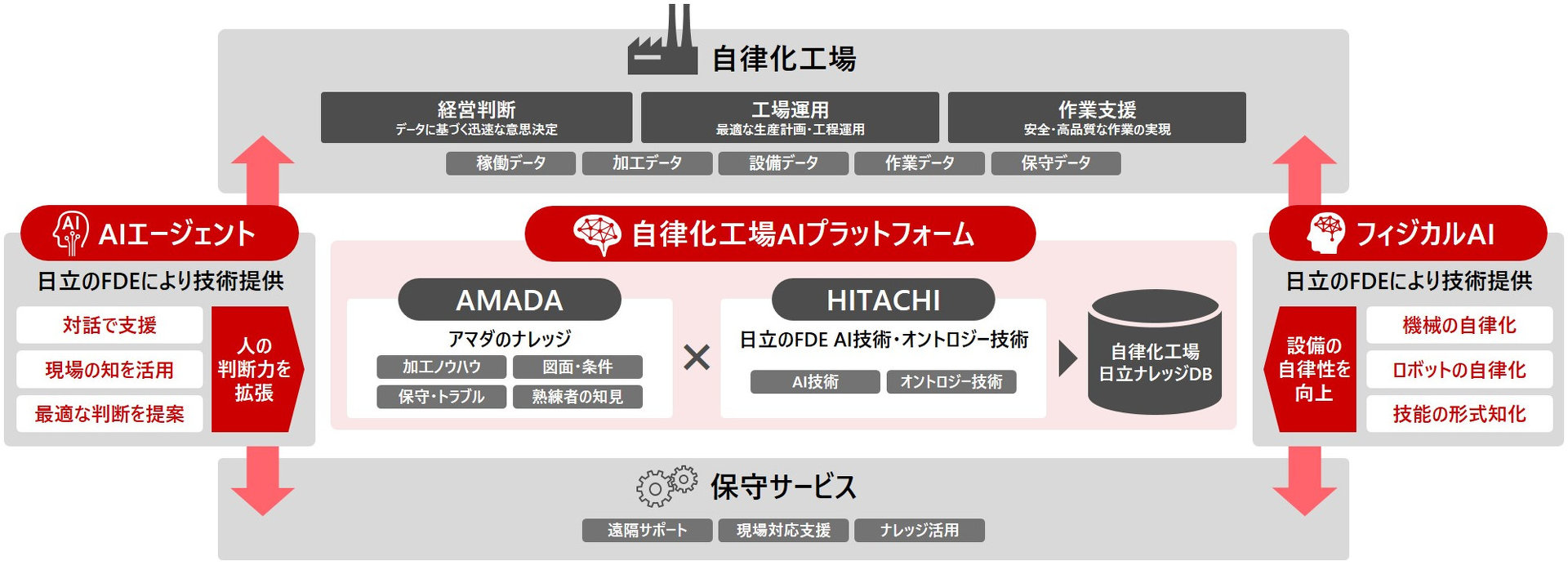
Amada and Hitachi ran an AI-agent PoC from August and October 2026 on an Amada customer factory's operating da…
Google renamed Gemini's paid-plan "Spark" feature to "Tasks" and opened it to free personal Google accounts

Visa's Abhijeet Ramesh said stronger AI models and cheaper AI tokens now let agents complete purchases, and Vi…

A developer who started LLM product work last autumn says prompt engineering and RAG went fine, but unexpected…

Waystar integrated into Google Cloud's Gemini for healthcare, and Oracle debuted AI agents for clinical trials

Xpeng unveiled humanoids, cars and drones built on a single shared AI brain, a direct challenge to Tesla