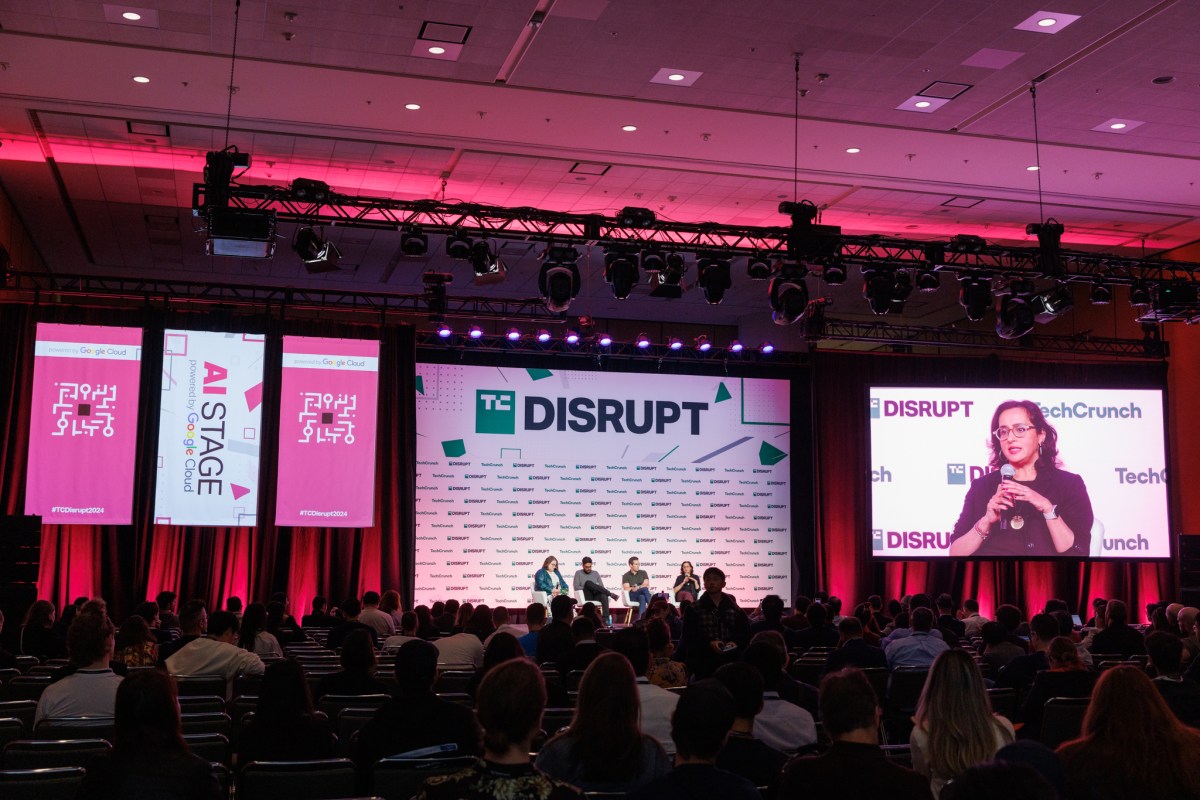
What happened
TechCrunch announced four Disrupt 2026 sessions on AI model choices, with speakers from Together AI, Pathway, Oumi, Nvidia and Ricursive Intelligence.
Why it matters
The agenda treats model selection as an ongoing decision, not a one-time architecture call, so cost, control and flexibility stay open questions.
What to watch
Whether multi-model and open-weight approaches beat frontier APIs hinges on how each startup balances cost against flexibility. Disrupt runs October 13-15 at Moscone West in San Francisco.
WHO IT HITSFounders and engineering leads at AI startups weighing model and infrastructure decisions, plus the investors backing them, are the audience these sessions are aimed at. Enterprises comparing frontier APIs with customized open-weight models face the same trade-offs the agenda describes.
Summaries like this, in your inbox every morning.
TechCrunch frames the open-versus-closed model question as something startups no longer settle once. Open models keep improving, frontier APIs keep advancing, and some companies now build products that draw on several models at once, which the article says leaves founders with more decisions about where to spend, what to own, and how much flexibility to preserve.
The four Disrupt sessions are organized along that stack rather than around a single answer. One panel, with CapitalG, Together AI and Pathway, looks at multi-model products. A second, with Oumi's Manos Koukoumidis, asks how much of the AI stack a company should own, weighing frontier APIs against customized open weights and outright ownership. A third, with Nvidia's Nader Khalil and Sydney Sykes, revisits the open versus proprietary trade-offs, and a fourth, with Ricursive Intelligence's Anna Goldie and Azalia Mirhoseini, moves down to the hardware, where AI is beginning to help design chips.
The underlying tension the article draws out is that owning more of the stack can buy control and differentiation, but it may also demand more time, talent and resources than relying on existing models. Which way that trade-off breaks for any given startup appears to hinge on how much flexibility it wants to keep as the technology changes.
Pick your industry and the AI tools you use, and get news related to your work every day.
Free · 30 seconds with Google · unsubscribe anytimeWhat is AIToday? →
Ask AI anything about this article. The AI reads this article, earlier AIToday articles, and Wikipedia, and cites its sources. Q&As are published on this page for other readers too.
Ghost AI raised $11 million, led by Andreessen Horowitz with Abstract, Audacious Ventures, Nova and SV Angel…

Moonshot AI closed its final private round at about a $50 billion valuation and is aiming for a Hong Kong IPO…
OpenAI told Fortune it is piloting a 'mission interview' for candidates on certain teams, starting with market…
Reactor said it added Nvidia's venture capital arm and Sapphire Ventures to its cap table, bringing its total…
OpenAI will roll out invisible text watermarks to all ChatGPT and Codex plan users in the EU within weeks, and…

A Stanford, Carnegie Mellon, UC Berkeley, and Microsoft Research team ran 6,800+ math, coding, and science tas…