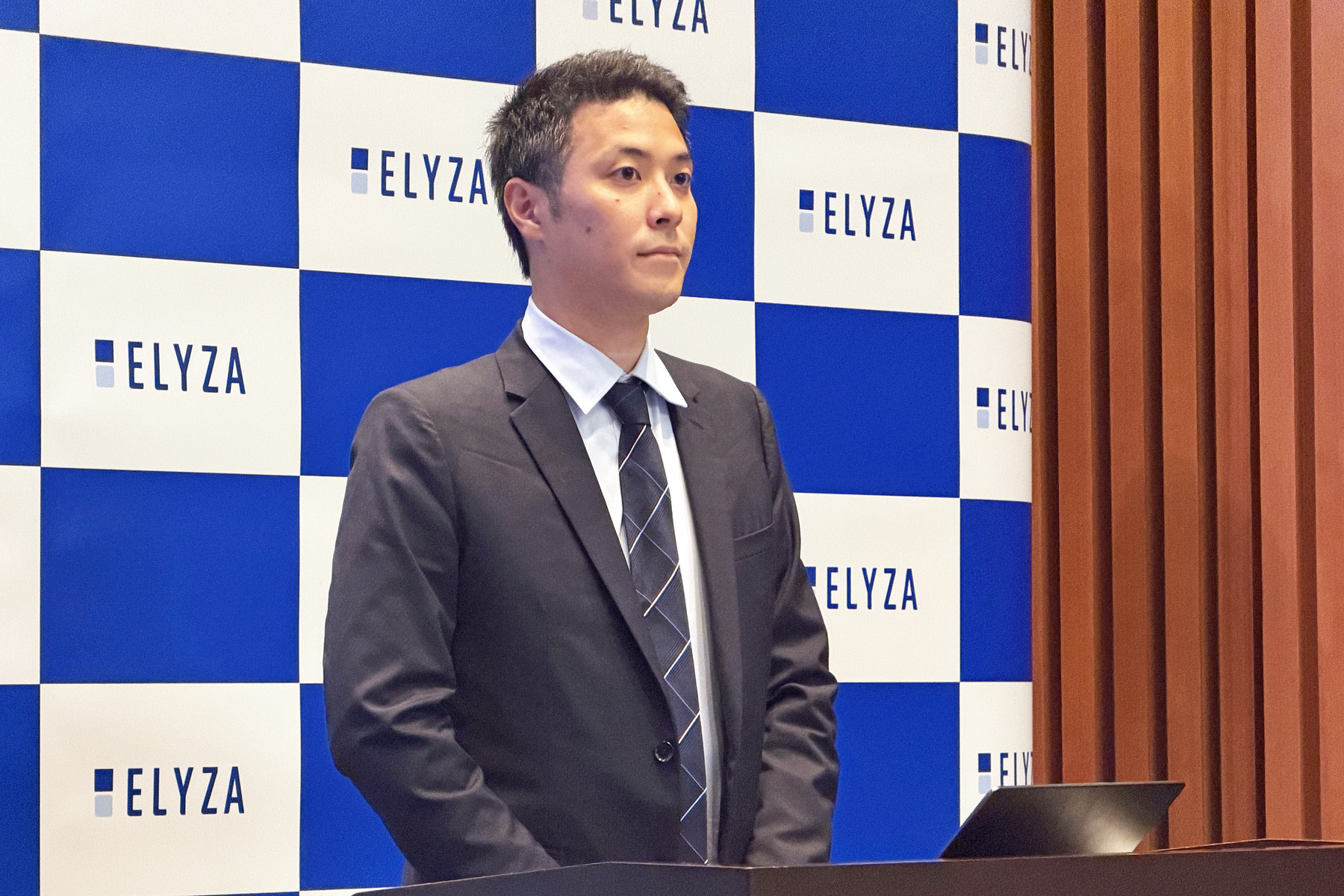
What happened
ELYZA said it is launching "ELYZA RSI Research", and that for LLMs of 100 billion parameters or fewer it has reached stage 1 of AI-driven AI development, with harness improvement almost fully automated at stage 3.
Why it matters
If improvement loops run almost without human hands at that scale, the pace at which frontier models are released could rise, though this is still a research-stage claim.
What to watch
Its benchmark work sits only at stage 2, semi-automated, and full automation of the loop remains stage 4, so the test is whether ELYZA can push evaluation machinery further.
WHO IT HITSEnterprise and research teams watching who can automate AI development will read this as a claim about speed, while safety reviewers will focus on the isolation and shutdown measures ELYZA says it uses in research.
Summaries like this, in your inbox every morning.
ELYZA is an AI company spun out of the University of Tokyo's Matsuo Lab, working on large language models and their deployment. It joined the KDDI group in April 2024, a move it frames as giving it GPU resources to pursue research and product releases at scale.
In its own account of the field, LLM accuracy has risen fast, simple tasks plateaued about two years ago, and the current front line is science use and complex multi-day tasks. It also points to a wave of open models, largely from China, arriving two to three months after the frontier. Against that backdrop, it describes recursive self-improvement as already beginning at companies such as Anthropic and OpenAI, and lays out four stages, from humans doing everything to an improvement loop that runs entirely on AI.
The stakes hinge on how quickly the evaluation side can move. ELYZA has full automation in the harness but only semi-automation in evaluation, and it says full autonomy is stage 4. Its planned extension from LLMs into vision-language models and vision-language-action models for robots is likely to be judged on the same safety conditions, which its executives described as a matter of isolation and the ability to stop the system.
Pick your industry and the AI tools you use, and get news related to your work every day.
Free · 30 seconds with Google · unsubscribe anytimeWhat is AIToday? →
Ask AI anything about this article. The AI reads this article, earlier AIToday articles, and Wikipedia, and cites its sources. Q&As are published on this page for other readers too.
Meta will link Naver Map's walking-navigation feature to its Ray-Ban Meta and Oakley Meta AI glasses in 2026…

Anthropic's new study says that if robot prices decline along past trends, it will take 40 years for robots to…
Flow Engineering announced a $50 million Series B at a $750 million valuation, co-led by Antonio Gracias and G…
Ramp economist Ara Kharazian says US firms are spending less on AI even as usage rose about 50 percent from Ju…

Microsoft AI launched MAI-Transcribe-2-Streaming, which Microsoft says ranks first for accuracy on Artificial…

NTT AI-CIX began offering BUNTANT on October 1