
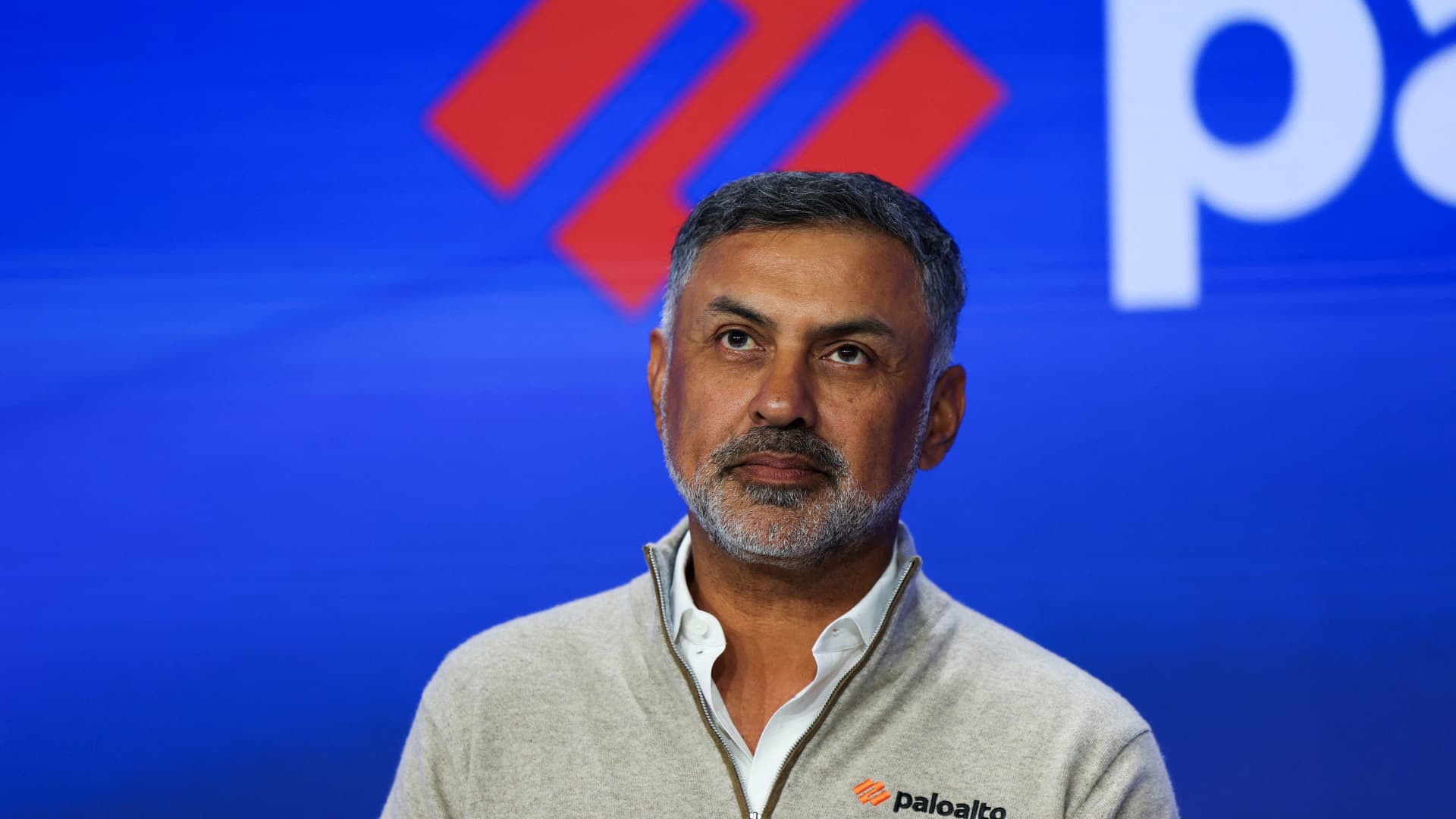
Palo Alto Networks is advancing AI-powered security through new partnerships with IBM and Red Hat while CEO Nikesh Arora publicly advocates for lower AI token costs, a shift that underscores the economic barriers to enterprise AI adoption. The company is betting on platformized, AI-centric security to win larger enterprise deals, though rising AI infrastructure and R&D costs present a margin risk if revenue growth decelerates.
Summaries like this, in your inbox every morning.
Sign up free →What happened
Palo Alto Networks has announced expanded AI-driven cybersecurity initiatives, including new collaborations with IBM, Red Hat, and Tenzai, plus the launch of its Idira identity security platform. CEO Nikesh Arora has publicly called for sharply lower AI token costs, underscoring the economic hurdles to enterprise-scale AI adoption.
Why it matters
The company is betting that AI-centric, platformized cybersecurity can capture a larger share of enterprise security budgets despite high competition and heavy spending needs. Stronger integration and intelligence from partnerships like the IBM and Red Hat collaboration could help Palo Alto Networks win larger multi-product deals. However, investors face a central risk: high AI and integration spending could pressure margins if revenue growth slows.
What to watch
Palo Alto Networks' narrative projects $17.9 billion(約2.9兆円) revenue and $2.6 billion(約4200億円) earnings by 2029, requiring 19.0% yearly revenue growth and an earnings increase of about $1.8 billion(約2900億円) from $842.9 million(約1300億円) today. Some of the lowest analysts were already assuming revenue of about US$16.0 billion(約2.6兆円) and shrinking margins by 2029.
Palo Alto Networks is navigating a pivotal transition in enterprise cybersecurity: the shift toward AI-powered, consolidated platforms rather than point solutions. The body indicates that the company's partnership strategy with IBM and Red Hat is directly tied to this platformization narrative—stronger integration and AI-driven intelligence are intended to make Palo Alto Networks' offerings more essential as customers consolidate tools. CEO Arora's public push for lower AI token costs signals that the company views cost reduction as critical to the viability of its AI security roadmap, not merely a rhetorical gesture.
However, the article identifies a tension at the heart of the investment case. To achieve the projected $17.9 billion(約2.9兆円) revenue and $2.6 billion(約4200億円) earnings by 2029, Palo Alto Networks must sustain 19.0% annual revenue growth while increasing earnings by roughly $1.8 billion(約2900億円) from today's $842.9 million(約1300億円) baseline. The body notes that high AI and integration R&D spending could pressure margins if revenue growth slows—a risk that becomes more acute if enterprises are slower to consolidate budgets or if competitors match Palo Alto's platform breadth. Some analysts already assume more conservative outcomes, including revenue of about US$16.0 billion(約2.6兆円) and shrinking margins by 2029, reflecting skepticism about AI security adoption and platformization velocity.
The timing of the cost advocacy and partnership expansion suggests Palo Alto is attempting to address both the immediate economic barrier (token cost) and the structural barrier (customer lock-in through integration). Whether these moves materially improve the margin profile or merely manage investor expectations remains the central question for stakeholders.
No comments yet. Be the first to share your thoughts!
Log in to join the discussion




Get curated AI news from 200+ sources delivered daily to your inbox. Free to use.
Get Started FreeFree · takes 30 seconds · unsubscribe anytime
1 minute a day. The AI essentials.
200+ sources · Email / LINE / Slack
