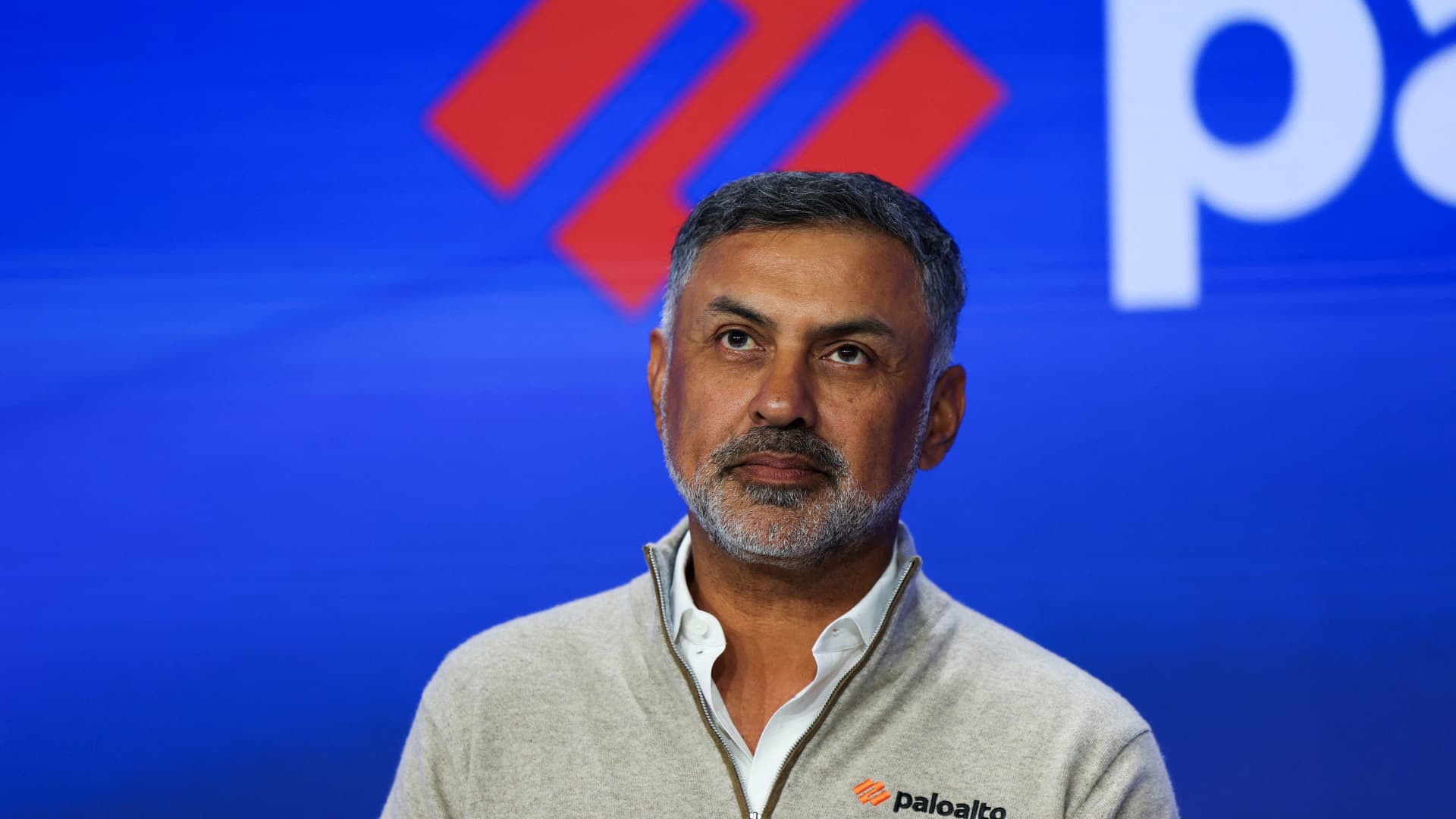
Palo Alto Networks CEO Nikesh Arora warned that token costs—the price charged per unit of AI processing—must drop as much as 90% to unlock widespread business adoption of AI tools. He says the current pricing is a major barrier preventing enterprises from implementing AI at scale, echoing concerns from other executives about token economics becoming a fundamental bottleneck in the AI market.
Summaries like this, in your inbox every morning.
Sign up free →What happened
Palo Alto Networks CEO Nikesh Arora told CNBC that token costs need to fall as much as 90% to promote large-scale AI adoption. He said token efficiency needs to drop to 20% over the next 12 months, and 90% by the following year, after OpenAI's latest model achieved 54% better token efficiency for agentic coding.
Why it matters
High token costs have emerged as a major pain point for businesses and are creating barriers to widespread AI adoption. The current pricing makes AI tools increasingly difficult for enterprises to implement. Arora is among a growing group of executives, including Palantir's CEO, warning that token pricing is preventing many businesses from deploying AI tools at scale.
What to watch
The token problem is already driving many businesses toward cheaper open-weight models, including Chinese models that are closing the gap with American labs. Arora expects the market will rationalize over time as demand remains high and technology becomes more efficient, or businesses will adjust their budgets accordingly.
Token pricing has emerged as a critical flashpoint in the AI market. While major labs like OpenAI and Anthropic have built their business models around charging per token processed, enterprise customers are balking at the accumulating costs of running AI workloads at scale. Arora's call for a 90% reduction is not a casual remark—it reflects a growing consensus among business leaders that the current pricing structure is incompatible with the "infinite demand" he sees for AI.
The body of evidence supports this tension. Palantir's CEO Alex Karp recently criticized the token model explicitly, and businesses are voting with their dollars by turning to open-weight alternatives, including Chinese models. At the same time, the article notes that AI spending is accelerating to new highs and tech giants are raising enormous sums to fund infrastructure. This suggests a market in flux: the underlying AI capability and demand may be strong, but the pricing mechanism itself may not be sustainable at current levels. Arora's prediction that markets will "rationalize over time" suggests he expects either token costs to fall sharply or enterprise budgets to shrink as efficiency gains take hold—a significant shift from today's trajectory.
No comments yet. Be the first to share your thoughts!
Log in to join the discussion



Get curated AI news from 200+ sources delivered daily to your inbox. Free to use.
Get Started FreeFree · takes 30 seconds · unsubscribe anytime
1 minute a day. The AI essentials.
200+ sources · Email / LINE / Slack
