Four major tech companies—Microsoft, Amazon, Alphabet, and Meta—spent roughly $170 billion on capital expenditures this earnings season, driven by AI infrastructure buildout.
The spending is now delivering returns, with companies monetizing enterprise AI, accelerating cloud demand, and AI-enhanced advertising.
This massive outlay is creating strong demand for infrastructure suppliers like Vertiv and Broadcom, which are seeing revenues surge and raising growth forecasts.
What happened
Microsoft, Amazon, Alphabet, and Meta reported roughly $170 billion in combined capital expenditures this earnings season—Microsoft $41 billion, Alphabet $44.9 billion (and raised its full-year forecast), Meta $31.1 billion, and Amazon $54.2 billion in property and equipment purchases.
Why it matters
The spending is now showing returns as these companies monetize AI investments: Microsoft is monetizing enterprise AI, Amazon and Alphabet are benefiting from accelerating cloud demand, and Meta's AI-enhanced advertising is funding its infrastructure buildout. This demand is flowing through the supply chain to companies like Vertiv and Broadcom.
What to watch
Vertiv's Q2 revenue grew 24% to $3.3 billion and raised its full-year outlook; Broadcom's Q2 revenue soared 48% to $22.2 billion, with AI semiconductor revenue surging 143% year-over-year to $10.8 billion, and the company expects AI revenue to reach $16 billion next quarter.
Ask the AI about this article →
The earnings season revealed a decisive shift in the AI investment narrative: the skepticism that once surrounded massive infrastructure spending has given way to visible returns. Microsoft, Amazon, Alphabet, and Meta collectively deployed roughly $170 billion in capital expenditures, with Alphabet notably raising its full-year CapEx forecast, signaling confidence in the trajectory ahead. Each company is deriving distinct benefits—Microsoft from enterprise AI monetization, Amazon and Alphabet from accelerating cloud adoption, and Meta from AI-powered advertising that directly funds its infrastructure buildout. This creates a powerful demand tailwind across the entire AI infrastructure supply chain.
The impact is already visible in the earnings and guidance of suppliers like Vertiv and Broadcom. Vertiv's 24% revenue growth to $3.3 billion, coupled with a raised full-year outlook, reflects how dependent data center operations have become on its cooling and power systems as AI workloads intensify. Broadcom's performance is even more striking: a 143% year-over-year surge in AI semiconductor revenue to $10.8 billion signals that custom accelerators and networking chips are now critical to the buildout. The company's expectation of $16 billion in AI revenue next quarter underscores how sustained and accelerating this demand cycle appears to be. With both Vertiv and Broadcom raising estimates and forecasts, the supply-chain benefits of the big tech spending are no longer theoretical—they are materializing in real time.
For example, today's edition would include:
AI-summarized, only the topics you pick — one digest a day via Email, Slack, or Discord.
Free · takes 30 seconds · unsubscribe anytimeWhat is AIToday? →
Ask AI anything about this article. Q&As are published on this page for other readers too.
Phonely Ltd. launched Alma, a large language AI model built for voice agents and trained on over 10 million re…

Aranya Inc., a startup founded last year, launched today with $11 million in funding

CBTS Technology Solutions LLC launched Forge Agents, a platform that turns a plain-language job description in…

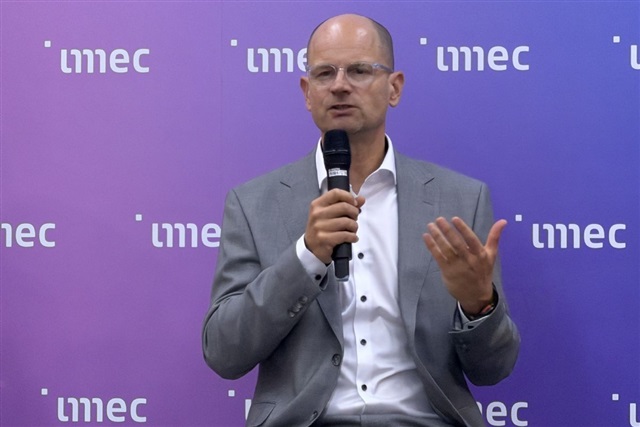
Imec CEO Patrick Vandenameele said at SEMICON Taiwan 2026 that the Belgian research center is broadening its c…
Alphabet's AI Overviews now reach over 2.5 billion monthly users through Google Search, and its ad business ge…
Sarah O’Connor's book 'We Are Not Machines' explores how mechanization and AI have transformed the workforce…