
What happened
Japanese Finance Minister Katsuki Katayama visited Honda's autonomous driving demonstration in Joso City, Ibaraki Prefecture, and praised the technology, saying it could be a winner in Europe and Asia if commercialized.
Why it matters
Honda is developing E2E (end-to-end) AI technology that doesn't rely on high-precision 3D maps, unlike rule-based systems like Google's. This approach could be better suited for Japan's narrow roads and complex lane changes, and could help Honda lead among established automakers in Level 2++ by around 2027.
What to watch
Honda aims to apply the next-generation ADAS (advanced driver assistance system) broadly to its main lineup in North America and Japan around 2027. The company also plans to use E2E for Level 4 and beyond, competing with players like Tesla and Waymo.
Summaries like this, in your inbox every morning.
The article highlights a potential shift in Japan's autonomous driving landscape, with a political figure expressing strong support for Honda's approach. Finance Minister Katayama's visit to Honda's demonstration site and her praise for the E2E technology suggest that government backing, particularly in budget and public-private investment, could accelerate development. This is significant because established automakers have been lagging in Level 2++ commercialization, which is currently led by Tesla and some Chinese manufacturers.
Honda's collaboration with Helm.ai, a U.S. company specializing in unsupervised learning, has strengthened since 2019, with additional investments in 2022 and 2025. The partnership aims to develop next-generation ADAS using Helm.ai's Deep Teaching technology and generative AI, targeting application to main models by around 2027. The article notes that while it's unclear if Honda CI is strictly E2E, it appears to use AI for direct perception and decision-making, similar to E2E principles.
The broader context is a race toward Level 5 autonomous driving, where rule-based leaders like Waymo are now adopting E2E or hybrid systems. Honda's strategy of leading in Level 2++ first, then accelerating Level 4 development, could position it well. However, the article cautions that progress among European and American manufacturers is hard to assess, so it's uncertain if Honda and Nissan can truly lead if they meet their 2027 targets. The government's role in regulation and support will be crucial as the industry moves toward the 2030s.
Pick your industry and the AI tools you use, and get news related to your work every day.
Free · 30 seconds with Google · unsubscribe anytimeWhat is AIToday? →
Ask AI anything about this article. The AI reads this article, earlier AIToday articles, and Wikipedia, and cites its sources. Q&As are published on this page for other readers too.
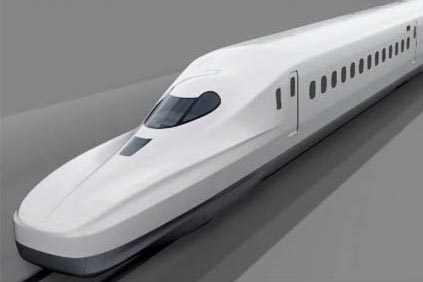
JR Central announced the S0系 on October 16, its first full model change since the N700S, with commercial servi…
Wells Fargo hired an AI executive based in San Francisco, a move The Business Journals describes as part of em…

Amazon launched two Bee "personal AI" devices on Thursday: the $74.99 Bee Frontier wristband and the $99.99 Be…

Apple released MLX today, which runs the 816B-parameter Muse Spark Open on four Mac Studios at over 36 tokens…

Bloom Energy stock fell 4% to $229.83, still up 165% year to date, while Caterpillar slipped 3% to $727.55 and…

LogicMonitor announced its 2026 Elevate Award winners at its Elevate Community Conference in Chicago, honoring…