
What happened
Apple released MLX today, which runs the 816B-parameter Muse Spark Open on four Mac Studios at over 36 tokens per second, well above average human reading speed.
Why it matters
AI researchers can now run a frontier-class model locally in a private environment instead of relying on cloud services, Apple says.
What to watch
Muse Spark Open decode speed is 36.73 tokens per second on four M5 Ultra computers with tensor parallelization.
WHO IT HITSAI researchers and developers who want to experiment with frontier models locally in a private environment can now run Muse Spark Open on their own hardware, Apple says.
Summaries like this, in your inbox every morning.
Apple's MLX is an open-source array framework that leverages the unified memory architecture of Apple silicon, letting researchers run inference and fine-tuning methods on their own hardware. In this post, Apple shows how the latest version of MLX, released today, runs the frontier-class model Muse Spark Open — with nearly a trillion parameters — on a cluster of four Mac Studios, generating over 36 tokens per second.\n\nThe post benchmarks three frontier-class models on Mac Studio: Muse Spark Open (816B), Mistral Medium 3.5 (128B), and Qwen 3.8 (27B). Muse Spark Open is a mixture of experts model, which keeps only a fraction of its experts active, reducing compute at inference, and it is evaluated in NVFP4 precision. The smaller Qwen and Mistral models fit comfortably on a single Mac Studio with 512GB of RAM, but Muse Spark Open would require more than 1.6TB of RAM in its native precision for the model parameters alone, so it requires parallelization across multiple Mac Studio computers.\n\nApple describes two approaches to splitting large models: pipeline parallelization, which splits a model across its depth, and tensor parallelization, which splits it across its width. These rely on fast inter-machine communication, and macOS 26.2 introduced a low-latency RDMA driver over Thunderbolt 5 that MLX builds on, providing new communication collectives called jaccl. Apple also notes that the Mac Studio is energy-efficient for LLM inference, with peak power consumption of about 200W for the M3 Ultra and 300W for the M5 Ultra — a fraction of the power used by a common toaster.
Pick your industry and the AI tools you use, and get news related to your work every day.
Free · 30 seconds with Google · unsubscribe anytimeWhat is AIToday? →
Ask AI anything about this article. The AI reads this article, earlier AIToday articles, and Wikipedia, and cites its sources. Q&As are published on this page for other readers too.
Amazon launched two Bee "personal AI" devices on Thursday: the $74.99 Bee Frontier wristband and the $99.99 Be…

Chip stocks pared losses after a debt-driven AI sell-off

Meta and Apple revealed Thursday that developers can run Meta's new open-weight Muse Spark Open model locally…

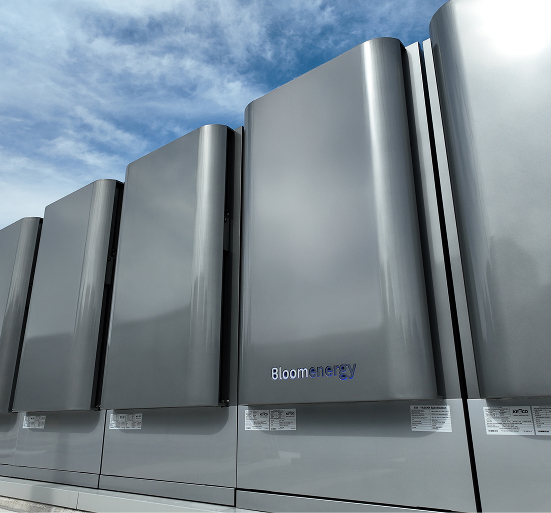
Bloom Energy stock fell 4% to $229.83, still up 165% year to date, while Caterpillar slipped 3% to $727.55 and…
The S&P 500 closed up 0.33% at 7,744.06 points, as Eli Lilly gained over 3%, UnitedHealth added 2.8% and Walma…

LogicMonitor announced its 2026 Elevate Award winners at its Elevate Community Conference in Chicago, honoring…