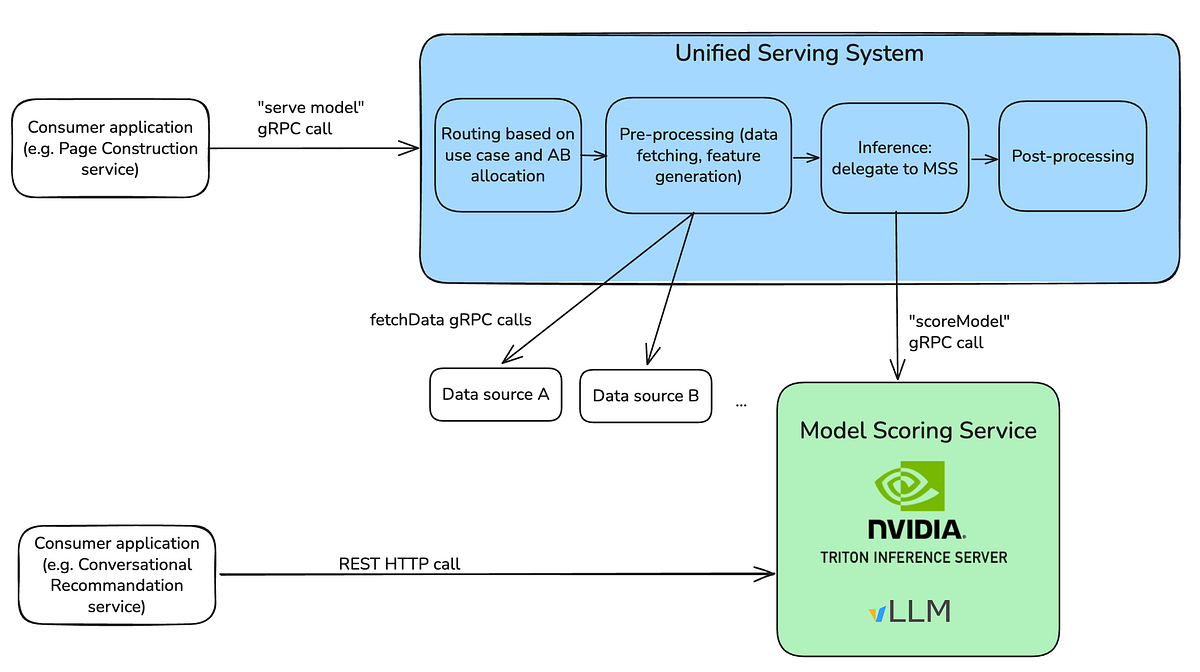
Netflix has built its own internal system for serving large language models — the infrastructure that runs AI and returns answers to users — according to a post on its engineering blog. This move reflects a broader strategy among large tech companies to control their AI operations independently, managing costs and data security without relying solely on external AI providers.
Summaries like this, in your inbox every morning.
Sign up free →What happened
Netflix has developed an internal large language model (LLM) serving system — infrastructure that runs AI models and delivers their responses to users — rather than relying solely on external providers.
Why it matters
Building proprietary AI serving infrastructure allows Netflix to control costs, latency, and the data flowing through its AI systems, which matters for a company handling sensitive subscriber information and operating at massive scale. This is common practice among large tech companies seeking independence from third-party AI vendors.
What to watch
The post appears on Netflix's engineering blog, suggesting the company may share technical details about how it built and operates this system, which could inform how other media and entertainment companies approach AI infrastructure.
Netflix has developed an in-house system for serving large language models — the computational infrastructure that runs AI models and delivers their responses. This system represents Netflix's decision to build proprietary AI infrastructure rather than rely entirely on third-party AI services. By operating its own LLM serving system, Netflix maintains control over critical factors including cost efficiency, response time (latency), and the handling of user and subscriber data. The company announced this development through a post on its official technology blog, where it appears to be sharing technical details about the system's design and operation. This move aligns with a broader industry trend among large-scale technology companies that handle substantial data volumes and have performance-critical applications — building internal AI infrastructure provides greater flexibility, security, and optimization potential than outsourcing to external vendors alone.
Netflix's investment in proprietary LLM serving infrastructure reflects a maturing approach to AI within large technology companies. Rather than outsourcing all AI operations to external vendors, Netflix has chosen to develop internal capabilities that give the company direct control over how its language models operate. This decision carries practical implications for cost management and performance — serving AI models at Netflix's scale introduces substantial infrastructure demands, and owning that system in-house allows the company to optimize specifically for its workloads. The fact that Netflix is publishing details about this system on its engineering blog suggests confidence in the approach and a willingness to share technical knowledge, which may also signal to potential hires and partners that the company has built mature AI infrastructure.
AI-summarized, only the topics you pick — one digest a day via Email, Slack, or Discord.
Free · takes 30 seconds · unsubscribe anytime
No comments yet. Be the first to share your thoughts!
Log in to join the discussion


Get curated AI news from 200+ sources delivered daily to your inbox. Free to use.
Get Started FreeFree · takes 30 seconds · unsubscribe anytime
1 minute a day. The AI essentials.
200+ sources · Email / LINE / Slack