What happened
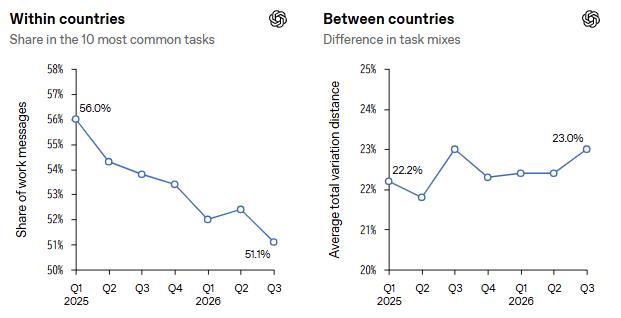
OpenAI published OpenAI Signals v3.0, classifying work-related ChatGPT messages across about 100 countries into 165 task types; in the 74 countries with full data, the top 10 activities fell from an average 56% to 51.1%.
Why it matters
The figures suggest work-related ChatGPT use is spreading across a wider range of tasks rather than staying clustered in a few dominant ones, with OpenAI citing national industry mix and access to AI tools as possible factors.
WHO IT HITSCorporate teams that set AI usage policy—especially those in HR, operations, and IT—may see more varied day-to-day ChatGPT use across job functions, making it harder to manage with a single one-size-fits-all guideline, based on the report's finding that work use is less concentrated.
Summaries like this, every morning.
OpenAI Signals v3.0 is a new statistical view of how ChatGPT is used for work, built on the U.S. O*NET database and its 165 Intermediate Work Activities. The headline finding is a gradual loosening of concentration: in the 74 countries with complete quarterly data, the top 10 task types accounted for an average 56% of work-related messages in Q1 2025 but 51.1% by Q3 2026. OpenAI notes that the mix of top tasks differs by country and suggests national industry structure and access to AI tools may play a role.
The Japan and U.S. breakdowns add country-level color to that trend. In Japan, planning and decision-making rose from 31% to 35.8% between Q1 2025 and Q3 2026, and development and advice grew from 8.8% to 10%, while deliverable creation and communication and interaction declined. The report's scope is limited to individual ChatGPT plans; enterprise plans and Codex are excluded, so the figures describe consumer-side work use rather than corporate deployments.
Pick your industry and the AI tools you use, and get news related to your work every day.
Free · 30 seconds with Google · unsubscribe anytimeWhat is AIToday? →
Ask AI anything about this article. The AI reads this article, earlier AIToday articles, and Wikipedia, and cites its sources. Q&As are published on this page for other readers too.
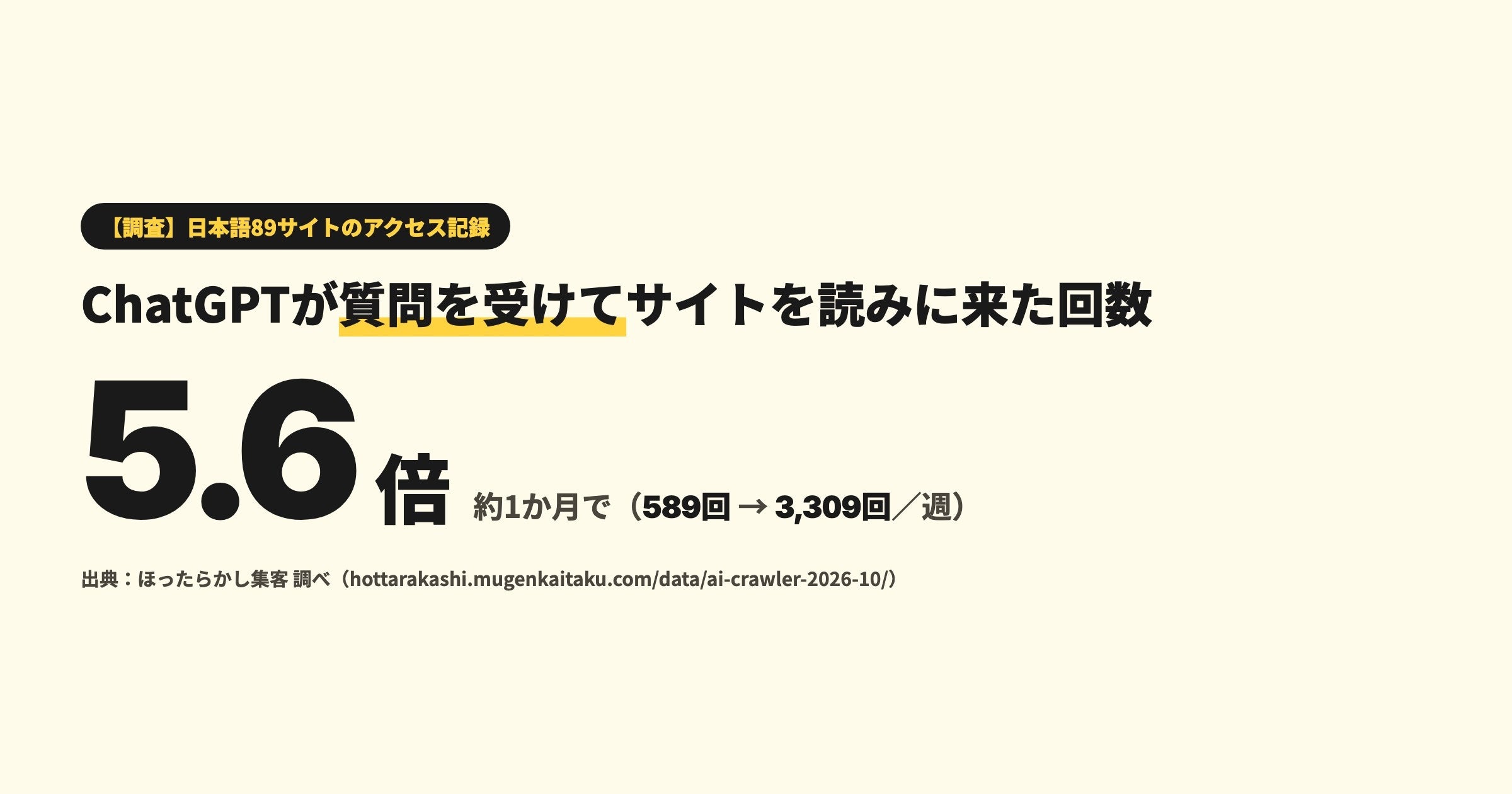
Across 89 Japanese-language sites run by Mugenkaitaku, ChatGPT-User visits rose from 589 in the week of Sept 3…
Uravation began offering a 6-hour hands-on course built on the emergency PHP release of 2026年10月21日, with AI a…

Cisco unveiled Ecosystem Deal Registration, which credits advisers, consultants and developers for deals they…

Broadcom reached a deal with several financial firms to finance the purchase of US$63 billion worth of its chi…

DIGITIMES forecasts AMD's 2027 server CPU revenue at US$31.2 billion, ahead of Intel's US$28.7 billion, on hig…

NVIDIA and Meta announced they will expand their work on Muse and the Muse family of models to improve inferen…