What happened
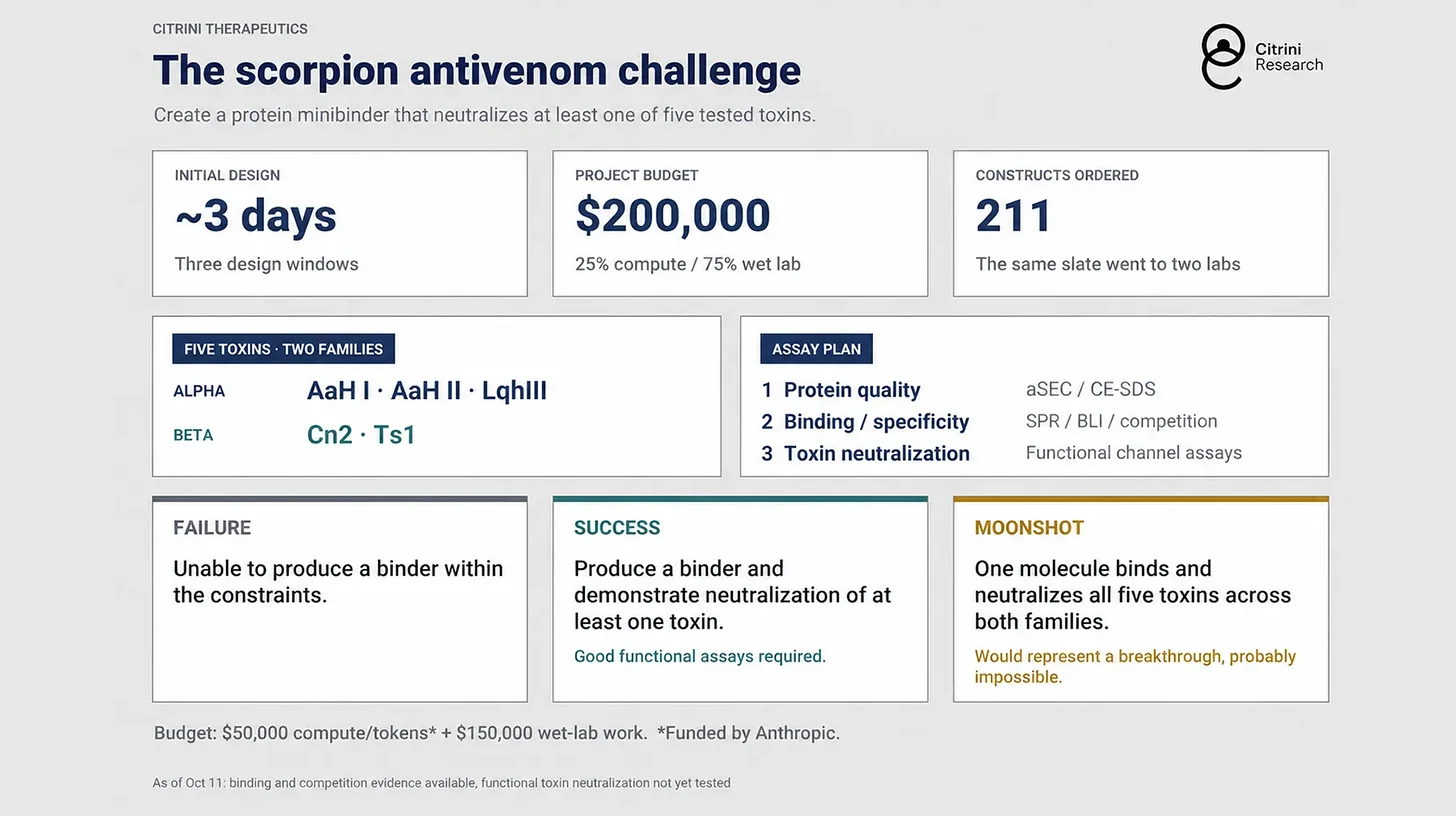
Anthropic reported that an internal version of Claude generated 318,484 candidates over a 64-hour run and selected 180 designs; humans added 31, and 211 went to Twist Bioscience and Adaptyv Bio for testing.
Why it matters
The result suggests AI could help people with little drug-development experience start research projects; the team included staffers with no science background, though they needed Anthropic's help and access to an internal model.
WHO IT HITSInvestment researchers and other non-specialists with an idea but limited lab experience are the group this experiment speaks to; they could use AI to generate candidate designs, though the work required Anthropic staff support and an internal model, and lab testing remains a bottleneck.
Summaries like this, in your inbox every morning.
The experiment grew out of a partnership between Anthropic and investment research firm Citrini Research, which brought five staffers to the project. Biosecurity restrictions initially blocked work on Citrini's own computers, so the team moved to Anthropic's offices, where it used an internal model and received help on a prompt of about 35 pages. The run generated 318,484 candidates over 64 hours using 12 specialist tools; Claude selected 180 designs and humans added 31. Citrini reports five human messages during that initial design run and 367 across the whole project. The budget breakdown shows where time and money went: $49,997 in compute costs, just under $150,000 in lab charges, and a wait of roughly two months for experimental work. Citrini's account leaves the full cost, including Anthropic's staff time and any subsidized model access, unclear. Anthropic's support for the project sets limits on how broadly the approach could be repeated. The company's Life Sciences Verification Program, launched September 17, reviews research credentials, security standards and ethical oversight, and initially served teams and institutions. Access rules could shape who can carry out similar work. In Anthropic's own lab, announced in September, Claude helps form hypotheses and interpret results, while human scientists perform all laboratory work. For newcomers, access to scientists who can design sound tests and assess evidence could be as important as access to the model. Whether the 17 binders can stop the toxins' effects in cells or protect animals remains untested, and Citrini called its universal antivenom experiment a failure. A separate Anthropic research note published September 17 said a simplified workflow reached similar predicted binding scores with about one hundredth of the GPU time required by earlier campaigns, though those comparisons measured computer predictions and equivalent success in lab tests remains unproven.
Pick your industry and the AI tools you use, and get news related to your work every day.
Free · 30 seconds with Google · unsubscribe anytimeWhat is AIToday? →
Ask AI anything about this article. The AI reads this article, earlier AIToday articles, and Wikipedia, and cites its sources. Q&As are published on this page for other readers too.
Schneider Electric, Nvidia and HPE formed a strategic collaboration to launch Industrial AI Agents at the Edge…

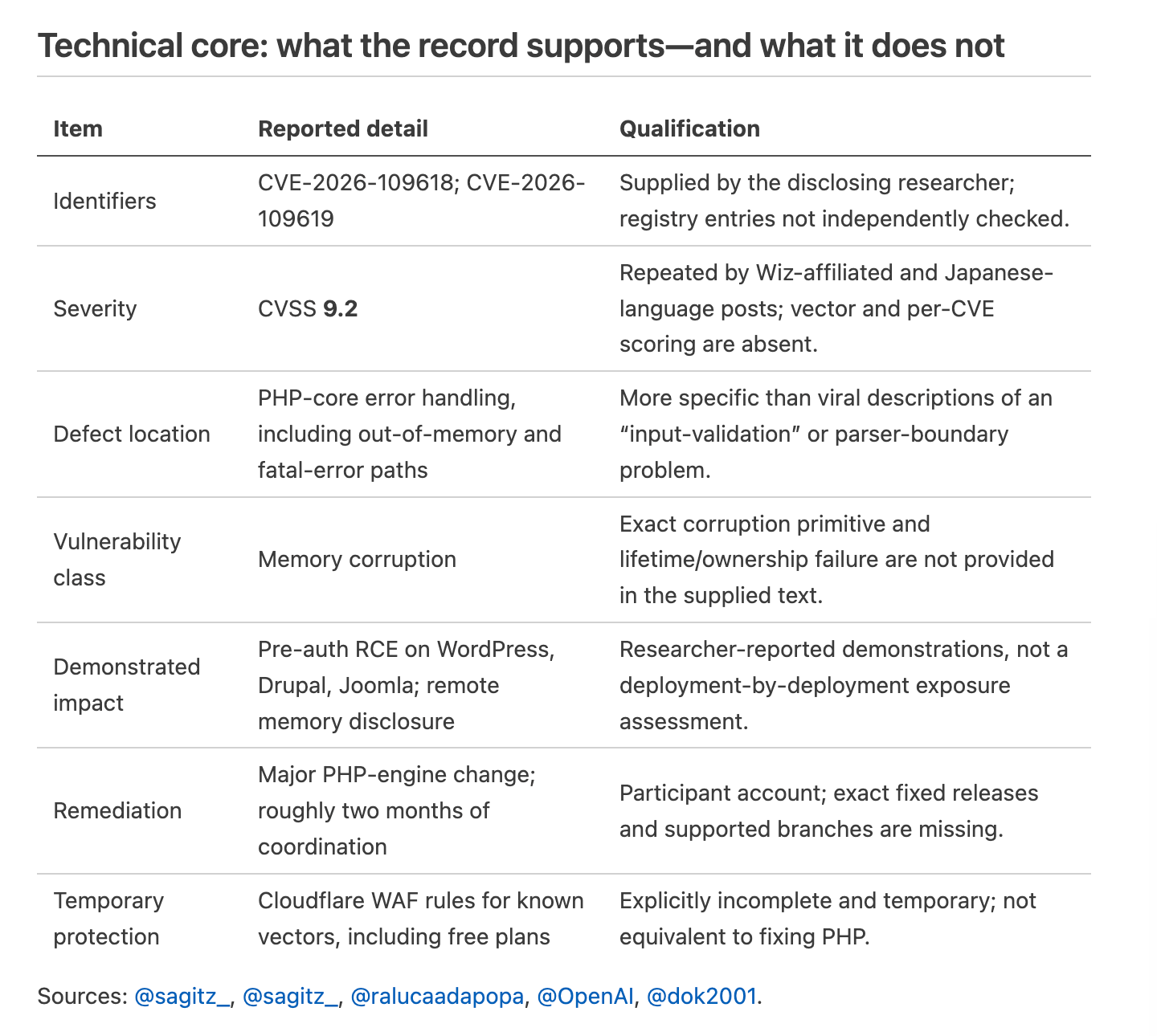
OpenAI says Calif researchers using GPT 5.6 Sol under its "Patch the Planet" project found the PHP2Shell flaws…
Anthropic released Claude Duet, built on Claude Opus 5.5

Counting the public CSVs (fetched Oct 22, 2026) showed HarmBench's 400 text prompts contain 0/400 lines with n…

OpenAI's GPT-5.6 Sol found two critical PHP vulnerabilities, CVE-2026-109618 and CVE-2026-109619, collectively…
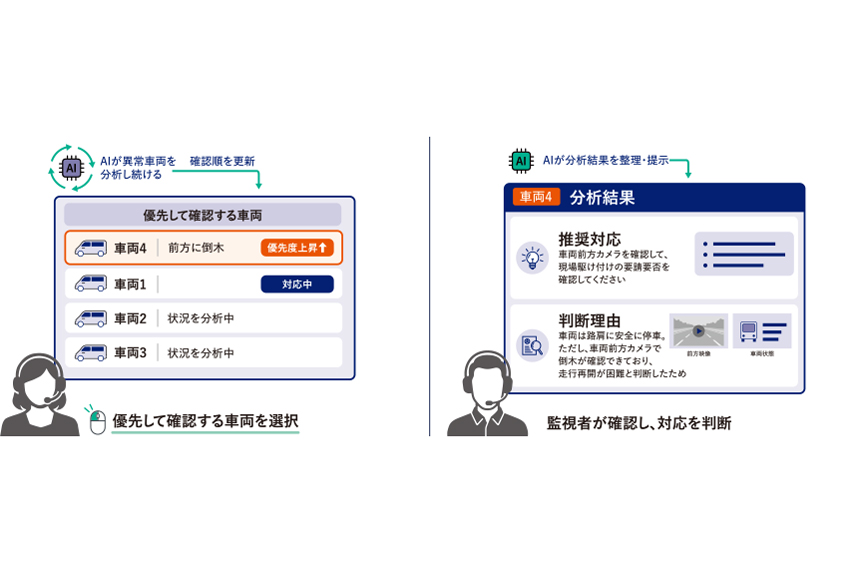
KDDI developed an AI agent for 1対N remote monitoring in レベル4 autonomous driving