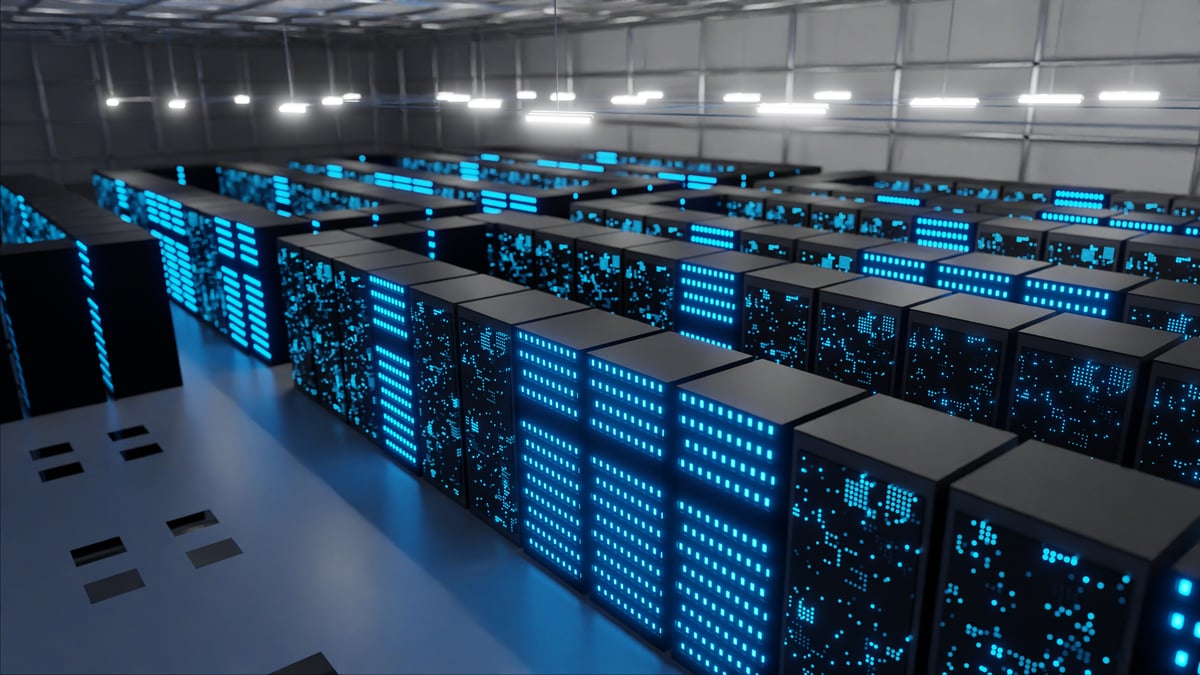
Alphabet, Amazon, and Meta have announced combined AI infrastructure spending exceeding $500 billion(約80兆円) for 2026, with most of that money flowing to Nvidia, which supplies the GPUs that power data centers. Nvidia's first-quarter fiscal 2027 revenue surged 85% to $81.6 billion(約13兆円), driven by a 92% jump in data center revenue to $75.2 billion(約12兆円). Yet Nvidia stock fell alongside other big tech stocks on Thursday, trading about 12% below its 52-week high—a sign that investors are questioning whether these record spending commitments will ultimately prove profitable. Nvidia's earnings remain entirely dependent on a handful of customers' capital budgets, which can shift quickly once market conditions change.
Summaries like this, in your inbox every morning.
Sign up free →What happened
Alphabet raised its 2026 capital spending forecast to $195 billion(約31兆円)–$205 billion(約33兆円) (from $180 billion(約29兆円)–$190 billion(約30兆円)), Amazon expects to invest about $200 billion(約32兆円), and Meta plans $125 billion(約20兆円)–$145 billion(約23兆円), together committing more than half a trillion dollars in a single year—mostly on AI infrastructure. Nvidia, the dominant supplier of the graphics processing units (GPUs) that power these data centers, reported first-quarter fiscal 2027 revenue of $81.6 billion(約13兆円) (up 85% year over year), with data center revenue climbing 92% to $75.2 billion(約12兆円), yet Nvidia stock fell on Thursday and now sits about 12% below its 52-week high.
Why it matters
Nvidia collects more of these spending commitments than any other company, and the scale of customer investment directly drives its revenue—data center revenue rose 20% from the prior quarter alone. However, the disconnect between record customer budgets and a falling stock price suggests investors are doubting whether these half-trillion-dollar spending plans will generate returns. Nvidia's growth depends entirely on a handful of customers' willingness to keep increasing their capital budgets, which can flatten quickly once a boom ends.
What to watch
Nvidia guided for about $91 billion(約15兆円) in revenue in fiscal second quarter (ending July 2026) while holding gross margin near 75%. The company's valuation—about 32 times trailing earnings for an 85% growth business, or about 21 times expected next-12-month earnings—already prices in a meaningful slowdown. Customers are also developing alternatives: Meta is rolling out more than a gigawatt of its own custom silicon (developed with Broadcom) and chips from Advanced Micro Devices alongside new Nvidia systems.
Alphabet, Amazon, and Meta have disclosed a combined AI infrastructure spending commitment exceeding half a trillion dollars for 2026, marking an unprecedented scale of investment in a single year. Alphabet raised its 2026 capital spending forecast to a range of $195 billion(約31兆円) to $205 billion(約33兆円), up from $180 billion(約29兆円) to $190 billion(約30兆円). Amazon expects to invest about $200 billion(約32兆円). Meta Platforms lifted its forecast to $125 billion(約20兆円)–$145 billion(約23兆円), a range it increased by $10 billion(約1.6兆円) in April. These three companies' commitments alone exceed $500 billion(約80兆円), with the vast majority directed toward AI infrastructure; Microsoft has separately pointed to about $190 billion(約30兆円) of its own spending in the space.
Nvidia, the dominant supplier of the graphics processing units (GPUs) that form the computational backbone of these data centers, has captured an enormous share of this spending. In its first quarter of fiscal 2027, which ended April 26, 2026, Nvidia reported record revenue of $81.6 billion(約13兆円), representing 85% year-over-year growth. Data center revenue—the direct beneficiary of customer capital budgets—climbed 92% to $75.2 billion(約12兆円), and total revenue rose 20% from the prior quarter. CEO Jensen Huang characterized the moment in the earnings release: "The buildout of AI factories—the largest infrastructure expansion in human history—is accelerating at extraordinary speed." Nvidia guided for approximately $91 billion(約15兆円) in revenue for fiscal second quarter while maintaining gross margin near 75%.
Alphabet's spending allocation illustrates where customer capital flows: on its earnings call, the company disclosed that about 60% of its technical infrastructure investment in the second quarter went to servers, with the remainder directed to data center and networking equipment. Alphabet also raised $49.6 billion(約7.9兆円) in a June stock offering, with scaling AI infrastructure among the stated uses. This fresh capital extends the spending trajectory into the second half of 2026.
However, on Thursday, Nvidia stock fell alongside other megacap technology shares, declining 1.01%, and now sits approximately 12% below its 52-week high. The disconnect between record customer budgets and a declining stock price reflects investor concern that the scale of spending itself may not justify the capital deployed. Capital budgets are plans made during booms and can be rewritten quickly once market conditions shift; the semiconductor industry has historically never sustained growth above its cyclical norm for extended periods. At a valuation of about 32 times trailing earnings—modest relative to the 85% growth rate—the market is already pricing in a meaningful slowdown. Against next-12-month expected earnings, the multiple falls to about 21.
Additionally, Nvidia's largest customers are pursuing alternatives that reduce dependence on the company. Meta disclosed on its first-quarter earnings call that it is rolling out more than a gigawatt of its own custom silicon, developed with Broadcom, alongside chips from Advanced Micro Devices, complementing new Nvidia systems it continues to install. This diversification strategy, while not replacing Nvidia entirely, signals that even the most aggressive spenders are hedging their reliance on a single supplier. Together, these dynamics—the cyclical risk embedded in capital budgets, the potential for rapid budget revision, and the emergence of competing silicon from major customers—explain the caution in investor sentiment despite Nvidia's current financial strength.
The spending announcements from Alphabet, Amazon, and Meta represent an extraordinary commitment to AI infrastructure, totaling more than $500 billion(約80兆円) across just three companies in a single year. Alphabet's June stock offering of $49.6 billion(約7.9兆円), explicitly tied to scaling AI infrastructure, underscores how these companies are mobilizing capital to fund the expansion. Nvidia sits at the direct center of this build-out: Alphabet disclosed that about 60% of its technical infrastructure investment in the second quarter went to servers, and Nvidia's quarterly revenue growth of 85%—with data center revenue climbing 92%—confirms that the majority of these spending plans flow to the company's products.
Yet the market's reaction on Thursday reveals a fundamental anxiety. When Alphabet announced its capital spending increase, its shares fell, and the sell-off spread to other megacaps including Nvidia. The apparent disconnect is not a valuation disconnect: Nvidia trades at about 32 times trailing earnings for a business growing 85%, a multiple that is actually modest relative to the growth rate, and at 21 times forward earnings the stock already reflects meaningful deceleration assumptions. Rather, the market is questioning whether the spending itself—not Nvidia's capture of it—will prove justified. A capital budget is a plan made during a boom; such plans historically get rewritten quickly when conditions shift, and the semiconductor industry has never sustained growth above its cyclical norm for long.
A secondary risk lies in the diversification of Nvidia's customer base. Meta is rolling out more than a gigawatt of its own custom silicon developed with Broadcom, and is also deploying chips from Advanced Micro Devices. While Meta continues to install new Nvidia systems, the move signals that even the largest customers are working to reduce their dependence on a single supplier. These dynamics—cyclical risk in capital budgets, and gradual customer self-sufficiency—explain why record customer spending did not prevent the stock from falling.
AI-summarized, only the topics you pick — one digest a day via Email, Slack, or Discord.
Free · takes 30 seconds · unsubscribe anytime
No comments yet. Be the first to share your thoughts!
Log in to join the discussion

Get curated AI news from 200+ sources delivered daily to your inbox. Free to use.
Get Started FreeFree · takes 30 seconds · unsubscribe anytime
