What happened
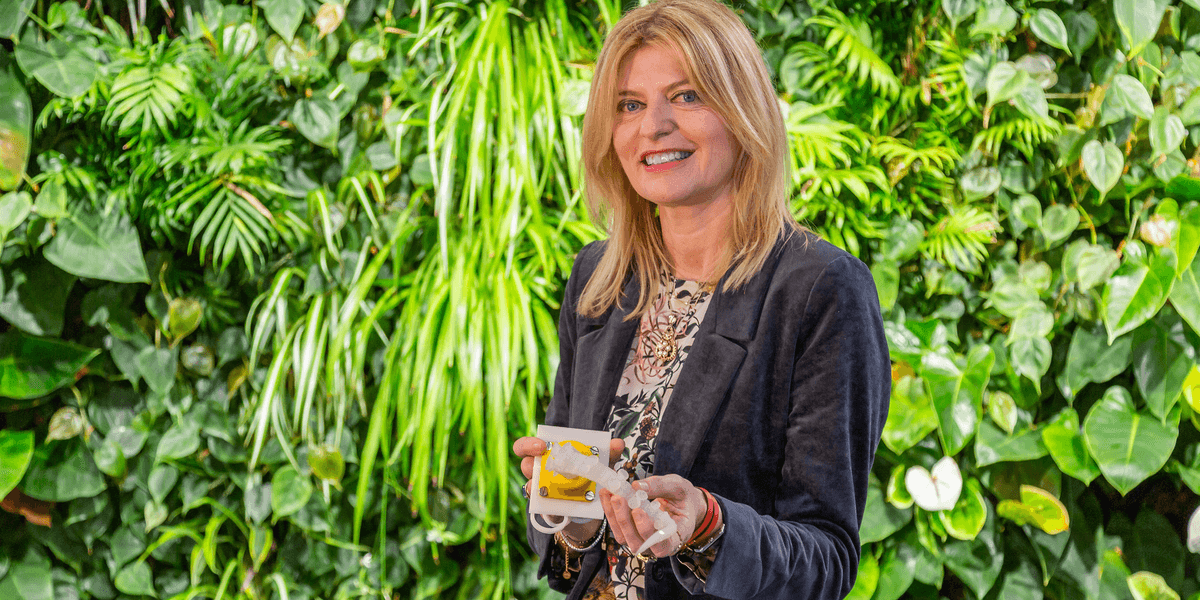
Barbara Mazzolai, associate director for robotics at the Italian Institute of Technology, published a manifesto in Nature Machine Intelligence in July proposing "sustainability robotics" built on three pillars: minimal environmental impact, global accessibility, and symbiotic benefit to humans and nature.
Why it matters
Her proposal pushes robot designers to plan for a machine's end of life — reuse, recycling, or biodegradation — rather than following plastics and car batteries, which she says were developed without regard for their environmental afterlife.
What to watch
The manifesto is a vision, not deployed technology; its influence hinges on whether designers adopt life-cycle thinking early. Watch whether robotics labs take up the three pillars as design requirements.
WHO IT HITSRobotics researchers and product designers — especially those working on bioinspired or soft robots — would need to treat environmental impact and end-of-life reuse or biodegradation as design inputs, not afterthoughts, if Mazzolai's vision gains traction.
Summaries like this, in your inbox every morning.
Mazzolai's path to this proposal runs through biology rather than engineering. She enrolled at the University of Pisa in 1987 to study biology, drawn to marine biology, and in 1995 joined the Italian National Research Council's Institute of Biophysics to study how heavy metals like mercury cycle through water, soil, vegetables, and humans. A university recruitment effort for biologists to design environmental monitoring devices pulled her into engineering in 1999, and she worked as a research assistant under bioroboticist Paolo Dario. That transition shaped her later view that bioinspired work requires "two separate brains" — one of a biologist, one of an engineer.
The robots she is known for came from applying biological principles rather than copying animals. After her first bioinspired project, a soft robot based on the octopus, she became interested in plants as models, particularly roots that reduce friction by growing only at a very fine tip while the thicker base stays static — far less energy than a drill that pushes the whole structure from above. Her team realized this with a miniaturized 3D printer at the robot's tip, feeding thermoplastic filament through a heated nozzle, with sensors to avoid obstacles and detect nutrients or water.
Her sustainability robotics proposal extends the same borrowing logic back to nature. It argues that robotics should not repeat the pattern she attributes to plastics and car batteries, which were developed with little thought about their end-of-life impact. Whether the field takes hold may depend on whether researchers and manufacturers treat reuse, recycling, and biodegradation as design constraints from the start, rather than cleanup problems afterward.
For example, today's edition would include:
AI-summarized, only the topics you pick — one digest a day via Email, LINE, or Slack.
Free · 30 seconds with Google · unsubscribe anytimeWhat is AIToday? →
Ask AI anything about this article. Q&As are published on this page for other readers too.
At Semafor's The Next 3 Billion event, Nvidia sustainability head Josh Parker attributed recent US anti-AI sen…

JS Denain of Epoch AI said OpenAI and Anthropic blog posts on AI accelerating AI progress are not strong evide…

OpenAI is pushing for international standards on recursive self-improvement, with the US leading global techni…

Pew Research Center data shows about 1 in 10 American adults use AI chatbots for emotional support or advice…

AstroForge built Solo, a transformer-based autonomous control stack made in-house, to fly on Autonomy-1 in 202…

TechCrunch Disrupt 2026 will run five AI safety and security sessions on its AI Stage and Real World AI Stage…