AIToday
Top Companies' AI MovesAutonomous DrivingTop Companies AIPublished: Aug 29, 2026, 06:30 JST2 min read

Toyota to equip passenger cars with near-hands-free self-driving from 2028

Toyota to equip passenger cars with near-hands-free self-driving from 2028

Key takeaway

  • Toyota will install near-hands-free self-driving in some cars in 2028.

  • The AI system is built in-house.

  • It aims to cut traffic accidents.

3 Key Points

  1. What happened

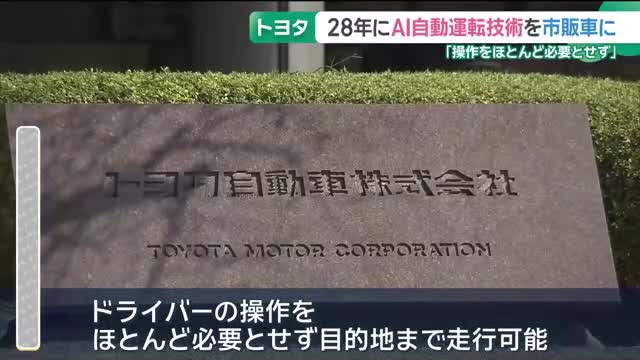
    Toyota plans to install AI-based automated driving technology in its commercial passenger cars starting in 2028. The AI system, developed in-house, assists with surroundings recognition and can drive to a destination in urban areas with many pedestrians with almost no driver operation.

  2. Why it matters

    This would go beyond the current mainstream Level 2 systems in Japan, which enable functions like following the vehicle ahead. Toyota aims to expand the rollout to more models from 2030 onward, with the goal of preventing traffic accidents.

  3. What to watch

    The technology will start with certain models in 2028, with wider adoption expected after 2030. Whether Toyota can achieve full-scale deployment to reduce accidents will depend on regulatory approval and real-world performance.

Ask the AI about this article →

Context & Analysis

Toyota's announcement signals a strategic pivot toward in-house AI development for automated driving, a move that could differentiate it from competitors that rely on partnerships or acquisitions. The 2028 target for passenger cars aligns with a broader industry push toward higher autonomy, but Toyota's focus on accident prevention suggests a safety-first approach rather than a race for flashy features.

The shift from Level 2 to near-hands-free operation in urban environments is technically challenging, especially in Japan's dense pedestrian traffic. Toyota's internal development may allow tighter integration with its vehicle platforms, but it also means bearing the R&D costs and regulatory hurdles itself. Success will depend on proving reliability in real-world conditions, which could influence consumer trust and regulatory approval.

While the article does not specify pricing, availability, or specific models, the phased rollout starting in 2028 gives Toyota time to refine the system. The company's stated goal of expanding from 2030 and preventing accidents sets a clear long-term ambition, but the actual impact will hinge on execution and public acceptance.

FAQ

When will Toyota start selling cars with this technology?
Toyota plans to install the technology in commercial passenger cars starting in 2028, then expand to more models from 2030.
What level of automation does this technology represent?
It is more advanced than the current Level 2 systems common in Japan, which mainly support lane keeping and following the car ahead. This new system can handle urban driving with many pedestrians, requiring almost no driver input.
Top Companies AIRead Original Article

Get the latest Top Companies' AI Moves news every morning

For example, today's edition would include:

  • Caterpillar's record quarter fueled by AI data center demandTop Companies AI · 1h ago
  • Tempus AI Stock Jumps After Moderna-Merck Vaccine SuccessTop Companies AI · 1h ago
  • AI growth could make these 2 S&P 500 stocks decade-long buysTop Companies AI · 1h ago

AI-summarized, only the topics you pick — one digest a day via Email, Slack, or Discord.

Free · takes 30 seconds · unsubscribe anytimeWhat is AIToday? →

Ask AI

Ask AI anything about this article. Q&As are published on this page for other readers too.

Related Articles

Next articleColt Japan CEO: AI-powered autonomous network