What happened
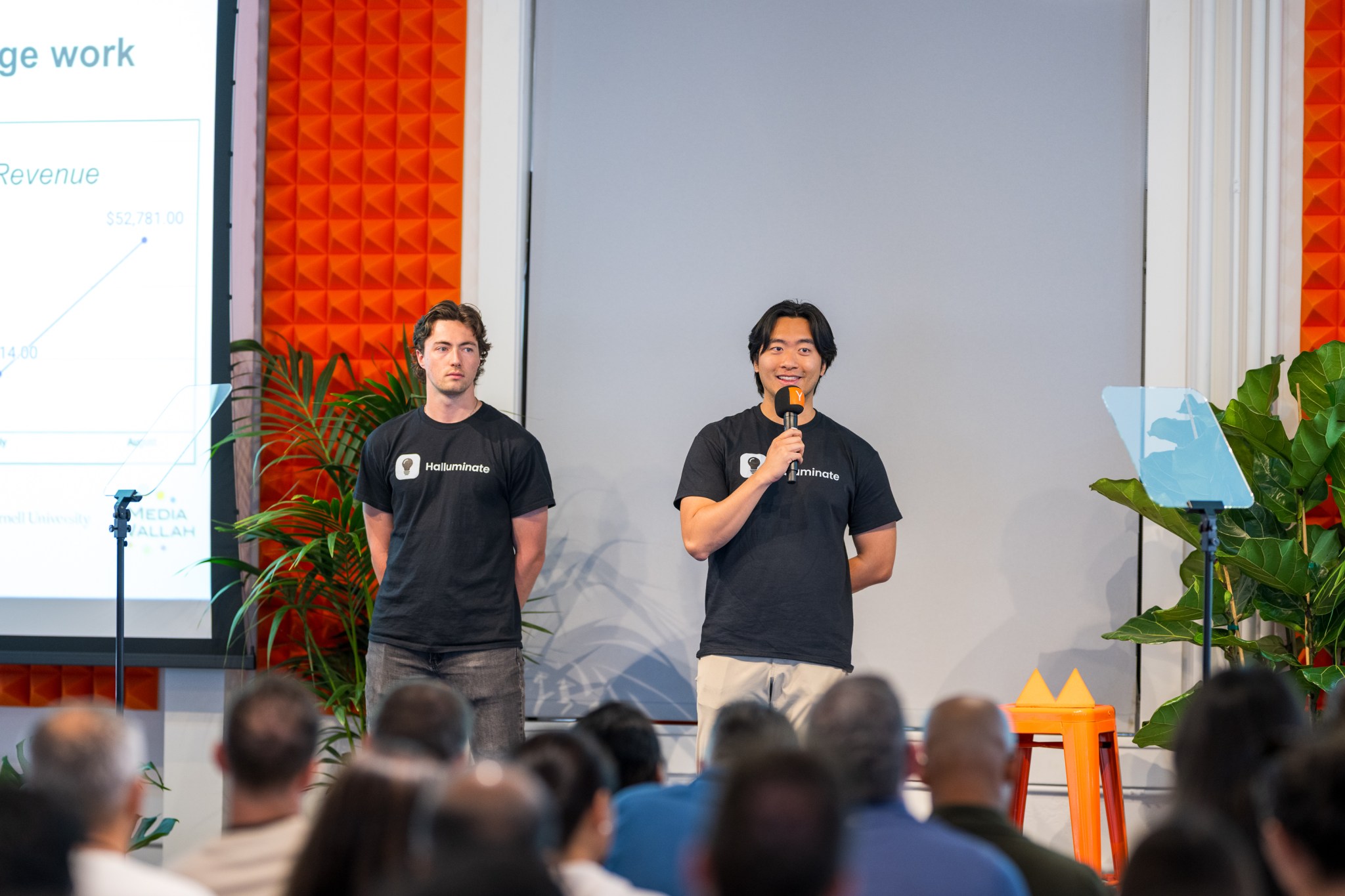
Halluminate raised $30 million in a Series A led by Oak HC/FT, bringing total funding to $38.5 million, and CEO Jerry Wu says four of the top five closed-source U.S. AI labs are paying customers.
Why it matters
The company has crossed a mid-eight-figure annualized revenue run rate and is profitable, suggesting AI labs are willing to buy specialized, finance-specific training data and environments rather than general ones.
What to watch
Halluminate is deliberately focusing on a small group of frontier labs instead of enterprise customers, so its growth hinges on whether those labs keep funding increasingly complex environments. Wu says that complexity must roughly double every six to eight months.
WHO IT HITSThis lands on founders and investors in AI data and training startups, who now have a concrete example of a tiny team reaching a mid-eight-figure annualized revenue run rate and profitability by selling industry-specific training environments rather than general-purpose data.
Summaries like this, in your inbox every morning.
Halluminate was founded in 2024 and is betting that the data and environments used to train AI will become increasingly specialized by industry. CEO Jerry Wu frames the company's systems as "verticalized data research labs," arguing that simulating an investment banker's work is fundamentally different from simulating a software engineer's.
The company's approach starts with benchmarks that expose where AI models fall short on financial tasks, then turns those failure modes into reinforcement-learning environments. Its August benchmark, built from anonymized private-equity transactions and reviewed by practicing deal professionals, found that the best of seven frontier models averaged just 51% across 88 tasks — agents left out required changes, used the wrong analytical method, or relied on superseded information.
Oak HC/FT General Partner Matt Streisfeld said finance's breadth of complex knowledge work and Halluminate's expertise stood out, and that testing and specialization will matter more as agents take on long-horizon work. Wu's "Moore's law of environments" — his estimate that complexity must roughly double every six to eight months — suggests the company's ability to keep pace with frontier labs, rather than the size of this round, is what will determine whether its early customer concentration pays off. For now, enterprise customers and other industries are explicitly not a priority.
Pick your industry and the AI tools you use, and get news related to your work every day.
Free · 30 seconds with Google · unsubscribe anytimeWhat is AIToday? →
Ask AI anything about this article. The AI reads this article, earlier AIToday articles, and Wikipedia, and cites its sources. Q&As are published on this page for other readers too.
Arceus Legal disclosed a $17 million round led by Greycroft LP, with Craft Ventures Management and South Park…

Meta's rapid rollout of its Muse AI agent is serving as an early test of how agentic AI reshapes server infras…

In the Loop host Ejaaz Ahamadeen broke down what Anthropic's (ANTH.PVT) leaked S-1 filing actually covers, and…
The 2026 UK Business Data Survey shows just 12% of AI-using manufacturers have fully integrated AI into busine…

Boston Dynamics released Spot 5.2, expanding Orbit fleet software with a Model Context Protocol layer that let…
Anthropic launched Claude for Government for US federal and state civilian agencies