What happened
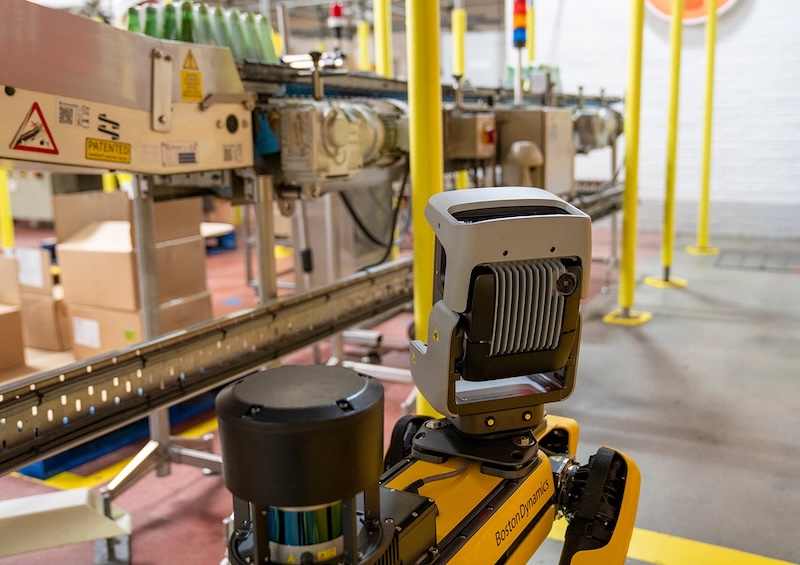
Boston Dynamics released Spot 5.2, expanding Orbit fleet software with a Model Context Protocol layer that lets AI agents autonomously deploy Spot when predefined business conditions are met.
Why it matters
Orbit can now link individual assets to Spot inspections and import asset hierarchies, so alerts can target specific equipment like pumps rather than whole facilities, and Spot can be dispatched automatically when those conditions are met.
What to watch
The MCP layer's value hinges on whether facilities actually connect PLCs, sensors and cameras to Orbit; the body names no timeline or availability date for that.
WHO IT HITSPlant engineers and maintenance teams running CMMS, MES or EAM platforms stand to gain targeted asset-level alerts and automatic Spot dispatch, while security teams could see Spot sent to investigate sensor or CCTV triggers—though that hinges on integrating those external data sources into Orbit.
Summaries like this, in your inbox every morning.
Spot 5.2 builds on Boston Dynamics' prior work on AIVI, the visual inspection system it previously said would use Google Gemini models trained on industrial data. That system was designed for specialized inspections of 5S boards, sight glasses, pallets and gauges; the new release extends it to video through AIVI-Learning, which the company says can catch conditions harder to see in still images, such as water dripping from pumps, slipping conveyor lines and equipment warning lights.
The Orbit redesign around assets rather than individual inspections is meant to mirror how equipment is already organized in CMMS, MES and EAM platforms. By importing asset hierarchies and metadata, Orbit allows more targeted alerts—pump-specific anomalies for the engineers responsible for pumps—and lets plant managers review trends across a facility, an equipment class or a production area. The expansion of Orbit's APIs to accept inputs from programmable logic controllers, fixed sensors and security cameras, rather than only from Spot, is what the company describes as the foundation for the MCP layer.
The stakes appear to hinge on how many of those external systems industrial operators are willing to wire into Orbit, since the autonomous dispatch and security workflows the company describes depend on those connections. For plant engineers and security teams already running such systems, the update points toward a model where an anomaly detected by one device triggers a physical investigation by a robot—though whether that reduces downtime or simply adds a layer to existing processes is not something the body resolves.
Pick your industry and the AI tools you use, and get news related to your work every day.
Free · 30 seconds with Google · unsubscribe anytimeWhat is AIToday? →
Ask AI anything about this article. The AI reads this article, earlier AIToday articles, and Wikipedia, and cites its sources. Q&As are published on this page for other readers too.
In the Loop host Ejaaz Ahamadeen broke down what Anthropic's (ANTH.PVT) leaked S-1 filing actually covers, and…

Former Meta CTO Mike Schroepfer said on Yahoo Finance's Sozzi Unleashed that Anthropic CEO Dario Amodei should…

The 2026 UK Business Data Survey shows just 12% of AI-using manufacturers have fully integrated AI into busine…
Utopia Compression, a Los Angeles company with over two decades of defense work, is marketing AI-based passive…
Anthropic launched Claude for Government for US federal and state civilian agencies

Emails obtained by The New York Times show two employees told OpenAI executives that AI models were not proper…