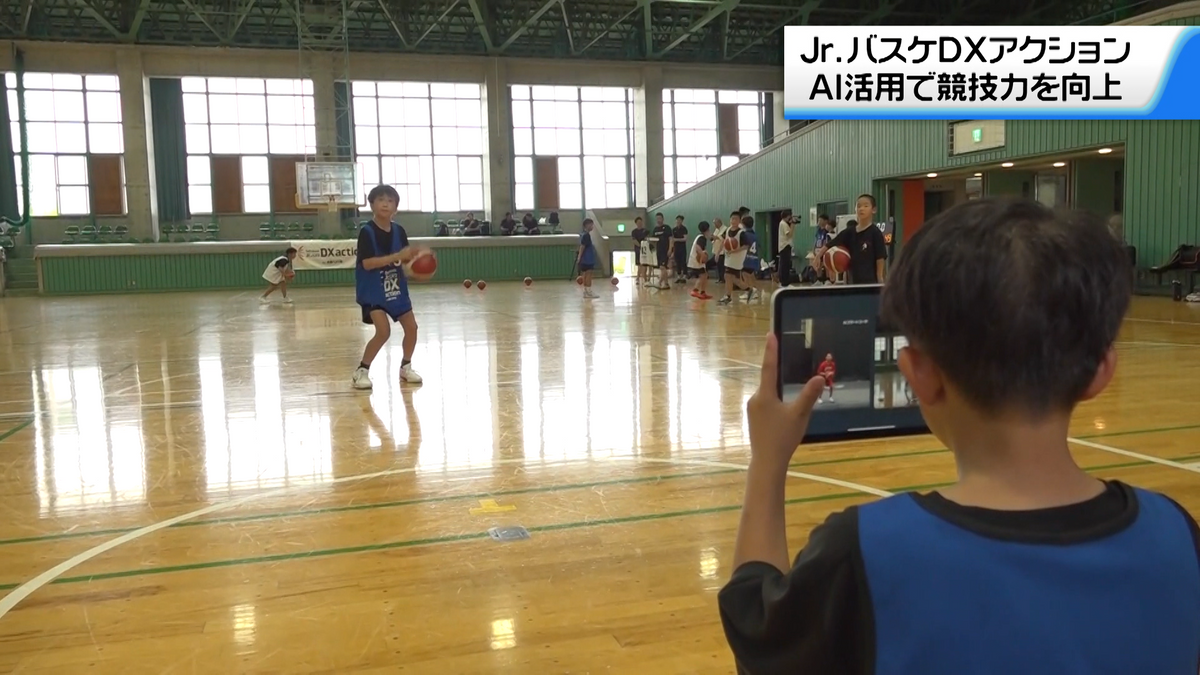
Softbank and Japan's Basketball Association have launched an AI coaching program for junior teams struggling with staffing shortages. The program uses skeleton-analysis technology to compare players' movements against professional athletes and deliver numerical feedback on form. The first training session in Nanao City drew strong participant interest, and the organizers plan to continue monthly joint sessions and remote coaching.
Summaries like this, in your inbox every morning.
Sign up free →What happened
Softbank and the Japan Basketball Association launched an AI-powered coaching initiative targeting junior basketball teams facing player and instructor shortages. Two teams from across Japan were selected; the first training session took place in Nanao City, featuring skeleton-analysis technology that compares a player's shooting form to professional players' forms and returns a numerical score.
Why it matters
The program addresses a real constraint in grassroots sports — understaffed teams can now access AI-driven form feedback and remote coaching at scale, allowing players to identify their own improvement points rather than relying solely on limited in-person instruction.
What to watch
The initiative will continue with monthly joint training sessions and ongoing remote coaching sessions, alongside further use of the AI smart coach tool. Participants expressed strong interest in the real-time feedback mechanism.
Japan's junior basketball ecosystem has long faced structural challenges: many teams lack sufficient players and qualified coaches to develop young talent. Softbank and the Basketball Association's initiative directly addresses this by pairing human expertise (a former professional coach) with scalable AI analysis. The skeleton-analysis technology democratizes form feedback — traditionally available only to well-resourced elite programs — by letting any junior player understand exactly how their movement differs from a professional standard and iterate on their own.
The monthly cadence and remote-coaching component suggest the program is designed for sustainability beyond a one-off demonstration. By embedding AI assessment into regular practice and making coaching accessible remotely, the organizers appear to be testing whether technology can partially substitute for the scarcest resource in grassroots sports: full-time, expert instruction. Early participant enthusiasm indicates the approach may resonate with junior athletes seeking concrete, data-driven feedback on their development.
No comments yet. Be the first to share your thoughts!
Log in to join the discussion



Get curated AI news from 200+ sources delivered daily to your inbox. Free to use.
Get Started FreeFree · takes 30 seconds · unsubscribe anytime
1 minute a day. The AI essentials.
200+ sources · Email / LINE / Slack
