What happened
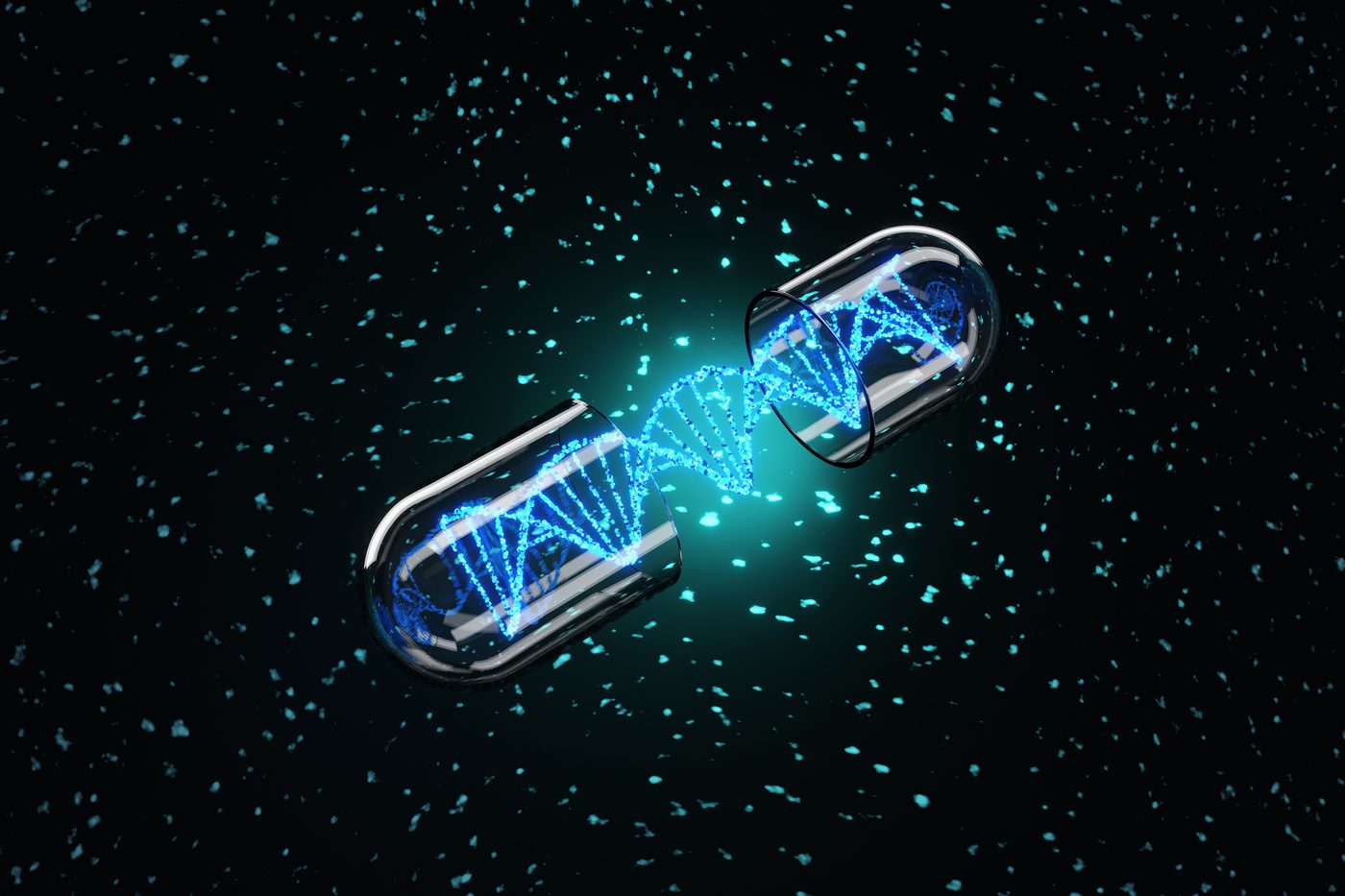
Isomorphic Labs raised $2.1 billion(約3400億円) in May led by Thrive Capital and secured major partnerships with Novartis, Eli Lilly, and Johnson & Johnson. The company's IsoDD platform predicts protein-ligand interactions and identifies cryptic binding pockets to expand the druggable landscape. Separately, Genesis Molecular AI and Incyte announced an expanded collaboration worth potentially over $1 billion(約1600億円), while Chai Discovery licensed its Chai-3 antibody design model to Pfizer, and Inceptive partnered with Alnylam Pharmaceuticals in a deal worth up to $2 billion(約3200億円) with $30 million(約48億円) upfront.
Why it matters
The investments reflect conviction in AI platforms and proprietary datasets as the foundation of drug discovery, even though few AI-designed drugs have reached the clinic. For pharma companies, embedding AI-driven workflows into R&D pipelines—using foundation models trained on internal genomics, transcriptomics, and proteomics data—may unlock previously intractable problems like neurological disease and accelerate candidate nomination timelines. However, commentators note the valuation cycle may have decoupled from clinical proof, meaning capital is chasing computational promise before real-world efficacy is proven.
What to watch
Foresite-backed Xaira Therapeutics, which launched in 2024 with more than $1 billion(約1600億円) in funding, is building virtual cell models to advance target discovery. Inductive Bio gained external validation in February by placing first in the OpenADMET-ExpansionRx blind challenge for predicting drug compound properties. The key differentiator for investors is whether AI can solve previously unsolvable problems and change the pace or probability of clinical success, not just model accuracy alone.
Summaries like this, in your inbox every morning.
The pharmaceutical industry's shift toward billion-dollar AI platform investments marks a departure from traditional drug discovery funding models. Rather than backing single assets or compounds, pharma giants and venture firms are now betting on integrated discovery engines—built by companies like Isomorphic Labs, Inceptive, and Inductive Bio—that combine AI models with proprietary datasets and computational workflows. This infrastructure-first approach reflects a belief that AI can unlock previously intractable problems: Insitro's partnership with Bristol Myers Squibb targets amyotrophic lateral sclerosis (ALS), Inceptive is developing foundation models for RNA-based therapies, and Inductive Bio's virtual lab technologies aim to surface risks earlier and accelerate candidate nomination timelines.
Yet the sector faces a notable credibility gap. Commentators have flagged that few AI-designed drugs have actually reached the clinic, and some analysts worry the industry's valuation cycle may have decoupled from clinical proof. Investors and operators counter that differentiation lies in solving previously unsolvable problems and owning business outcomes—not just model accuracy—and point to early validation signals like Inductive Bio's first-place finish in the OpenADMET-ExpansionRx benchmarking competition. The race is on to prove that AI-accelerated discovery translates into higher probability and faster timelines for clinical success; until then, capital continues to flow on the strength of platform design and pharma partnerships alone.
Pick your industry and the AI tools you use, and get news related to your work every day.
Free · 30 seconds with Google · unsubscribe anytimeWhat is AIToday? →
Ask AI anything about this article. The AI reads this article, earlier AIToday articles, and Wikipedia, and cites its sources. Q&As are published on this page for other readers too.
In Q2, billionaires or their funds sold six 'Magnificent Seven' AI stocks
Nvidia was rising early Friday, even as the wider chip sector kept falling, Barron's reported
ElevenLabs completed a $300 million employee tender at a $22 billion valuation, and co-founder Mati Staniszews…
On October 15, OpenAI announced the Rosalind Academic Plan, giving approved US university labs free access to…
Neostellar Capital principal Evan Schlossman said CoreWeave's $103.7 billion in remaining performance obligati…
Supermicro Computer appointed Mark Long as chief financial officer, bringing an experienced technology finance…