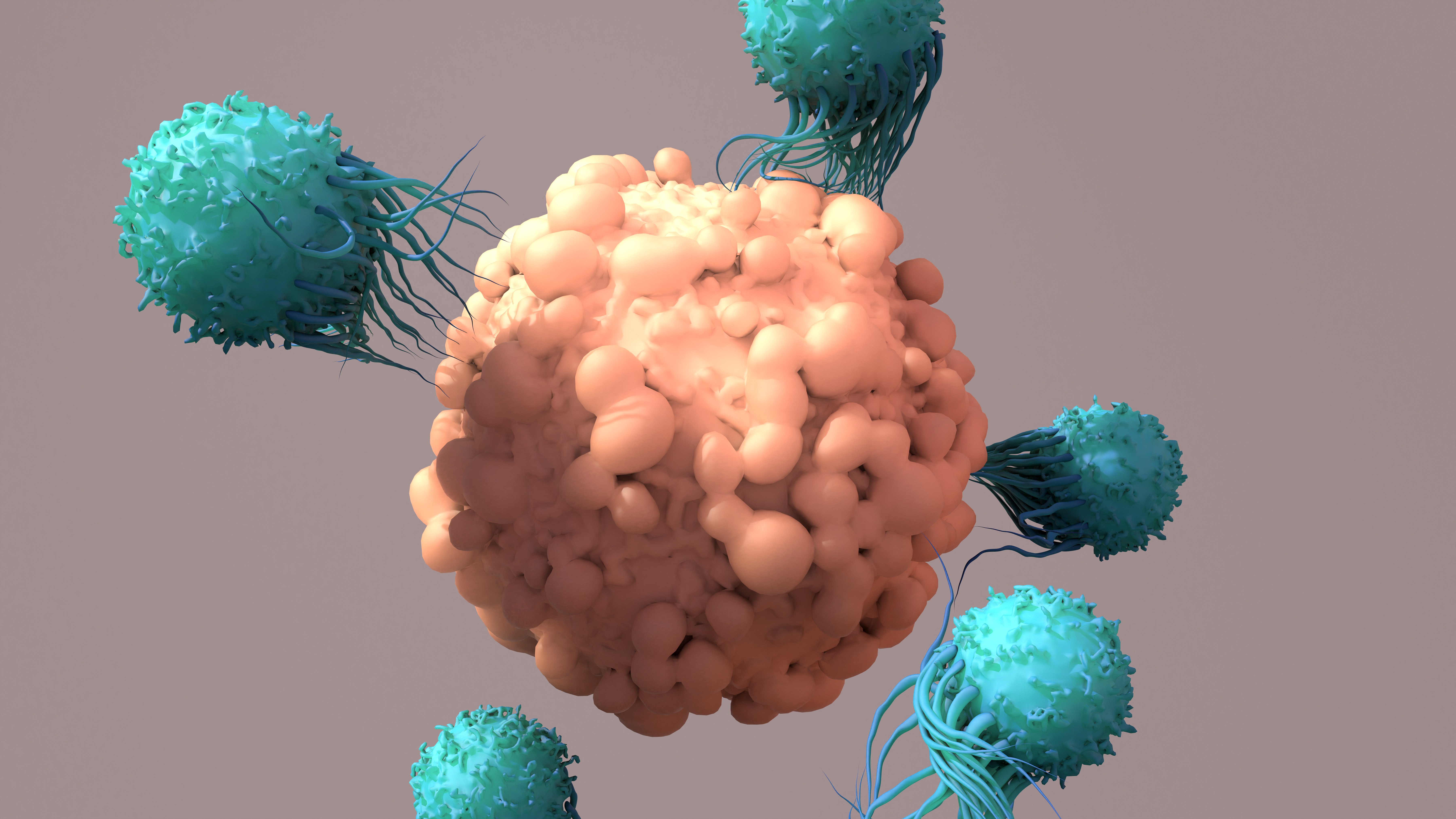
A study published in the Journal for ImmunoTherapy of Cancer found that artificial intelligence analysis of tumor biopsies can identify rare-cancer patients likely to benefit from pembrolizumab immunotherapy. Patients showing increased tumor-infiltrating lymphocytes and reduced tumor size during treatment had a median overall survival of 42 months, compared to 10 months for those without these markers, suggesting AI-driven insights from standard pathology slides could guide personalized treatment decisions.
Summaries like this, in your inbox every morning.
Sign up free →What happened
Researchers analyzed tumor biopsies from 84 rare-cancer patients using AI-powered pathology to assess immune cell density and tumor content, finding that specific markers—particularly increased immune infiltration and reduced tumor size during treatment—correlated with longer survival on the immunotherapy drug pembrolizumab.
Why it matters
The study suggests AI analysis of routine pathology samples could help clinicians personalize treatment decisions for immunotherapy patients with rare cancers, potentially identifying who will respond best before or early in treatment. Patients showing both increased immune cells and decreased tumor content during treatment had a median overall survival of 42 months versus 10 months without these markers.
What to watch
The findings require validation before clinical adoption, as acknowledged by the study's lead author; the work was funded by Merck & Co. (which makes pembrolizumab) and supported by Lunit, which provided the AI analysis tool.
The study emerges from a growing interest in using artificial intelligence to extract predictive signals from standard pathology samples in cancer care. By analyzing tumor biopsies before and during treatment with machine learning, the researchers sought patterns in immune cell composition and tumor density that might forecast which patients would survive longer on pembrolizumab. The findings suggest that meaningful insights can be extracted from routine samples across diverse rare cancer types, though the lead investigator emphasizes the approach still needs validation.
The specific markers identified—higher baseline immune infiltration (≥60 cells/mm2 intratumoral tumor-infiltrating lymphocytes), elevated CD8-positive immune cells, and lower regulatory T-cell density—aligned with favorable progression-free and overall survival in subgroup analysis. More strikingly, patients whose biopsies showed an on-treatment increase in immune infiltration paired with a decrease in tumor content experienced both prolonged survival and reduced spatial distance between immune and tumor cells, suggesting the AI can capture biologically meaningful changes in the tumor microenvironment during therapy. The 42-month versus 10-month median overall survival gap for patients with both favorable markers versus neither represents a substantial clinical difference that, if validated, could inform treatment personalization decisions for rare-cancer patients receiving immunotherapy.
No comments yet. Be the first to share your thoughts!
Log in to join the discussion




Get curated AI news from 200+ sources delivered daily to your inbox. Free to use.
Get Started FreeFree · takes 30 seconds · unsubscribe anytime
1 minute a day. The AI essentials.
200+ sources · Email / LINE / Slack
