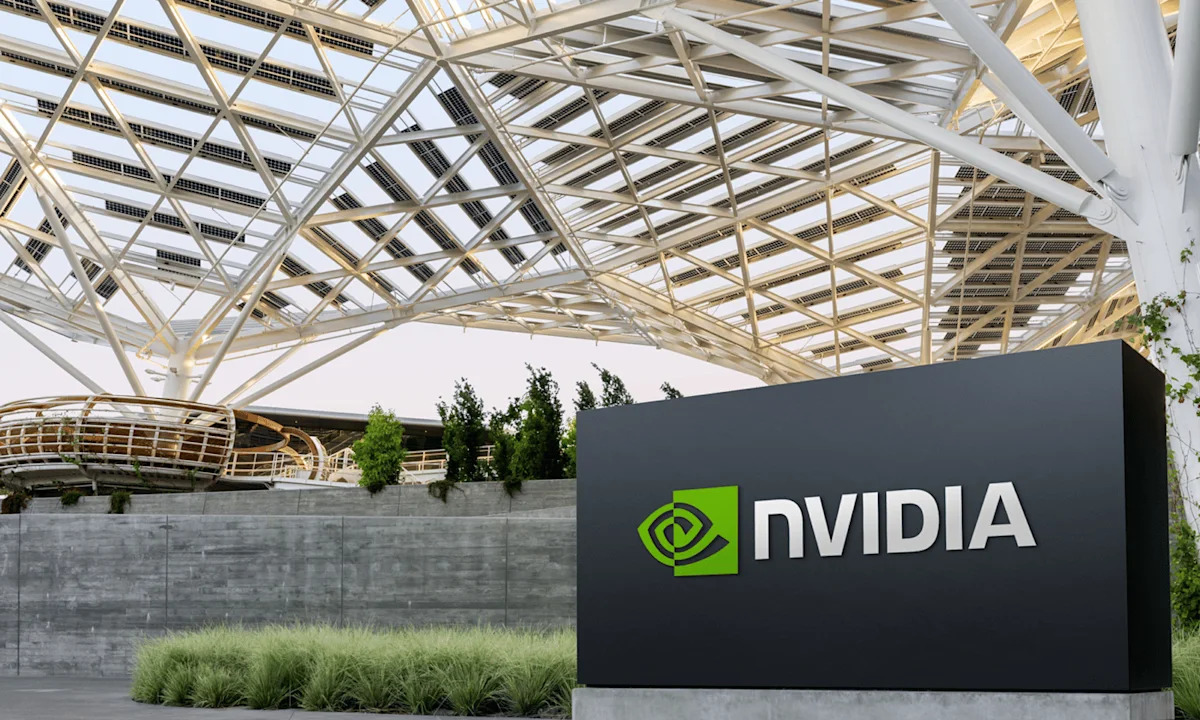
Berkshire Hathaway's new leadership has shifted toward selective, high-growth AI technology investments, exemplified by tripling its Alphabet position while abandoning Amazon. Nvidia increasingly fits the company's investment profile: it dominates the GPU market through its CUDA platform standard and is systematically diversifying into networking, data center infrastructure, and enabling custom chip partners—creating a powerful competitive moat across the entire AI stack.
Summaries like this, in your inbox every morning.
Sign up free →What happened
Under new CEO Greg Abel, Berkshire Hathaway more than tripled its Alphabet stake to nearly 54 million shares in the first quarter of 2025, while exiting its Amazon position. The moves signal Abel's willingness to pick among mega-cap technology leaders rather than hold them all equally.
Why it matters
Berkshire's selective approach to AI-driven tech stocks suggests the company now sees merit in backing specific leaders with durable competitive advantages. Nvidia's commanding GPU market position, reinforced by its CUDA platform standard and expanding ecosystem, aligns with this new investment philosophy.
What to watch
Nvidia is systematically expanding beyond chips—investing $1 billion(約1600億円) into Nokia for AI-native radio access networks in October, supporting data center buildouts through neocloud and optical component investments, and enabling partners like Marvell to develop custom AI chips integrated with Nvidia's architecture.
Berkshire Hathaway's portfolio moves under Greg Abel signal a meaningful shift in how the company approaches mega-cap technology leaders. Rather than maintaining broad exposure to the "Magnificent Seven," the new CEO is exercising selectivity—backing those with the strongest technological moats and clearest paths to durable competitive advantage. Alphabet's position in search and AI, combined with its diversified revenue streams, appears to have earned this heightened conviction, while Amazon no longer meets the bar under Abel's framework.
Nvidia's business model evolution supports the case for its inclusion in a portfolio oriented toward long-term AI leadership. The company is not simply defending its GPU dominance but systematically expanding its economic footprint across the entire AI infrastructure stack. The $1 billion(約1600億円) Nokia investment in AI-native radio access networks exemplifies this strategy—Nvidia is moving beyond semiconductors into the networking layer that underpins data center buildouts. Support for neocloud providers like CoreWeave and optical component leaders, coupled with its NVLink Fusion platform enabling partners like Marvell to build custom chips that integrate tightly with Nvidia's architecture, creates multiple revenue streams and deepens competitive moats that competitors are struggling to replicate at scale. This diversification reduces Nvidia's reliance on any single revenue stream while reinforcing its position as the central orchestrator of AI infrastructure.
No comments yet. Be the first to share your thoughts!
Log in to join the discussion




Get curated AI news from 200+ sources delivered daily to your inbox. Free to use.
Get Started FreeFree · takes 30 seconds · unsubscribe anytime
1 minute a day. The AI essentials.
200+ sources · Email / LINE / Slack
