What happened
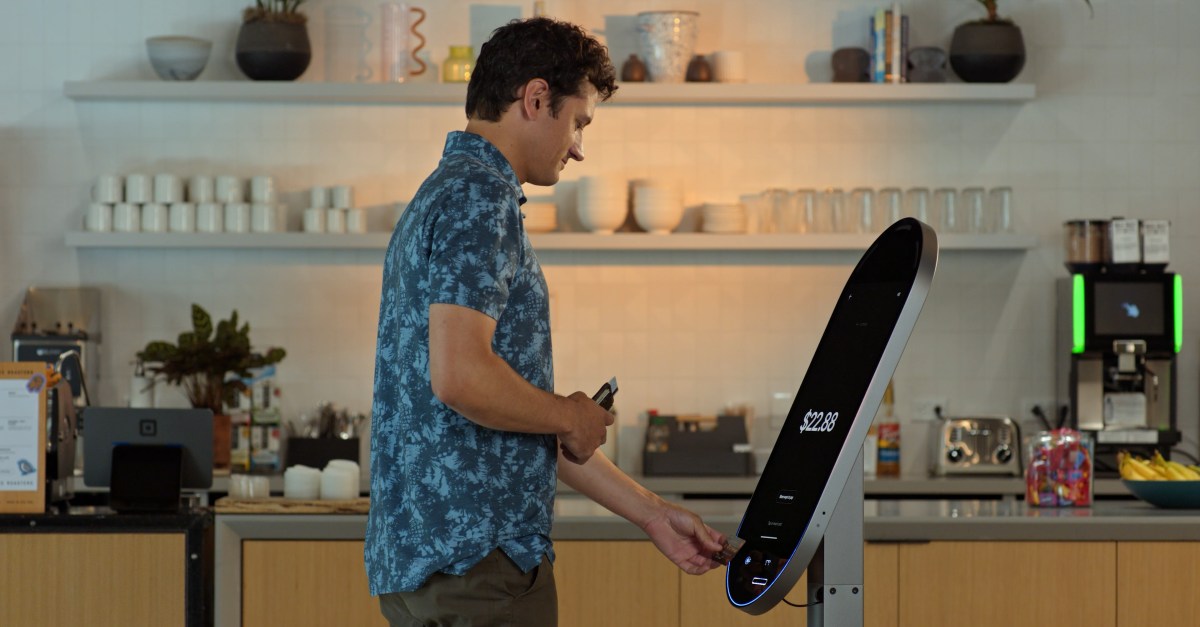
Square launched the Square Kiosk, a pill-shaped ordering device with a 21.5-inch touchscreen and an AI voice layer that understands a seller's menu and takes spoken orders.
Why it matters
Customers can ask questions and request modifications or substitutions by talking to the device, and it can greet people as they approach via presence detection, potentially reducing staff interaction at ordering points.
What to watch
The Kiosk is available starting today at $1,999 for businesses with a Square Plus or Premium subscription, plus a $99-per-device monthly software fee.
WHO IT HITSRestaurant and retail operators using Square's platform may need to weigh the $1,999 upfront cost and $99 monthly per-device fee against reduced counter staff time, while their customers adapt to voice-based ordering.
Summaries like this, in your inbox every morning.
Square is known for payment and point-of-sale tools, and the Square Kiosk extends that into self-service hardware. The device pairs a 21.5-inch touchscreen with what Square calls an "agentic, conversational voice layer." That voice layer is designed to fully understand a seller's menu and respond in real time, so customers can order the way they would naturally talk to staff. Square says the Kiosk can also welcome customers as they approach, using presence detection.
The ordering experience is not limited to simple selections. While talking with the AI agent, customers can ask questions and request modifications and substitutions. Payment adds another layer of flexibility: at checkout, customers can use the contactless payment reader or the card slot.
The Kiosk is available starting today, but it comes with conditions. At $1,999, it is limited to businesses that have a Square Plus or Premium subscription, and there is a $99-per-device monthly software fee on top.
Pick your industry and the AI tools you use, and get news related to your work every day.
Free · 30 seconds with Google · unsubscribe anytimeWhat is AIToday? →
Ask AI anything about this article. The AI reads this article, earlier AIToday articles, and Wikipedia, and cites its sources. Q&As are published on this page for other readers too.
Between September 28 and October 8, 2026, agents on Tencent Cloud made over 2,600 scraping attempts on Amap, p…

Prosecutors allege Abdulrahman Alfozan used prompts from his wife's ChatGPT account, sent Sept
MIT's Neil Thompson and colleagues tested OpenAI models o1 through GPT-5.5 on theory problems from papers post…

Google is introducing an opt-in 'enhanced protection' setting in Google Messages that uses cloud-based Gemini…
Apate.ai runs thousands of undercover AI agents that answer scam calls, reply to shady messages, follow phishi…
Amp CEO Quinn Slack says OpenAI models account for the majority of tokens used in Amp, and some users consume…