
What happened
FANUC, a global leader in industrial robots, and NVIDIA have formed a strategic partnership to integrate what the article calls Physical AI — AI systems that understand and act on the physical world — into FANUC's entire robot lineup. The collaboration combines FANUC's robotics hardware with NVIDIA's Omniverse, Isaac Sim, Isaac Lab, and Jetson Thor edge computers.
Why it matters
Traditional industrial robots require manual programming and dedicated tooling, which makes switching between product variations slow and costly. The article says the goal is to let robots learn tasks in virtual simulations and then deploy those skills to real machines without extra tuning, which could cut commissioning time from weeks or months to virtually zero and make manufacturing lines far more flexible.
What to watch
The article highlights a demonstration where two FANUC CRX collaborative robots learned to fold a T-shirt by imitating a skilled worker, using NVIDIA's GR00T N foundation model. It also notes that FANUC's ROS 2 driver supports 1ms high-speed streaming control, and that the Jetson Thor module delivers 7.5× the AI performance of the previous Jetson AGX Orin.
Summaries like this, in your inbox every morning.
This partnership marks a shift in how industrial robots are developed. Previously, automation relied on deterministic, play-back programming where humans manually guided robots through every motion. The article frames this as moving from a 'human writes the motions' era to a 'design the conditions for AI to learn' era, enabled by training in virtual spaces before deployment on real machines.
A central technical breakthrough described is the use of FANUC's own control algorithms, via ROBOGUIDE, inside NVIDIA's simulation environment. Because the virtual robot behaves exactly like the real one, the gap between simulation and reality shrinks, so policies learned in software can transfer to hardware without fine-tuning. This combination addresses a long-standing challenge in robotics, where simulated results often fail in the real world.
The article also highlights how this could address structural pressures in manufacturing, such as skilled labor shortages and the need for high-mix, low-volume production. The implication is that robots could handle tasks like cable routing or bulk part picking that previously required human sensing and feedback. The ability to pre-validate entire production lines virtually, including PLCs and conveyors, could also reduce the risk and cost of factory automation projects.
Pick your industry and the AI tools you use, and get news related to your work every day.
Free · 30 seconds with Google · unsubscribe anytimeWhat is AIToday? →
Ask AI anything about this article. The AI reads this article, earlier AIToday articles, and Wikipedia, and cites its sources. Q&As are published on this page for other readers too.
Wells Fargo hired an AI executive based in San Francisco, a move The Business Journals describes as part of em…

Amazon launched two Bee "personal AI" devices on Thursday: the $74.99 Bee Frontier wristband and the $99.99 Be…

Apple released MLX today, which runs the 816B-parameter Muse Spark Open on four Mac Studios at over 36 tokens…

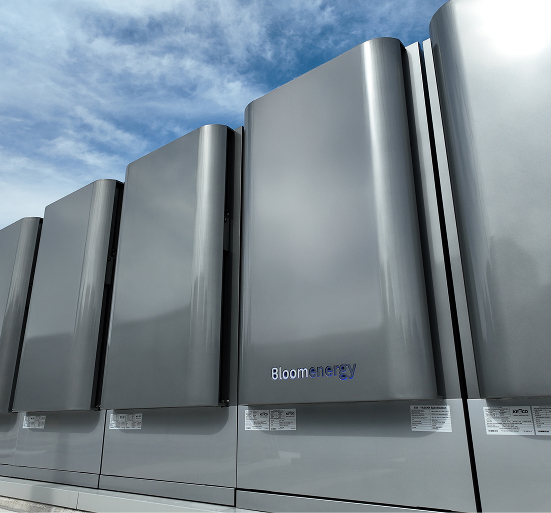
Bloom Energy stock fell 4% to $229.83, still up 165% year to date, while Caterpillar slipped 3% to $727.55 and…
LogicMonitor announced its 2026 Elevate Award winners at its Elevate Community Conference in Chicago, honoring…

Sandisk, AMD shares fall as Anthropic adds to AI concerns, per Barron's