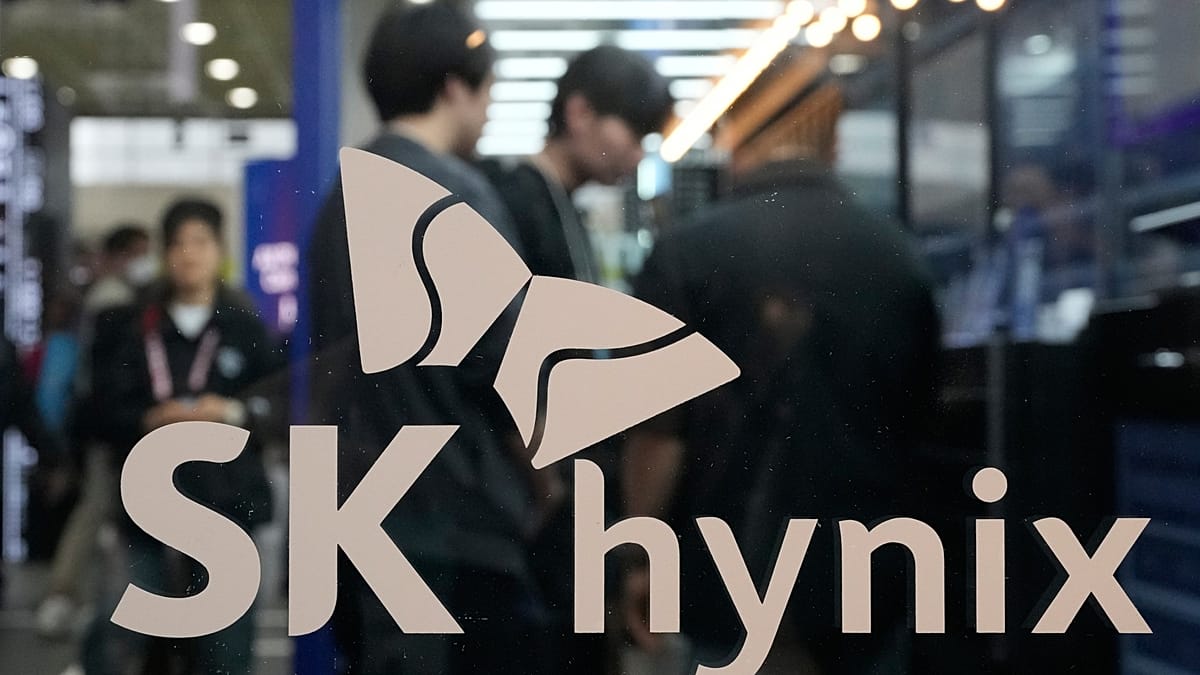
South Korea's SK hynix posted record quarterly profit of 93.9tn won (€56.9 billion), a 1,242% year-on-year jump driven by soaring demand for its memory chips used in AI infrastructure. Despite the historic earnings result, the stock fell 9.6% because operating profit and revenue missed market expectations, signalling investor concern about whether the AI investment boom will sustain.
Summaries like this, in your inbox every morning.
Sign up free →What happened
SK hynix reported second-quarter net profit of 93.9tn won (€56.9 billion), a 1,242% year-on-year surge, citing surging demand from the AI industry for its high-bandwidth memory chips. Operating profit jumped 557% to 60.5tn won (€36.6bn), and revenue reached 79.3tn won (€48bn), though both fell short of market expectations and sent shares down 9.6% on the day.
Why it matters
The South Korean chipmaker is a key supplier to Nvidia and a pillar of South Korea's tech economy. The massive gains reflect how dependent the global AI infrastructure build-out has become on advanced memory capacity—but the stock's decline shows investors are watching for signs that data-centre spending may slow or that AI demand may prove unsustainable.
What to watch
SK hynix intends investments in the 40tn won (€24.2bn) range this year. KB Securities analyst Kim Dong-won forecast memory chip prices will likely rise at least 30% in the third quarter, with supply shortages expected to persist until 2028. Samsung Electronics reports its earnings on Thursday and has forecast operating profit will rise about 1,800% year-on-year.
On Wednesday, 29 July 2026, SK hynix announced second-quarter results that broke its own records. Net profit reached 93.9tn won (€56.9 billion), an astounding 1,242% increase year-on-year. Operating profit climbed 557% to 60.5tn won (€36.6bn), and revenue totalled 79.3tn won (€48bn). The company, based in Icheon, South Korea, attributed the surge to the artificial intelligence industry's booming demand for its advanced high-bandwidth memory chips—essential components in the infrastructure powering AI services globally.
Despite these record results, the market reacted with skepticism. SK hynix shares fell 9.6% in Seoul on Wednesday, and had already dropped 14% the day before, because both revenue and operating profit fell short of what analysts had forecast. The declines were fuelled by investor concerns about whether the AI infrastructure build-out is sustainable and whether growth could slow as firms reassess their data-centre strategies.
Management addressed these worries directly. Park Joon-deok, marketing chief of the AI microchip division, told investors and reporters that the company is aware of concerns about AI infrastructure investment potentially slowing. He cited two emerging headwinds: companies considering renting data-centre capacity rather than building their own facilities, and the development of new, more efficient AI models that require lower memory workloads. However, Park reframed these trends as signs of maturation rather than retrenchment, saying "We view these developments not as a scaling back of AI investment, but rather as a process of maximising the utilisation of the massive AI infrastructure built to date and accelerating its monetisation." The company expects the momentum in memory demand to persist, supported by revenue generated from AI services and continued investments by major tech companies.
SK hynix is positioning itself for aggressive future growth. It announced plans to invest in the 40tn won (€24.2bn) range this year. Earlier in July, the company raised $26.5bn (€22.8bn) through a US offering of American depositary receipts, one of the world's largest-ever equity offerings. At the parent level, SK Group announced a new $500bn (€438.6bn) collaboration with Nvidia to invest in AI infrastructure. Looking ahead, analyst Kim Dong-won of KB Securities forecast that memory chip prices will likely rise at least 30% in the third quarter, with supply shortages expected to persist until 2028. Samsung Electronics, SK hynix's larger South Korean rival, is due to report earnings on Thursday and has forecast its operating profit will rise about 1,800% year-on-year.
SK hynix's record quarter reflects the relentless demand for memory chips as the global economy races to build out AI infrastructure. The company's high-bandwidth memory is a critical bottleneck: as AI models grow more complex, they consume more memory, and major tech companies continue to increase their investments to support expanding AI services. This creates a virtuous cycle where AI infrastructure spending generates revenue that funds further memory demand.
Yet the stock market's reaction—a 9.6% drop despite historic profits—reveals underlying anxiety about the durability of the AI boom. The company itself acknowledged investor jitters in its earnings call, addressing concerns that firms may shift from building their own data centres to renting capacity, or that new, more efficient AI models could reduce memory requirements. Management reframed these risks not as a scaling back of AI investment, but as a maturation process where companies optimize and monetize the infrastructure already built. Analyst forecasts support near-term strength: SK hynix's memory chip prices are expected to rise at least 30% in the third quarter, with supply shortages likely to persist until 2028. However, until those trends materialize, investors remain cautious.
AI-summarized, only the topics you pick — one digest a day via Email, Slack, or Discord.
Free · takes 30 seconds · unsubscribe anytime
No comments yet. Be the first to share your thoughts!
Log in to join the discussion


Get curated AI news from 200+ sources delivered daily to your inbox. Free to use.
Get Started FreeFree · takes 30 seconds · unsubscribe anytime
