What happened
Plus One Robotics CEO Erik Nieves said faster humanoid robots reinforce the need for human oversight, citing a company survey where 26 percent of Americans named lack of human judgment as their top concern.
Why it matters
Nieves argues trust in robots is permanent, not a temporary tech gap, so his company's human-in-the-loop model — robots doing routine work, people handling exceptions — may stay standard as robots improve.
What to watch
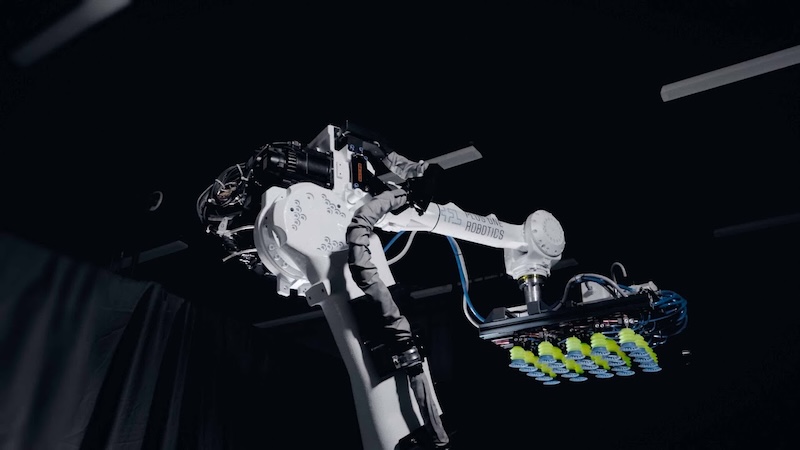
Nieves expects conventional industrial automation to still do most of the work in five years, with supervised autonomy the biggest shift as each person oversees more machines; purpose-built arms like Plus One's 2,500 picks per hour bar remain hard to beat.
WHO IT HITSWarehouse and logistics operators weighing humanoid robots against fixed automation get a clear guide: use humanoids where tasks change often and volumes are low, and keep trained supervisors available in high-stakes settings like surgery or elder care.
Summaries like this, in your inbox every morning.
Plus One Robotics has long advocated a human-in-the-loop model for logistics and parcel handling, and CEO Erik Nieves says the current wave of humanoid development only reinforces that view. His reasoning is that every new robot capability puts machines into environments full of exceptions nobody designed for, so a human backstop remains mandatory even as AI improves.
Nieves draws a sharp line between smarter robots and faster ones. He notes that foundation models — AI systems trained on broad data that can be adapted to many tasks — can cut deployment or redeployment from weeks to hours or a few days, but they don't change the process flow or the physics that set how many parts a machine handles per day. That is why he sees purpose-built automation keeping its edge in high-volume work like parcel induction and depalletizing, while humanoids find a genuine role in high-mix, lower-volume settings where tasks change often.
The stakes turn on trust. Nieves points to public discomfort with robots watching children, performing surgery and caring for the elderly as evidence that the industry may be pushing autonomy faster than people are ready for, and he suggests warehouses are a lower-stakes proving ground. Whether supervised autonomy becomes the norm — one person overseeing larger fleets — likely hinges on how reliably robots handle their worst day, which is the test he keeps returning to.
Pick your industry and the AI tools you use, and get news related to your work every day.
Free · 30 seconds with Google · unsubscribe anytimeWhat is AIToday? →
Ask AI anything about this article. The AI reads this article, earlier AIToday articles, and Wikipedia, and cites its sources. Q&As are published on this page for other readers too.
Caterpillar and CoreWeave shortened the data-labeling and feedback loop for training autonomous construction m…
Chinese logistics robots are spreading in Japan, and Toyota, Komatsu and others have adopted them, with the la…
Daiwa House's corporate venture capital arm invested in Persona AI, a US company developing industrial humanoi…

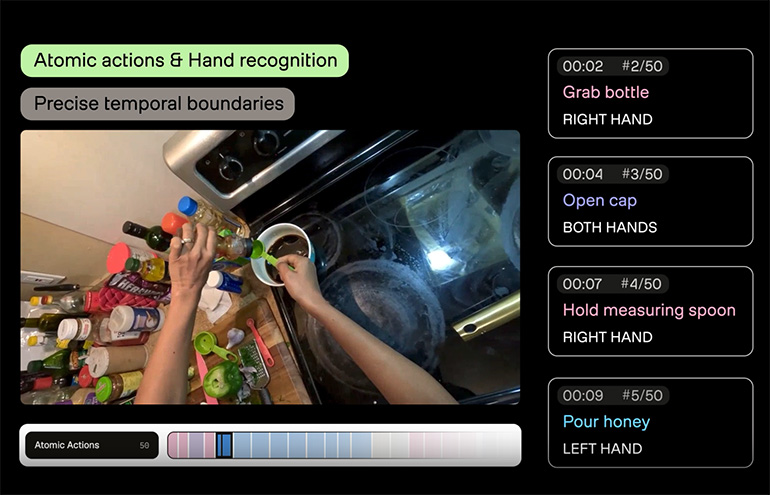
TwelveLabs released Pegasus 1.6, which it says is its first model built for egocentric video
Research from The University of Texas at Austin, led by Rohan Ghuge, found an autonomous vehicle can get most…
A team led by PhAI Labs, with collaborators from Stanford, Oxford, and Princeton, introduced JEPA-Anything, bu…