What happened
Per Betterment's 2026 Retail Investor Survey of 1,000 U.S. investors, 48% of Gen Z say AI has influenced a financial decision, and 41% are comfortable using it for long-term planning.
Why it matters
Among Gen Z clients already paying a human advisor, 65% say AI drove a decision they wouldn't otherwise have made — so the tool they call a career threat is quietly co-signing portfolios.
What to watch
Betterment's Dan Egan warns that treating sports betting as wealth-building is 'very concerning' — 52% of Gen Z investors redirected investing money to sports betting in the past year.
WHO IT HITSFinancial advisors serving younger clients, and the robo-advisory and AI planning tools competing with them, face a generation that trusts human judgment in principle but often acts on AI output instead. Employers and HR teams also face a workforce already using AI daily while naming it their top job threat.
Summaries like this, in your inbox every morning.
The contradiction at the center of this data is structural rather than personal. Gen Z begins investing at 19 on average, 16 years earlier than Baby Boomers did at 35, per Charles Schwab's Modern Wealth Survey, and 48% say they learn about investing primarily from social media. Yet when asked who they actually trust with financial guidance, they rank parents and financial professionals above social media. They are sourcing decisions from channels they don't believe, for lack of a better one immediately at hand — and AI tools, with their fluent, confident-sounding output, fill that gap.
That pattern extends into entertainment. Sportsbooks have leaned into generative AI for this audience with personalized odds and prop suggestions, joined by standalone AI betting copilots like PropGPT, PropsBot, and Gambly. Betterment's survey found 26% of Gen Z describe sports betting as part of a deliberate, ongoing financial strategy, compared with 14% of Millennials, 6% of Gen X, and 1% of Boomers. The stakes are concrete: the New York Fed has linked legalized sports betting's spread to rising delinquency and bankruptcy rates in early-adopting states, and a 2025 U.S. News survey found a quarter of bettors missed a bill because of wagers.
What the reader should take from this is a question of whether the tools Gen Z reaches for can carry the weight placed on them. Betterment's Dan Egan draws the line at whether gambling is budgeted as entertainment or mistaken for wealth-building — a distinction that hinges on how financial guidance is delivered and trusted, not on which generation is holding the phone.
For example, today's edition would include:
AI-summarized, only the topics you pick — one digest a day via Email, Slack, or Discord.
Free · 30 seconds with Google · unsubscribe anytimeWhat is AIToday? →
Ask AI anything about this article. Q&As are published on this page for other readers too.
Doosan committed KRW968 billion to expand high-end copper-clad laminate (CCL) production in South Korea and Ch…

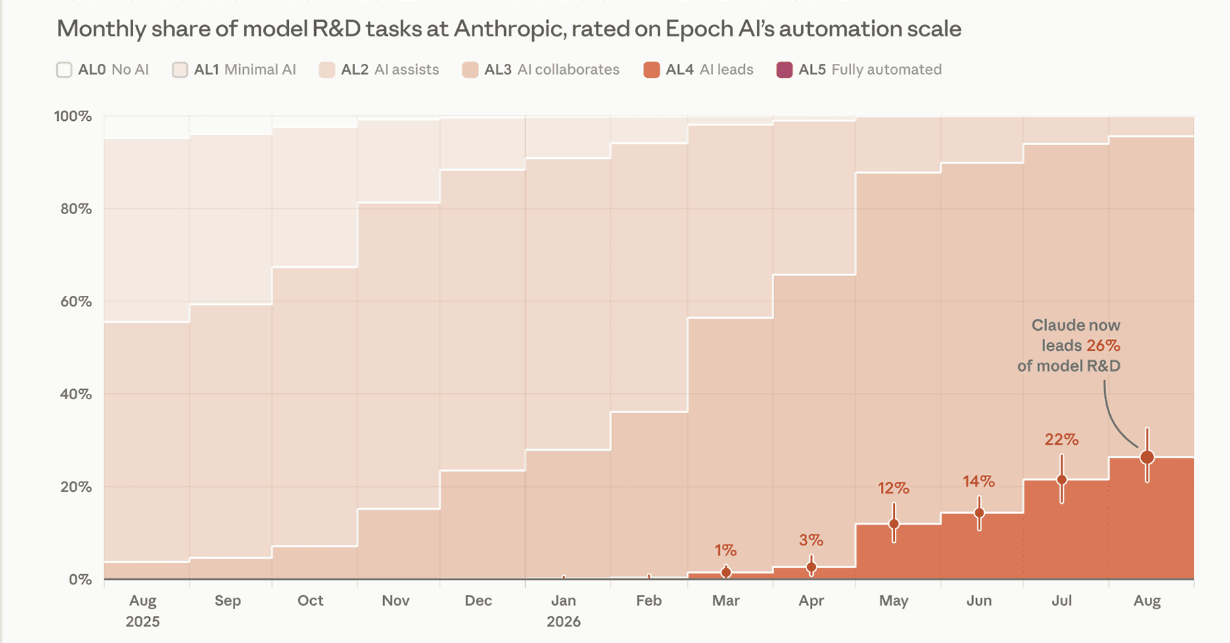
Anthropic Institute said that as of August, 26% of its AI research and development work was almost entirely do…
At Dreamforce, Salesforce and Nvidia unveiled Koa, a domain-specific reasoning model for Salesforce's Agentfor…

Abel more than tripled Berkshire's Alphabet stake in the first quarter and added another $17 billion in the se…

Kai-Fu Lee says most CEOs want AI transformation but are 'mostly doing it wrong', and that they must personall…

Atlassian CEO Mike Cannon-Brookes said the most AI-native customers are expanding fastest, and that customers…