What happened
At HP Partner Communication 2026 on July 16, 2026, Japan HP's Hiroshi Katsuya told partners to stop selling cloud-only AI and instead match roles, stages, and hardware to each customer's job.
Why it matters
This gives sales partners a concrete playbook — chat, internal data, automation — and suggests AI agents will reshape buying decisions and hardware needs beyond GPUs.
What to watch
Whether local AI delivers, given Katsuya's own open-source agent stalled in his environment; he warns a 100% local goal can slow work, so data sensitivity and workload should set the split.
WHO IT HITSSales partners and enterprise IT planners weighing cloud versus local AI infrastructure will need role-based proposals, explicit data-export limits, and multi-user sizing that the vendor says customers are still experimenting with.
Ask the AI about this article →
Summaries like this, in your inbox every morning.
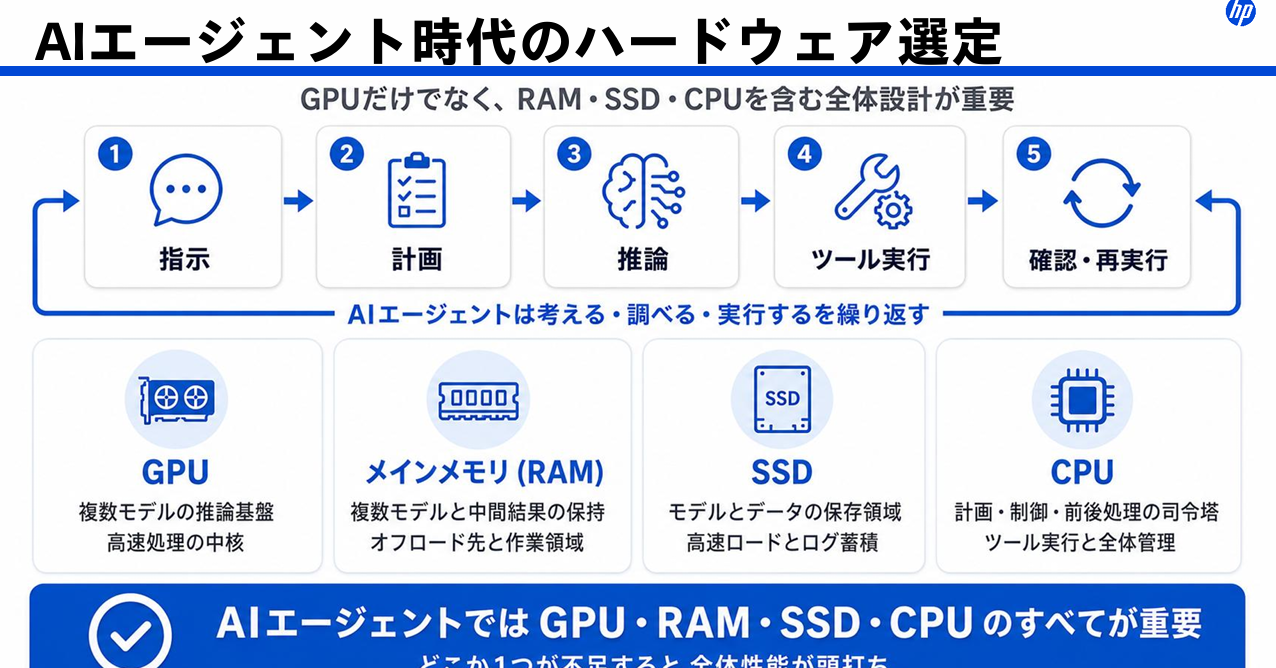
Japan HP ran the HP Partner Communication 2026 conference in Tokyo on July 16, 2026, where the company pushed partners to shift from selling AI products to embedding AI into customer operations. The backdrop Katsuya cited is labor shortage, with hiring alone unable to fill gaps. He split the AI workforce into three roles — assistants, specialists, and managers — and mapped adoption into three stages: chat use, internal data use, and automation with AI agents.
Katsuya's own practice shows the split is not binary. He uses cloud AI for public information, but keeps non-exportable business data fully local. He also draws a line between running an app on a PC and running inference there, noting that OpenAI's Codex app operates on the PC while inference happens in the cloud. His local experiments with the open-source agent OpenClaw ran into processing stalls, so he still chooses Codex in some situations.
Hardware follow this logic. For individual research he favors the small HP ZGX Nano G1n AI Station, while departments may need workstations. He said AI agents will make memory, SSD, and CPU as critical as GPUs, since any shortfall becomes the bottleneck. Cost and continuity are the other hinge: he said cloud can be shut off, while partners can go local for token savings, though the choice is a corporate judgment — and his own approval step shows humans can become the bottleneck.
For example, today's edition would include:
AI-summarized, only the topics you pick — one digest a day via Email, Slack, or Discord.
Free · 30 seconds with Google · unsubscribe anytimeWhat is AIToday? →
Ask AI anything about this article. Q&As are published on this page for other readers too.
At its Amplify user conference, Workiva placed controls, data lineage and human sign-off at the center of its…
DIGITIMES reports major memory suppliers posted record-high revenue in the second quarter of 2026, with triple…

Sharp Corporation began taking orders in Japan on September 15 for AI servers procured from its Taiwanese pare…

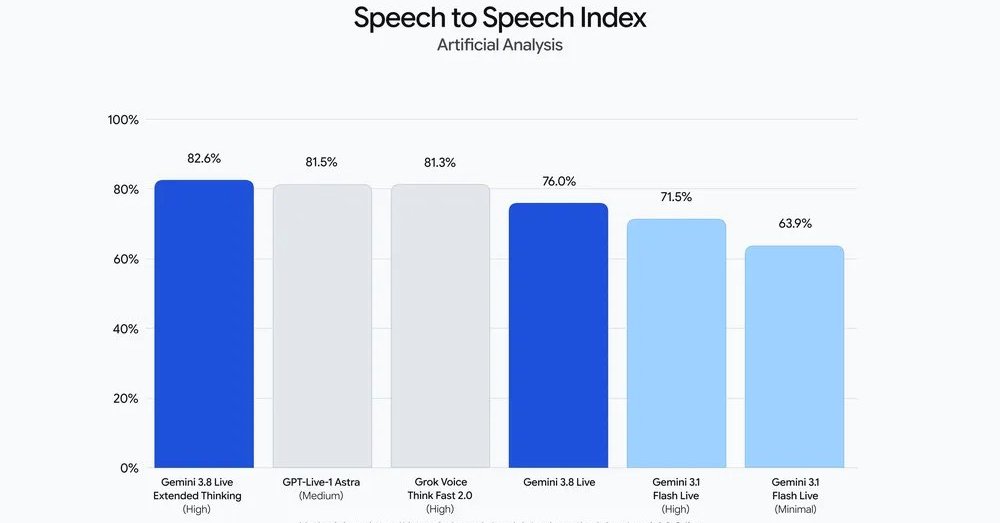
Google announced Gemini 3.8 Live and Gemini 3.8 Live Extended Thinking on September 15 and began offering them…
Forgent Power Solutions reported fiscal 2026 fourth-quarter revenue of $462 million, up 94% year over year, wi…

The heads of leading U.S