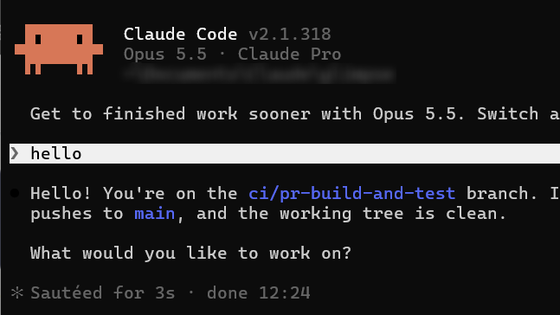
What happened
The column argues running an AI-written tool locally keeps your photos off remote servers, since only what the code says gets executed — and advises having a different company's AI review that code first.
Why it matters
The AI that wrote the code can stay fixated on one assumption within the same chat, so a fresh chat, ideally with a rival AI, catches hidden data-sending or delete/overwrite behavior — a safeguard against leaks like the Singapore case in late September.
Summaries like this, every morning.
The column takes a practical stance: the AI never touches your PC — whatever the code says is what happens when you run it — so the review should focus narrowly on code that communicates externally or deletes and overwrites files. Because an AI can cling to a wrong assumption for an entire chat, the review is deliberately handed to a fresh chat, and where possible to a different company's AI, since the same vendor's model may share the same blind spot. It even has the building AI write the review request, leaving out its own description of the code so the reviewer is not primed by it.
The cautionary case is the late-September Singapore incident. An employee sent a mass email to members using an AI-written program, and recipients could see each other's addresses — about 95,000 were exposed. Authorities said it was not an AI malfunction: the request never included "hide the recipients." The company now requires two or more people to check before a mass send, and the column points out the test send only confirmed the delivery log, never what the messages actually looked like.
The piece closes on a question it leaves hanging: when you paste reference articles or materials into a chat, the AI may be reading instructions from someone else hidden in that text. That concern about the inputs, not just the output, is left open.
Pick your industry and the AI tools you use, and get news related to your work every day.
Free · 30 seconds with Google · unsubscribe anytimeWhat is AIToday? →
Ask AI anything about this article. The AI reads this article, earlier AIToday articles, and Wikipedia, and cites its sources. Q&As are published on this page for other readers too.
OpenAI announced GPT-6 Cyber on November 5, 2026, a model built for cybersecurity research that finds vulnerab…
Japan's AI Law, in force since September 1, 2025, carries no penalties; the country instead leans on soft-law…

In a Zenn write-up, the author explains that the ALPACA-template maps Waterfall's QG1–QG6 quality gates onto A…

Mikami of Canly's store-acquisition team used aidlc-workflows' bugfix scope on a Google Business Profile CSV b…
For April–September 2026, Nomura Research Institute posted revenue of 4299億円, up 8% year on year, and operatin…
Claude Code inserted users' email addresses into the User-Agent header sent to external sites, reported on Git…