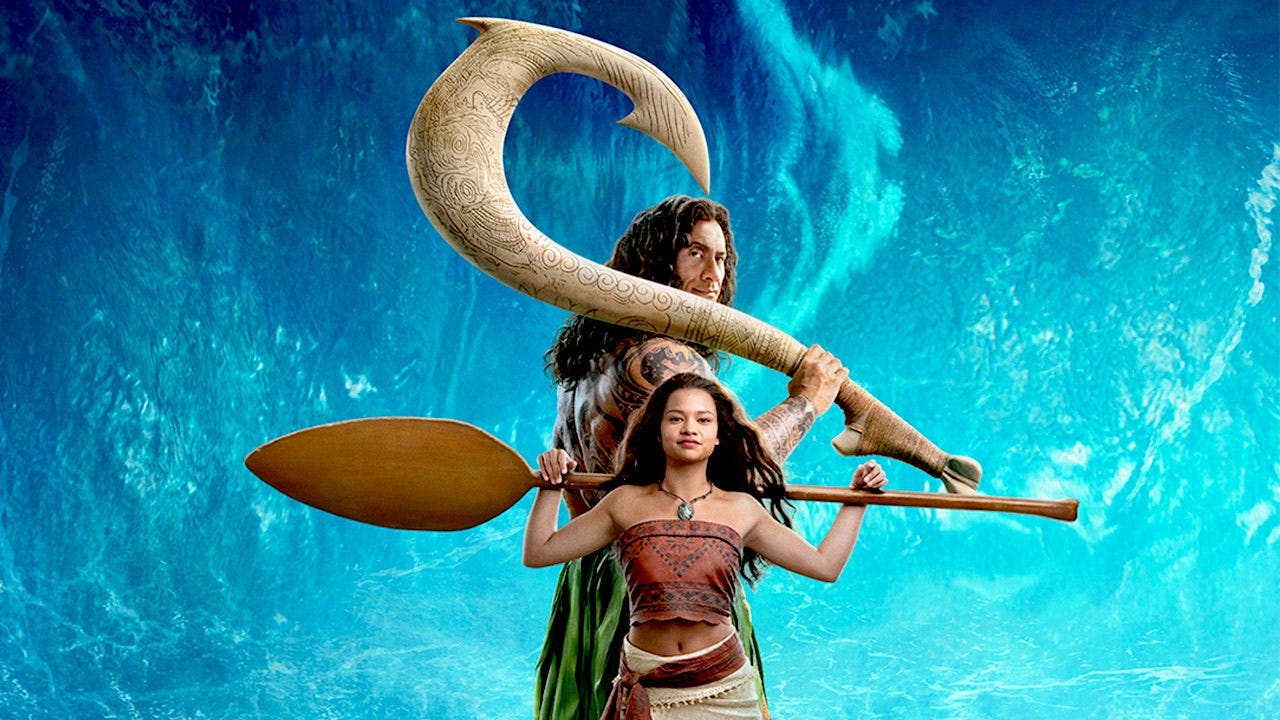
Disney released a live-action remake of its 2016 animated film Moana, directed by Thomas Kail and starring Dwayne Johnson. The remake has been criticized by reviewers as an uninspired, shot-for-shot recreation of the original that relies on green screens and artificial visual effects without adding meaningful creative vision, making it difficult to justify beyond being a commercial product.
Summaries like this, in your inbox every morning.
Sign up free →What happened
Disney released a live-action remake of its 2016 animated film Moana, directed by Thomas Kail and starring Dwayne Johnson as Maui and newcomer Catherine Laga'aia as Moana. The film follows the same plot as the original—Moana must find Maui and restore the heart of the nature goddess Te Fiti to save her island from starvation.
Why it matters
The remake has drawn criticism for being visually lazy and creatively uninspired, with green-screened beach scenes, unrealistic animals, and a reliance on the original's blueprint rather than adding any new creative vision. A film reviewer noted it is less funny, has stiffer characters, and a less captivating soundtrack than the original, making it difficult to justify its existence beyond serving as a cash cow for Disney.
What to watch
The film is rated PG for action/peril, some scary images, rude humor and brief thematic elements, with a running time of 1 hour, 55 minutes, and is in theaters now.
Disney's live-action remake strategy has been commercially successful, with several prior remakes earning over a billion dollars globally, including last year's Lilo & Stitch remake. However, this Moana adaptation marks a notable departure from earlier critical successes in the live-action remake category. The studio has previously achieved creative success with films like 2015's Cinderella and 2016's The Jungle Book, as well as villain-focused reinterpretations like Maleficent and Cruella, each of which brought distinct creative elements to their source material.
The Moana remake, by contrast, is being characterized as an almost literal reproduction of the animated original without meaningful additions or reinterpretation. The reliance on visual shortcuts—particularly extensive green screening that is visibly artificial on actors' faces and unconvincing animal effects—suggests a production prioritized efficiency over artistry. Director Thomas Kail's theatrical debut appears to have leaned heavily on the original material as a blueprint rather than as a foundation for creative reimagining, a strategy that reviews suggest has resulted in a duller, less engaging film across narrative, character development, and musical performance dimensions. The core tension is between the commercial logic of remaking an established property (which has proven profitable for Disney) and the creative justification for its existence, a tension the reviews suggest this particular film fails to resolve.
No comments yet. Be the first to share your thoughts!
Log in to join the discussion


Get curated AI news from 200+ sources delivered daily to your inbox. Free to use.
Get Started FreeFree · takes 30 seconds · unsubscribe anytime
1 minute a day. The AI essentials.
200+ sources · Email / LINE / Slack
