What happened
JPMorgan Chase raised its 2026 year-end S&P 500 target to 8,000 from 7,800, and lifted its 2026 S&P 500 earnings forecast to $365 per share from $350 and its 2027 estimate to $420 from $390. The bank cites accelerating cloud businesses at Microsoft, Amazon, and Alphabet, along with swelling backlogs and improving cash-flow visibility, as signs that AI infrastructure spending is beginning to produce measurable returns.
Why it matters
The new target represents only roughly 3.1% upside from Friday's close, signaling that JPMorgan is betting on earnings growth rather than multiple expansion. The bank raised its 2026 earnings estimate by roughly 4.3% and its 2027 forecast by about 7.7% while keeping its forward valuation assumption near 20 times earnings—meaning the S&P 500 must deliver real profit growth, not just higher stock prices, to reach 8,000.
What to watch
JPMorgan's thesis depends on AI spending translating into genuine profits, sustained profit margins, inflation remaining controlled, and geopolitical stability. Roughly 85.1% of the 436 S&P 500 companies that had reported through Friday beat expectations, providing near-term momentum, but the path to 8,000 requires corporate America to sustain earnings delivery in a market the bank notes is already expensive.
Summaries like this, in your inbox every morning.
JPMorgan's upgraded S&P 500 target reflects a shift in how Wall Street is valuing the earnings impact of AI spending. Rather than betting on investors paying higher multiples for stocks, the bank is anchoring its forecast to earnings growth—a notable distinction given that the S&P 500 is already trading at elevated valuations. The bank raised its 2026 earnings estimate by roughly 4.3% and its 2027 forecast by about 7.7% while holding its valuation assumption steady at roughly 20 times earnings, meaning all the upside to 8,000 must come from bottom-line profit expansion.
The thesis rests on the premise that years of AI infrastructure investment are finally transitioning from capital spending to measurable returns. Microsoft, Amazon, and Alphabet—the three companies JPMorgan highlights—control much of the cloud infrastructure underpinning the AI buildout, and the bank sees their accelerating cloud revenues, improving backlogs, and stronger cash-flow visibility as early proof that returns are materializing. This interpretation is supported by near-term momentum: roughly 85.1% of S&P 500 companies that reported earnings through Friday beat expectations, adding credence to the earnings-growth narrative.
However, JPMorgan's own language underscores the fragility of this path. The bank explicitly flags that AI spending "needs to turn into real profits," margins "need to hold," inflation "cannot reignite badly enough to keep rates higher for longer," and "geopolitical shocks cannot derail the earnings machine." These conditions are not guarantees—they are preconditions for the target to hold. As JPMorgan notes, "the S&P 500 is already expensive, so there is less room for excuses." The upside to 8,000 is modest (3.1%), reflecting the bank's view that the market has already priced in much of the near-term optimism; further gains depend almost entirely on execution by corporate America.
Pick your industry and the AI tools you use, and get news related to your work every day.
Free · 30 seconds with Google · unsubscribe anytimeWhat is AIToday? →
Ask AI anything about this article. The AI reads this article, earlier AIToday articles, and Wikipedia, and cites its sources. Q&As are published on this page for other readers too.
NetApp and Iterate.ai are packaging the AIPod Mini with Iterate's Generate platform and an embedded LLM, so en…
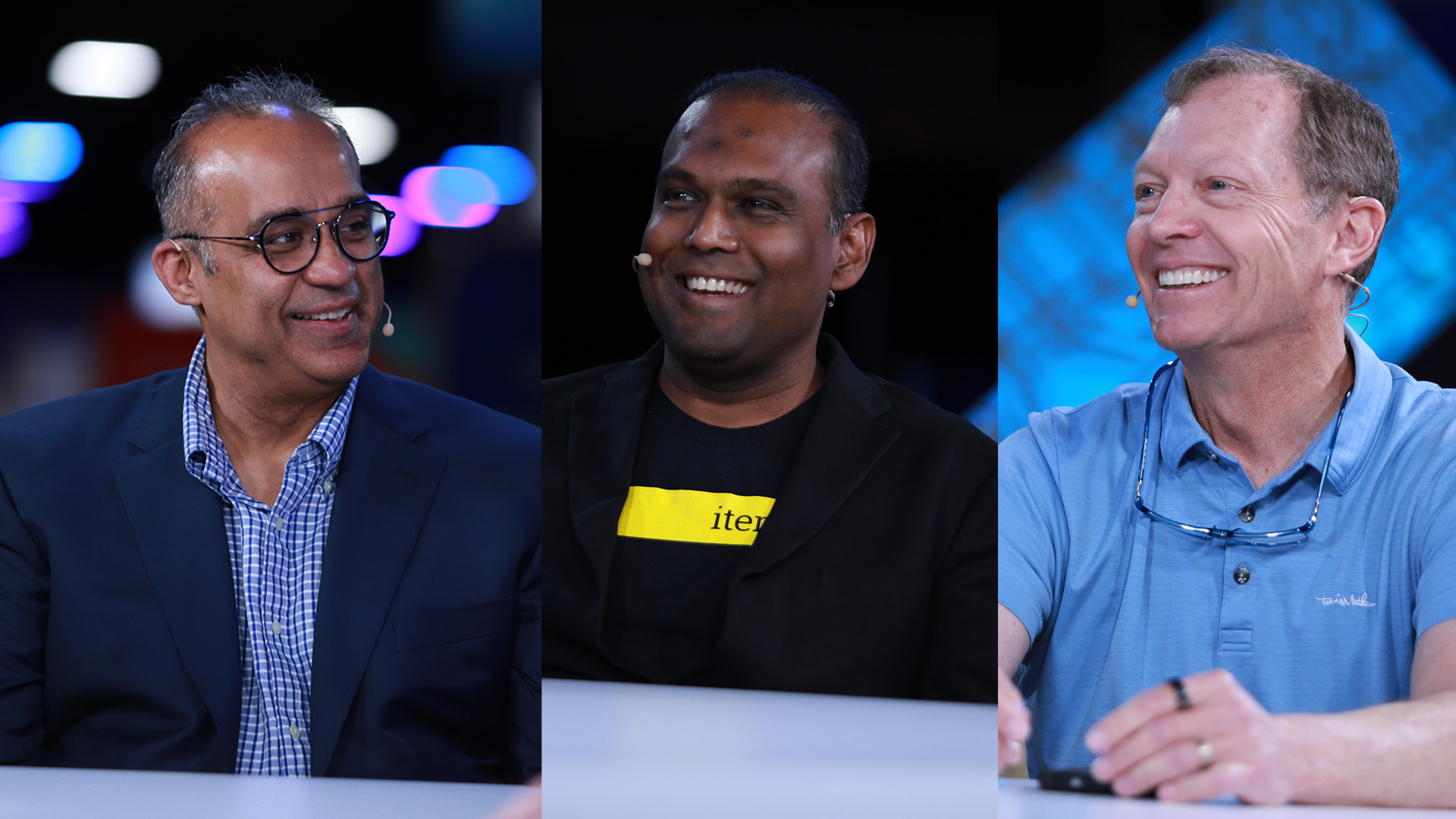
DIGITIMES estimates global AI server shipments will exceed 2.5 million units in 2026, including 2.37 million h…
Google Cloud revenue grew 82% to $24.77B on Alphabet's TPU-powered stack, while NVIDIA's revenue rose 105.8% a…
European AI-focused startups raised $23 billion in the first half of 2026, up 130% year over year and 55% of t…
The SEC revealed cases where fund advisors allegedly sold investors pre-IPO shares of SpaceX, OpenAI and other…

At Fortune's AIQ Summit, Bank of America's Hari Gopalkrishnan said the bank evaluates AI across 16 risk dimens…