
What happened
OpenAI presented a 166-page potential Navier-Stokes proof in early September, saying it followed the approach of Diego Córdoba and Luis Martínez-Zoroa. Mathematicians including EPFL's Gonzalo Cao-Labora now say that is not the actual approach.
Why it matters
If the stated method doesn't match the proof, the claimed link to the Spanish mathematicians' work is only surface-level, raising questions about how much of the proof OpenAI can actually explain — a gap that matters because the proof is hard to read on its own.
WHO IT HITSMathematicians and formal-proof reviewers are the first to feel this: they must verify a 166-page proof whose described method may not match its actual steps, and they have no clear way to trace which ideas came from where.
Summaries like this, in your inbox every morning.
OpenAI's Navier-Stokes effort came with unusually heavy machinery: about 10,000 model instances running for roughly 88 hours and 130 billion tokens. Yet according to OpenAI researcher Noam Brown, nobody actually knows what that massive agent swarm contributed, because behavior at that scale hasn't been studied and running systematic comparison tests with thousands of agents costs too much. Brown himself puts less than 10 percent of the success down to the multi-agent setup, saying these systems are new and flashy and get a disproportionate share of the credit; what really matters, he says, is the base model's ability to grind through tasks over long periods and run in parallel.
The provenance question is separate but related. Before publication, NYU mathematician Tristan Buckmaster accused OpenAI of building on work that he and Anthropic's Levent Alpöge had done with publicly available models, a claim OpenAI denied. Camillo De Lellis of the Institute for Advanced Study says a definitive answer is probably impossible because language models are black boxes — the same opacity that makes it hard to say where the proof's ideas came from.
Meanwhile, the volume of output is straining the field. In early October, OpenAI released roughly 400 more results as a loose collection on GitHub, which angered many mathematicians who felt it cheapened their field. The Clay Mathematics Institute has been reviewing the original proof since its release, but the dispute over method suggests the review will have to settle not just whether the proof is correct but what it actually is.
Pick your industry and the AI tools you use, and get news related to your work every day.
Free · 30 seconds with Google · unsubscribe anytimeWhat is AIToday? →
Ask AI anything about this article. The AI reads this article, earlier AIToday articles, and Wikipedia, and cites its sources. Q&As are published on this page for other readers too.
Researchers gave models 1,600 synthetic work logs, each with a hidden flaw
A simulation of Crescendo, the multi-turn jailbreak by Russinovich, Salem and Eldan published at USENIX Securi…

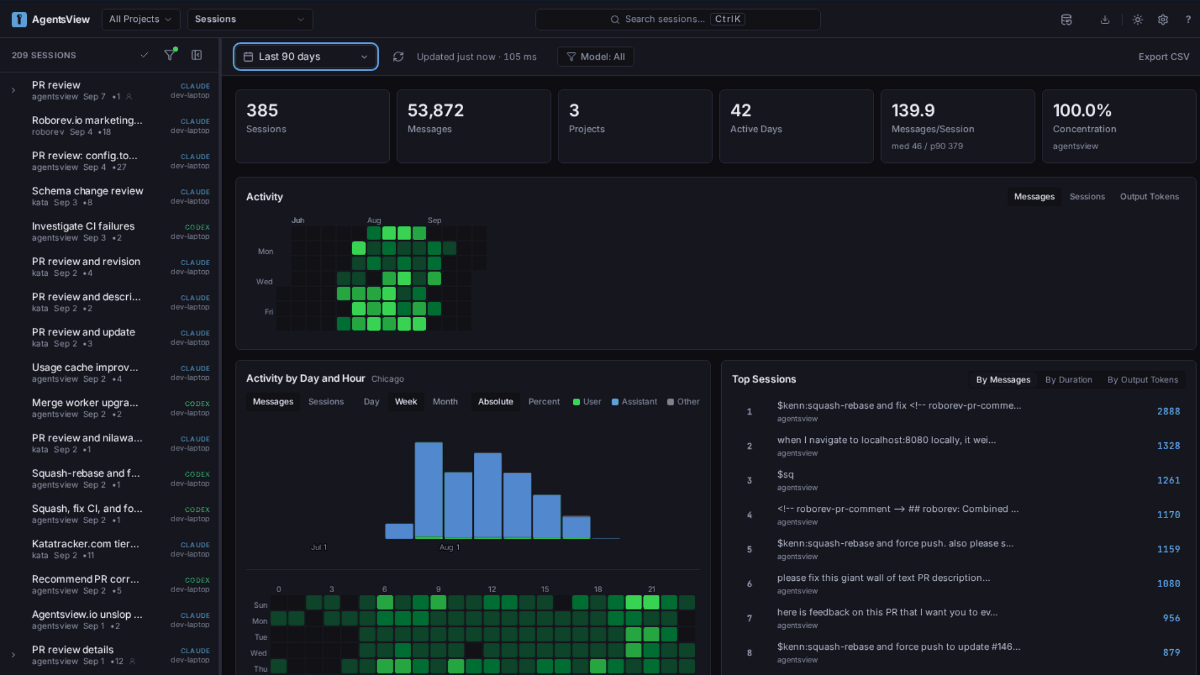
AgentsView automatically detects the local logs of Claude Code, Codex, Cursor, Copilot, Gemini and 60-plus oth…
Genomic foundation models like Evo 2, Genos and Google DeepMind's AlphaGenome learn correlations from DNA sequ…
Deutsche Bank Research predicts superintelligent AI could outperform human experts across virtually every cogn…

Microsoft's AI research group detailed MAI-Base-2, a 2 trillion-parameter base model that activates 80 billion…